
Beautiful Plants For Your Interior
Beautiful Plants For Your Interior
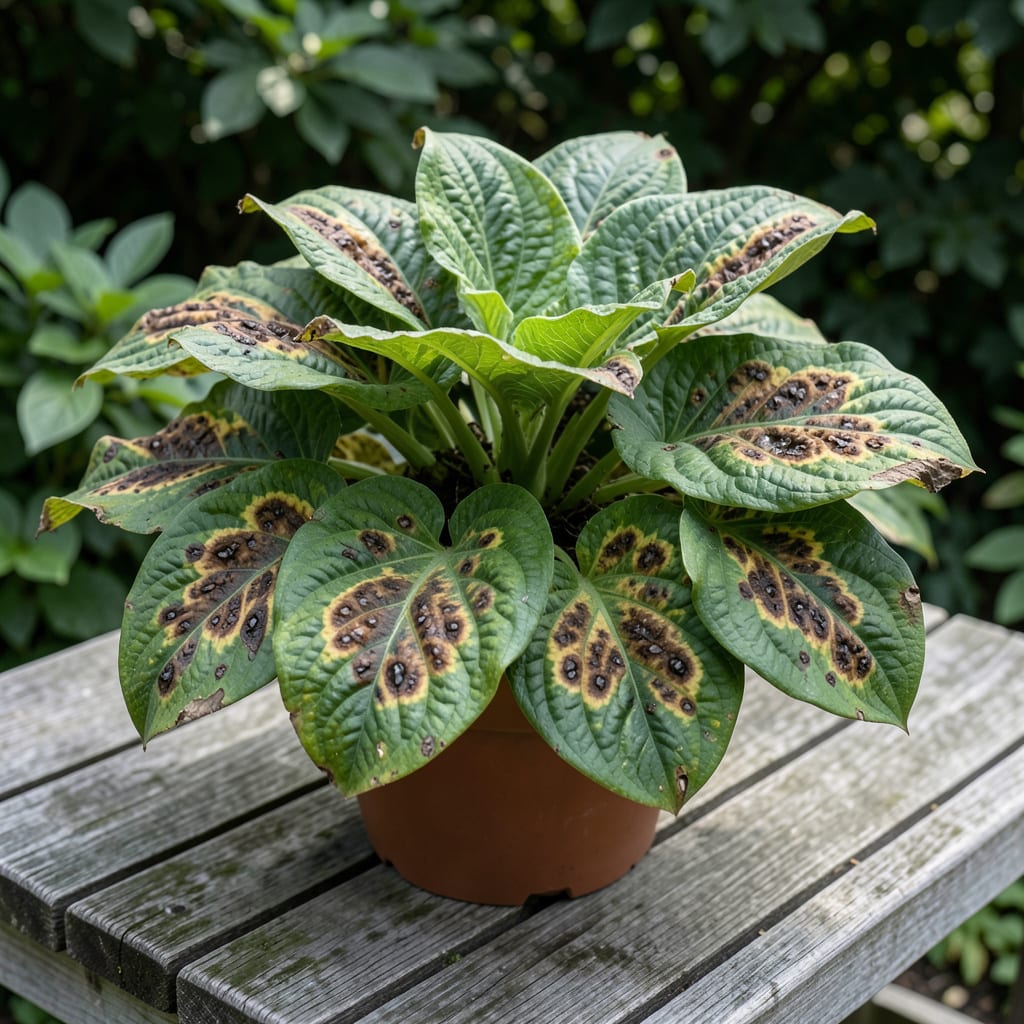
Spotted brown patches on your hosta leaves? I’ve been there—watching my prized plants go from lush green to polka-dotted with ugly lesions in days.
Anthracnose hits hardest in wet springs, turning healthy foliage into a fungus playground. Most gardeners don’t notice until it’s spread to half their garden, but catching it early changes everything.
You’ll learn to spot the difference between this and other common issues, plus the simple fixes that stop it in its tracks. No fancy equipment needed—just knowledge and timely action.
Works for all hosta varieties, from tiny blues to giant greens. Here’s how to save your plants before it’s too late.
Anthracnose in hostas isn’t random—it thrives under specific conditions. Understanding the causes helps you prevent outbreaks before they start.
Wet foliage is the #1 invite for Colletotrichum and Gloeosporium fungi, the pathogens behind anthracnose. Prolonged leaf wetness from rain, overhead irrigation, or high humidity gives spores the perfect window to germinate and infect. Action: Water at the base of plants early in the day to allow foliage to dry quickly.
Temperatures between 75–85°F (24–29°C) paired with high humidity create ideal conditions for fungal growth. These pathogens spread rapidly in such climates, especially in crowded garden beds with poor air circulation. Action: Space hostas adequately and thin dense canopies to improve airflow.
Fungal spores overwinter in decaying leaves, stems, and soil. If old hosta debris isn’t removed, it becomes a reservoir for reinfection come spring. Action: Clean up fallen leaves and plant debris in autumn, and avoid composting infected material.
Contaminated tools, gloves, or even your hands can transfer spores from diseased plants to healthy ones. Sharing equipment between infected and clean areas spreads the fungus silently. Action: Sterilize pruners and tools with a 10% bleach solution or rubbing alcohol between cuts.
Some hostas are genetically more vulnerable. Varieties with thin or smooth leaves (e.g., Hosta sieboldiana) often show symptoms faster than those with thick, textured foliage. Action: Opt for resistant cultivars like ‘Halcyon’ or ‘Blue Angel’ if anthracnose is a recurring issue.
Dealing with anthracnose on your hostas? Here’s how to tackle each issue head-on with simple, actionable steps.
Start by pruning away any leaves or stems showing dark, sunken lesions or yellowing. Use sterilized shears to avoid spreading spores, and dispose of the debris in the trash—not your compost. This removes the immediate source of infection and stops the fungus from spreading further.
Prevention tip: Always water at the base of the plant to keep foliage dry, as wet leaves encourage fungal growth.
Anthracnose thrives in humid, crowded conditions. Thin out dense hosta clumps to allow better airflow, and space plants at least 18–24 inches apart. If your garden is shaded, consider trimming nearby shrubs or trees to reduce excessive moisture buildup.
Prevention tip: Mulch with organic material like bark chips to reduce soil splashing onto leaves, which can spread spores.
For severe infections, use a copper-based fungicide or neem oil, following label instructions. Apply in the early morning or late evening to avoid leaf burn, and reapply after rain. Rotate fungicides to prevent resistance.
Prevention tip: Start treatments before symptoms appear in spring if anthracnose has been a recurring problem.
Fungal spores can overwinter in garden debris. In fall, remove all dead leaves and plant material from the bed. Rake the soil surface to expose and dry out any lingering spores.
Prevention tip: Disinfect garden tools with a 10% bleach solution after use to prevent cross-contamination.
Look for irregular brown or tan lesions with dark borders that often merge. Unlike other diseases, anthracnose spots may develop sunken centers or yellow halos as they expand.
Yes, but only if done early. Remove affected foliage immediately and dispose in the trash. Sterilize tools between cuts to prevent transferring spores to healthy plants.
Yes! Varieties like ‘Halcyon’ and ‘Blue Angel’ have thicker leaves that resist fungal penetration. Thin-leaved types are most vulnerable.
A baking soda solution (1 tsp per quart of water) can help mild cases. For severe infections, copper-based fungicides are more reliable. Always test on a small area first.
