
Beautiful Plants For Your Interior
Beautiful Plants For Your Interior
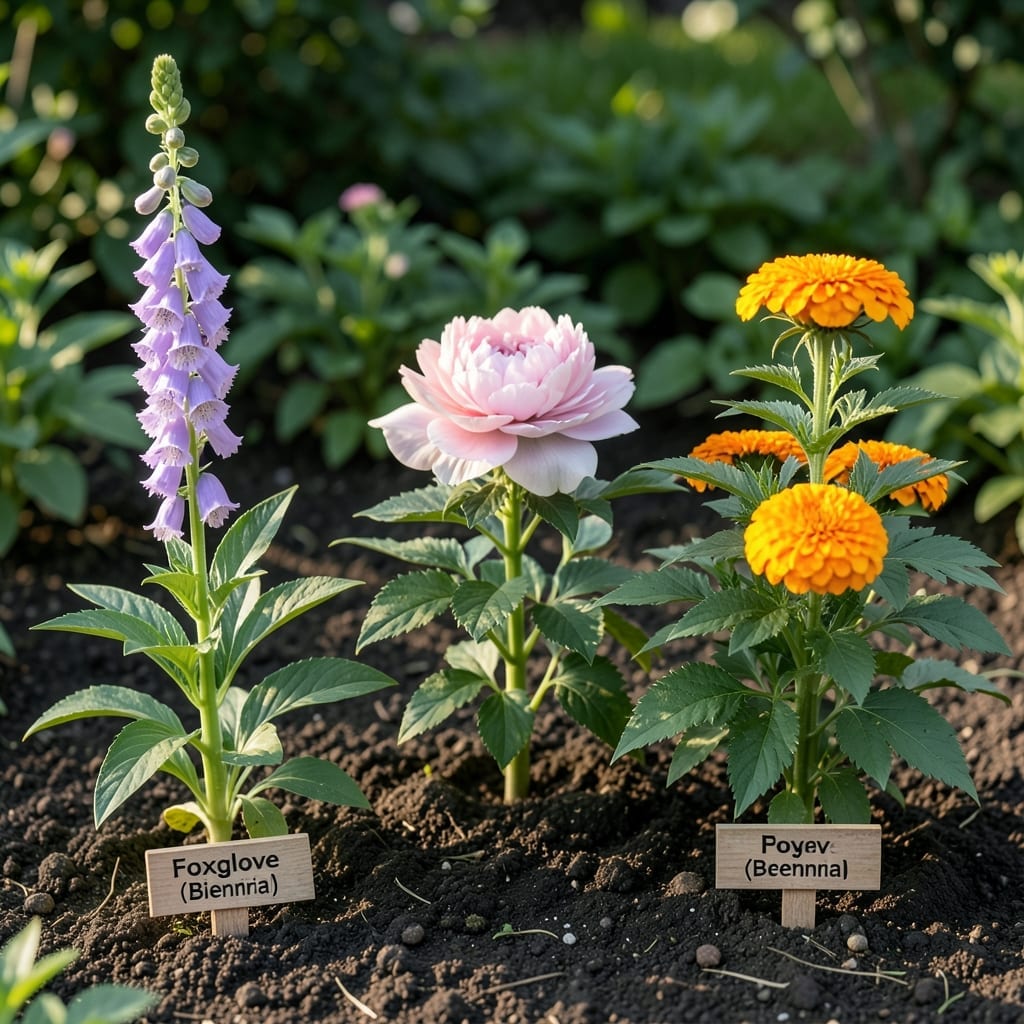
Annuals complete their life cycle in one year, biennials take two years, and perennials return yearly. Each type has distinct growing patterns and care requirements for gardeners.
I see these differences play out in my garden every season. Annuals like marigolds give quick color but need replanting, while perennials such as daylilies return stronger each year. Biennials like foxgloves require patience—they form leaves the first year and bloom the second. Understanding these cycles helps me plan for continuous blooms. 🌟
💡 In This Article
Annuals sprint through their entire life cycle in 12 months or less. They germinate, grow, flower, produce seeds, and die—all in a single season. This rapid pace is triggered by environmental cues like daylight length and temperature. Think of vibrant zinnias or fast-growing basil that burst with color and flavor before frost arrives.
Biennials operate on a two-year schedule. In their first year, they focus on leafy growth and root development, storing energy for the next season. The second year, they channel all that stored energy into flowering, seeding, and then dying. Carrots and parsley are classic examples, with their first-year foliage giving way to second-year blooms. 🌱
Perennials are the marathon runners of the plant world. They return year after year, often for 3-5 years or more, with some woody perennials like roses lasting decades. They invest energy in establishing strong root systems first, then focus on growth and reproduction in subsequent years.
Daylilies and peonies exemplify this endurance, coming back stronger each spring.
The key difference lies in how they allocate energy. Annuals pour everything into immediate reproduction. Biennials split their energy between growth and future reproduction. Perennials prioritize long-term survival, often entering dormancy during harsh seasons to conserve resources for the next growing cycle.
Environmental triggers play a crucial role. Annuals often respond to shortening days in fall by rushing to seed. Biennials need a cold period (vernalization) to trigger their second-year flowering. Perennials use both temperature and daylight cues to time their growth cycles, with some requiring specific chill hours to break dormancy.
This biological programming explains why you’ll see annuals like petunias wilting after their first frost, while perennials like hostas disappear underground only to re-emerge when conditions improve. Each strategy offers unique advantages for survival in different ecological niches. ✨
Most perennials return for 3-5 years or more, with some woody varieties like roses lasting decades. Their lifespan depends on growing conditions and care, but they reliably reappear each spring after establishing strong root systems.
Biennials focus on leaf and root growth in their first year to store energy. They need a cold period (vernalization) to trigger flowering in their second year, when they channel all stored energy into blooms and seeds before dying.
No, true annuals complete their entire life cycle in 12 months and die after seeding. However, some plants labeled as annuals in cold climates may be perennials in warmer zones. Self-seeding annuals can appear to return by dropping seeds.
Start biennial seeds indoors 10-12 weeks before the last frost. Transplant outdoors in early spring or late summer. This timing gives them enough growing time to establish before winter, ensuring they bloom the following year.