
Beautiful Plants For Your Interior
Beautiful Plants For Your Interior
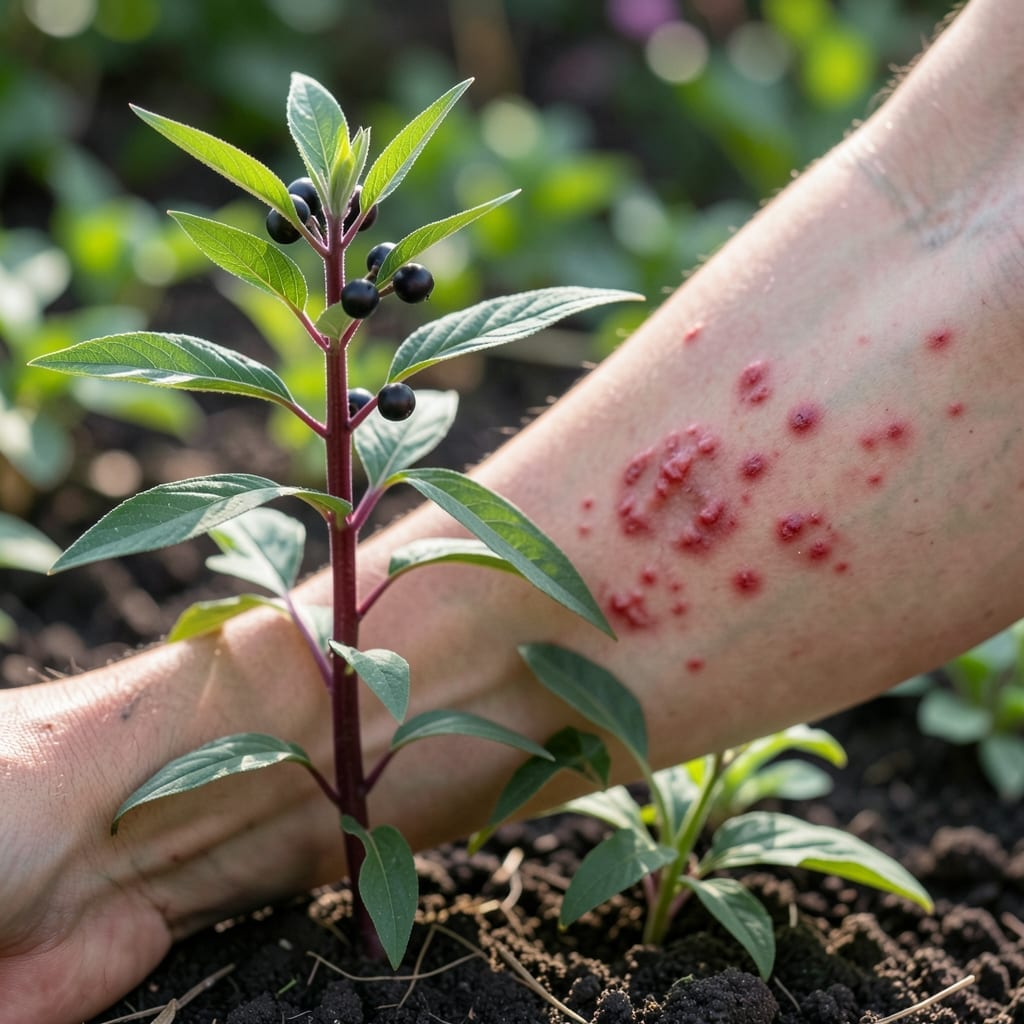
Contact with American pokeweed can cause a red, itchy rash due to its toxic sap. Symptoms include blisters, swelling, and irritation, typically appearing within hours of skin exposure.
The plant’s toxic compounds, like phytolaccatoxin and phytolaccigenin, trigger this reaction by irritating skin cells on contact. I notice it often affects gardeners or foragers who handle the plant without protection. The severity varies based on individual sensitivity and sap concentration. ✨
Immediate washing with soap and water can help remove the irritants and reduce symptom intensity. 💫
💡 In This Article
The toxic sap contains phytolaccatoxin and phytolaccigenin, powerful compounds that disrupt cell membranes. These chemicals trigger an inflammatory response, causing the immune system to release histamine. This process leads to redness, itching, and swelling as the body attempts to neutralize the irritants. 🔥
When the sap contacts skin, it penetrates the outer layer within minutes. The severity depends on sap concentration and exposure duration. Gardeners often experience worse reactions due to prolonged contact while handling the plant. The compounds are most potent in the berries, roots, and mature leaves. ✨
Individual sensitivity plays a major role in reaction intensity. Some people develop mild irritation, while others experience severe blistering. This variability stems from differences in skin barrier function and immune system responsiveness. Pre-existing skin conditions like eczema can exacerbate the reaction. 💫
The plant’s chemistry changes with maturity. Young shoots contain lower concentrations of toxins, which is why some foragers consume them after proper preparation. However, misidentification or improper handling of mature plants leads to most reported cases of skin irritation. The toxins remain active even after the plant wilts. ⚡
Environmental factors can amplify the effects. Sunlight exposure after contact may cause phytophotodermatitis, where UV rays interact with the plant compounds to create more intense, longer-lasting rashes. This explains why some people develop reactions only after being in the sun following exposure. 🌟
Symptoms typically develop within 1-4 hours of contact, though some may take up to 12 hours. The rash can worsen over the next 24-48 hours before improving.
No, this isn’t contagious. The rash only affects areas where the sap touched your skin. However, toxins on clothing or tools can cause new exposures.
Cool compresses and 1% hydrocortisone cream work best. Oral antihistamines like Benadryl can provide additional relief for severe itching.
Seek medical care if the rash covers a large area, involves your face/genitals, or shows signs of infection like pus. Also consult a doctor if symptoms don’t improve within 7 days.