
Beautiful Plants For Your Interior
Beautiful Plants For Your Interior
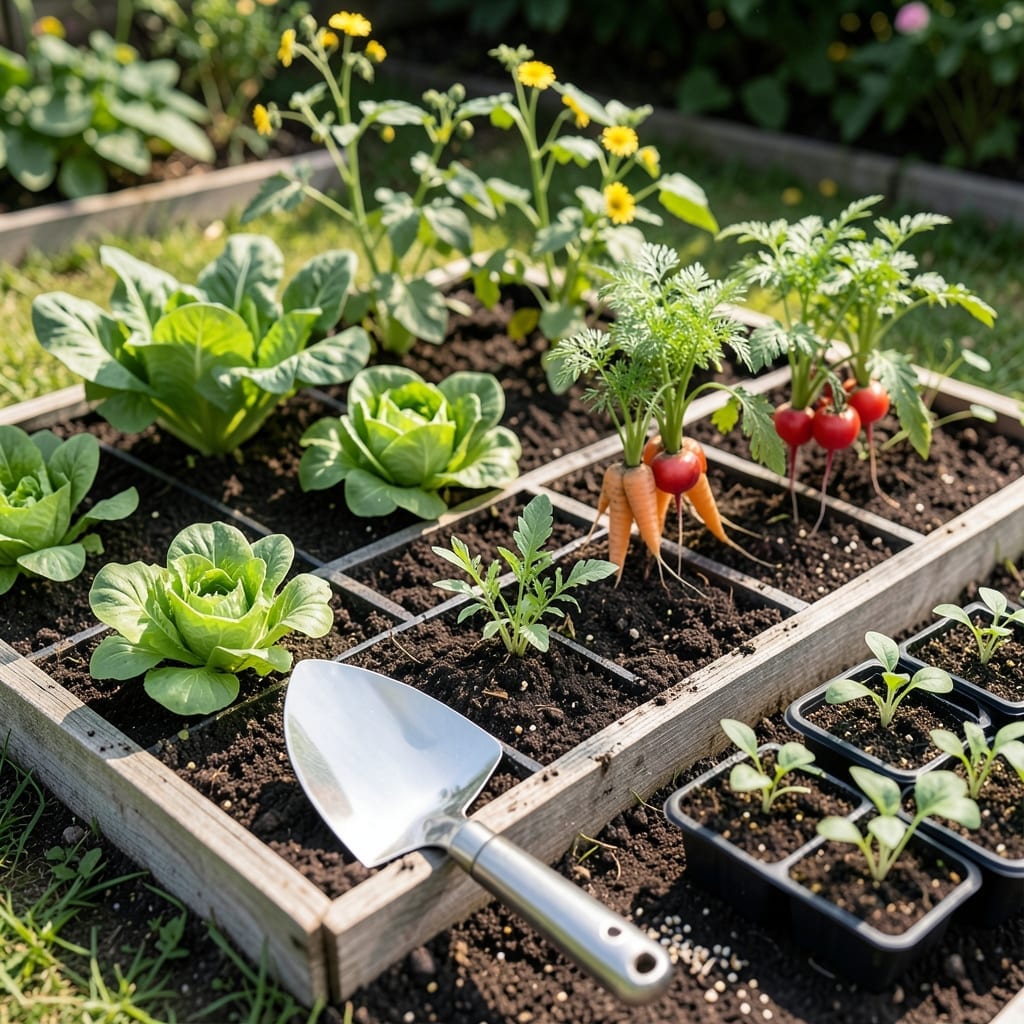
My first garden was a chaotic mess of overplanted rows and wasted space. Square foot gardening changed everything by turning a 4×4 foot plot into a powerhouse of productivity.
No more guessing about spacing or wasting seeds. Each 1-foot square holds exactly what it should—16 carrots, 1 tomato, or 4 lettuce plants—with zero wasted space. The grid system keeps everything organized and accessible.
You’ll harvest 5x more from the same area compared to traditional rows. Plus, the raised beds mean better soil, fewer weeds, and no compacted earth from foot traffic.
Works for veggies, herbs, and flowers, even on patios or balconies. Here’s how to set it up right the first time.
Square foot gardening can sometimes underperform, but understanding the root causes helps you fix them. Here are the most common reasons:
Poor soil structure or nutrient deficiencies directly impact plant growth. In square foot gardening, Mel’s Mix (a blend of compost, peat moss, and vermiculite) is ideal. If your soil lacks organic matter or has imbalanced pH, plants struggle to absorb nutrients. Test your soil annually and amend it with compost to maintain fertility.
Overwatering or underwatering disrupts root development. In small, concentrated spaces like square foot gardens, drainage is critical. If water pools on the surface, roots suffocate; if soil dries out too quickly, plants wilt. Use a moisture meter to monitor levels and water deeply but infrequently to encourage strong root systems.
Most vegetables need 6–8 hours of sunlight daily. If your square foot garden is in a shady spot, plants grow leggy or fail to produce. Rotate crops or use reflective surfaces to maximize light exposure. For shaded areas, opt for leafy greens (like lettuce) that tolerate less sun.
Dense plantings in square foot gardens can attract pests or foster fungal diseases. Companion planting (e.g., marigolds to deter nematodes) and crop rotation reduce risks. Remove infected plants immediately to prevent spread, and avoid overhead watering to minimize fungal spores.
Even the best-planned square foot gardens can run into trouble. Here’s how to troubleshoot and prevent common problems, keeping your garden thriving with minimal effort.
If plants struggle to grow, your soil may lack nutrients. Fix it by mixing in compost or aged manure to boost fertility. Test soil pH (aim for 6.0–7.0) and amend with lime (to raise pH) or sulfur (to lower it) as needed. Prevention tip: Refresh soil with compost every season to maintain richness. 💡
Too many plants competing for space? Remove weaker seedlings, leaving the strongest to grow. For root crops like carrots, thin to the recommended spacing (usually 2–3 inches apart). Prevention tip: Follow the “one plant per square foot” rule for large plants (e.g., tomatoes) and 4, 9, or 16 per square for smaller ones (e.g., radishes, lettuce). ✨
Wilting or yellowing leaves often signal over- or under-watering. Fix it by watering deeply 1–2 times per week (more in heatwaves) and ensuring the top inch of soil dries between waterings. Use drip irrigation to target roots and avoid fungal issues. Prevention tip: Mulch with straw to retain moisture and reduce evaporation. 🌡️
See chewed leaves or aphids? Handpick pests or spray with neem oil or insecticidal soap. Encourage beneficial insects (like ladybugs) by planting companion flowers (e.g., marigolds). Prevention tip: Rotate crops annually and remove debris to deter pests from overwintering. 🎯
Small fixes can make a big difference—keep it simple, and your square foot garden will reward you with bountiful harvests!
Standard beds are 4×4 feet with a 1-foot grid for easy access. You can go smaller, like 2×4 feet, but keep depth at least 6 inches for most plants.
Use the spacing guide: 1 plant per square for large items like tomatoes, 4 for medium (peppers), or 16 for small (carrots). Always check seed packets for specifics.
No—Mel’s Mix (1/3 compost, 1/3 peat moss, 1/3 vermiculite) is ideal. Regular soil compacts and drains poorly in raised beds.
Check soil daily—water when the top 1 inch feels dry. Use drip irrigation to avoid wetting leaves, which can cause disease.