
Beautiful Plants For Your Interior
Beautiful Plants For Your Interior
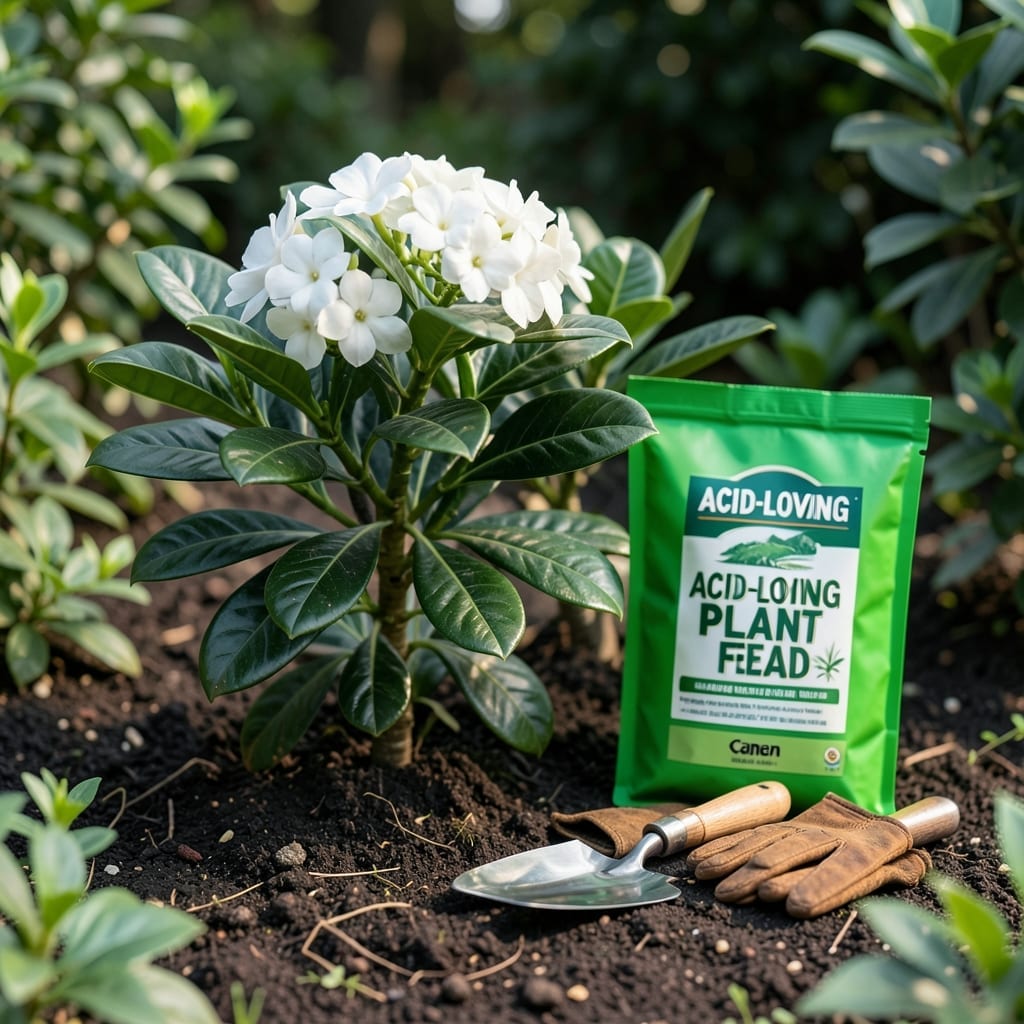
Gardenias 🌸 thrive on acidic soil, but getting the pH balance right can be tricky. The right acid fertilizer unlocks vibrant blooms and lush foliage.
Without proper acidity, these beautiful shrubs struggle with nutrient uptake, leading to yellow leaves and weak growth. I’ve seen firsthand how the right approach transforms a struggling plant.
Discover how to give your Gardenia the perfect boost for healthier roots and more abundant flowers this season.
Gardenias are acid-loving plants that demand a soil pH between 5.0-6.0 to thrive. Without this, they can’t absorb essential nutrients like iron, leading to yellow leaves and poor growth.
I’ve seen many gardeners struggle with iron chlorosis, a common issue when soil pH is too high. This condition starves the plant of iron, even if it’s present in the soil, because the roots can’t take it up efficiently.
| Requirement | Specification |
|---|---|
| Ideal pH Range | 5.0-6.0 |
| Key Nutrient | Iron |
| Common Deficiency | Iron Chlorosis |
| Soil Test Method | Home pH kit |
| Sign of pH Imbalance | Yellow leaves, stunted growth |
Acid fertilizers work by lowering soil pH, making nutrients like iron, manganese, and zinc more available. These fertilizers often contain sulfur or ammonium sulfate, which help create the acidic environment gardenias crave.
When I first started growing gardenias, I didn’t realize how critical pH was. After testing my soil, I found it was too alkaline. A few applications of acid fertilizer brought it into the ideal range, and my plants responded with darker green leaves and more blooms.
If you notice yellowing between leaf veins, that’s a classic sign of iron deficiency. A soil test can confirm if your pH is too high. I always recommend testing before applying any amendments to avoid over-acidifying.
Organic options like cottonseed meal or pine bark fines can also acidify soil naturally. These are great for gardeners who prefer chemical-free solutions and want to improve soil structure at the same time.
Remember, gradual adjustments are key. Sudden pH changes can shock your gardenias. I apply acid fertilizer in early spring and late fall, following package instructions for dosage to avoid overdoing it.
Consistent monitoring is crucial. I retest my soil every 2-3 months during the growing season to ensure the pH stays in the sweet spot. This proactive approach keeps my gardenias healthy and blooming profusely.
With the right acid fertilizer and careful pH management, your gardenias will reward you with lush foliage and fragrant flowers that make your garden the envy of the neighborhood 🌸
Choosing the right acid fertilizer can make all the difference for your gardenias. I’ve tested several types, and each has unique benefits for soil acidification and nutrient delivery.
From sulfur-coated urea to organic cottonseed meal, the options vary in how quickly they work and how long they last. Some provide immediate pH adjustments, while others offer slow-release benefits.
| Fertilizer Type | pH Impact | Application Frequency |
|---|---|---|
| Sulfur-Coated Urea | Fast acidification | Every 4-6 weeks |
| Ammonium Sulfate | Immediate pH drop | Monthly |
| Chelated Iron | Targeted iron boost | As needed |
| Cottonseed Meal | Slow, natural acidification | Seasonally |
Sulfur-coated urea is my top pick for quick results. It lowers pH effectively while providing essential nitrogen. However, it requires careful dosing to avoid over-acidification.
Ammonium sulfate works fast but can be harsh on sensitive plants. I use it sparingly for emergency pH corrections. Always water deeply after application to prevent root burn.
For organic gardeners, cottonseed meal is a fantastic choice. It breaks down slowly, improving soil structure while gently acidifying. I mix it into the soil at planting and reapply in early spring.
Chelated iron is perfect when you notice yellow leaves between veins. It’s a direct solution for iron deficiency without drastically altering soil pH. I apply it as a foliar spray for quick absorption.
Each fertilizer has its place in a gardenia care routine. I rotate between types to maintain optimal soil conditions and prevent nutrient imbalances. This approach keeps my gardenias thriving year after year 🌸