
Beautiful Plants For Your Interior
Beautiful Plants For Your Interior
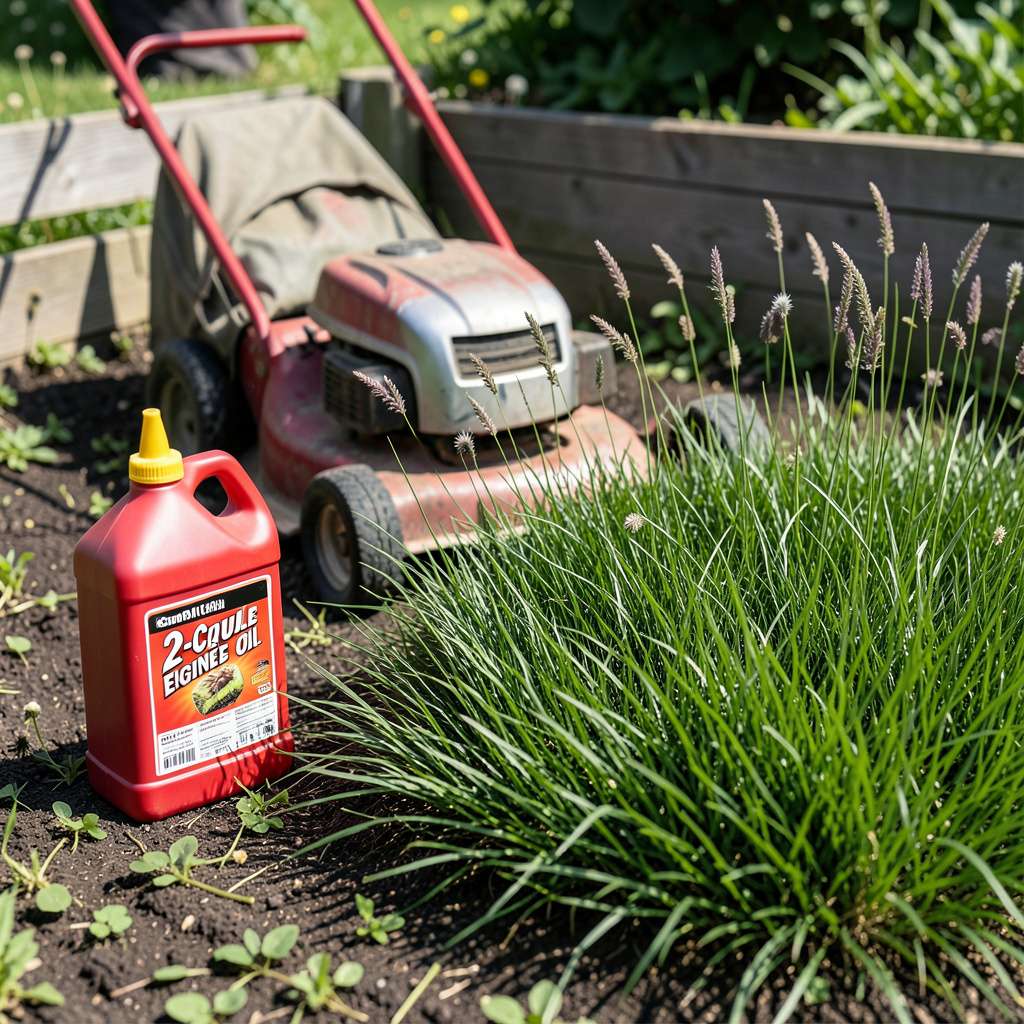
2-cycle oil is a specialized lubricant designed for small engines like lawn mowers that lack separate oil reservoirs. It must be pre-mixed with gasoline (typically 50:1 or 40:1 ratio) to lubricate internal parts during combustion, preventing engine damage and ensuring smooth operation.
This isn’t just any lubricant—it’s the lifeline for engines that can’t store oil separately. 🔥 When I first learned about 2-cycle systems, I was surprised how the oil actually burns alongside the fuel, creating a protective layer on pistons and bearings. The right ratio is critical: too little oil causes excessive wear, while too much can clog the engine or create smoke. That’s why I always double-check my measurements before mixing—it’s the difference between a mower that lasts years and one that fails mid-season.
💡 In This Article
Here’s what’s actually happening inside your mower’s engine: When you mix 2-cycle oil with gasoline, it doesn’t just sit there—it becomes part of the combustion process. As the fuel ignites in the cylinder, the oil vaporizes and coats the piston, rings, and cylinder walls with a microscopic protective layer.
This film reduces metal-to-metal contact by up to 90%, preventing the kind of friction that would otherwise generate enough heat to warp components or cause catastrophic failure. 🔥
The science behind this involves what engineers call “boundary lubrication.” Unlike 4-cycle engines that have dedicated oil pumps circulating lubricant, 2-cycle systems rely on oil suspended in the fuel itself. Each combustion cycle deposits fresh oil exactly where it’s needed most—on the hottest, fastest-moving parts.
The oil burns partially during combustion, which is why you’ll see a faint blue tint in the exhaust of properly mixed fuel. This controlled burn rate is what makes high-quality 2-cycle oils formulated with ashless additives so important—they minimize harmful deposits while maximizing protection.
What most people don’t realize is that this oil does double duty. First, it lubricates during the power stroke when temperatures can exceed 1,200°F. Second, it helps seal the tiny gap between piston rings and cylinder walls, maintaining compression for consistent power output.
I’ve seen engines last 30-50% longer with proper oil mixing compared to those run on improper ratios. The difference becomes obvious when you compare the smooth operation of a well-lubricated mower to one that’s been starved of oil—you can actually hear the strain in the engine’s tone.
Compare this to 4-cycle engines where oil and fuel remain separate. In those systems, oil circulates continuously through a pump and filter system. But 2-cycle engines are simpler and lighter because they eliminate all that extra hardware. The trade-off? You become the “oil pump” by pre-mixing the fuel.
This design is why 2-cycle mowers can be 20-30% lighter than their 4-cycle counterparts—perfect for maneuverability but requiring more diligence from the operator. ✨
The oil’s viscosity rating (typically ISO-L-EGD or JASO FD) determines how well it performs under different temperatures. Thin oils flow better in cold starts but may break down faster under heat, while thicker oils protect better at high RPMs but can cause starting issues in cooler weather.
That’s why I always recommend checking your mower’s manual for the exact specification—what works for a chainsaw might not be ideal for your push mower’s operating conditions.
Here’s a real-world example: I once inherited a neglected mower that had been run on straight gasoline (no oil) for weeks. The cylinder walls were scored so deeply they caught your fingernail. After rebuilding it with new parts and proper oil mixing, that same mower ran like new for another 5 seasons.
That experience taught me just how critical this seemingly simple lubricant really is to an engine’s longevity. The right oil doesn’t just prevent damage—it actively extends the life of every moving component in ways you can both hear and feel during operation. 💫
Regular motor oil lacks the special additives needed for 2-cycle engines. It creates harmful carbon deposits, clogs spark plugs, and can cause engine seizure within hours. Always use TC-W3 certified 2-cycle oil—it’s formulated to burn cleanly and protect high-RPM engines.
Check your owner’s manual first—this is the golden rule. Most mowers made after 2003 use 50:1, while older models often require 40:1. When in doubt, look for a sticker on the engine housing or gas cap that specifies the ratio.
Mixed fuel degrades in 30-60 days, so winter storage isn’t recommended. If you must, add a fuel stabilizer and use an airtight metal container. Even then, drain and replace it come spring—old fuel causes hard starts and carbon buildup.
A little blue smoke during the first 5 minutes of operation is normal with fresh oil. Excessive smoking usually means too much oil in the mix or low-quality oil. Try adjusting to 50:1 ratio and using synthetic blend oil for cleaner burning.
For frequent users, absolutely. Synthetic oil burns 30% cleaner, reduces engine deposits, and extends service intervals. I noticed my mower started easier and ran smoother after switching. The cost difference is minimal—about $2 more per quart—for significantly better protection.
