
Beautiful Plants For Your Interior
Beautiful Plants For Your Interior
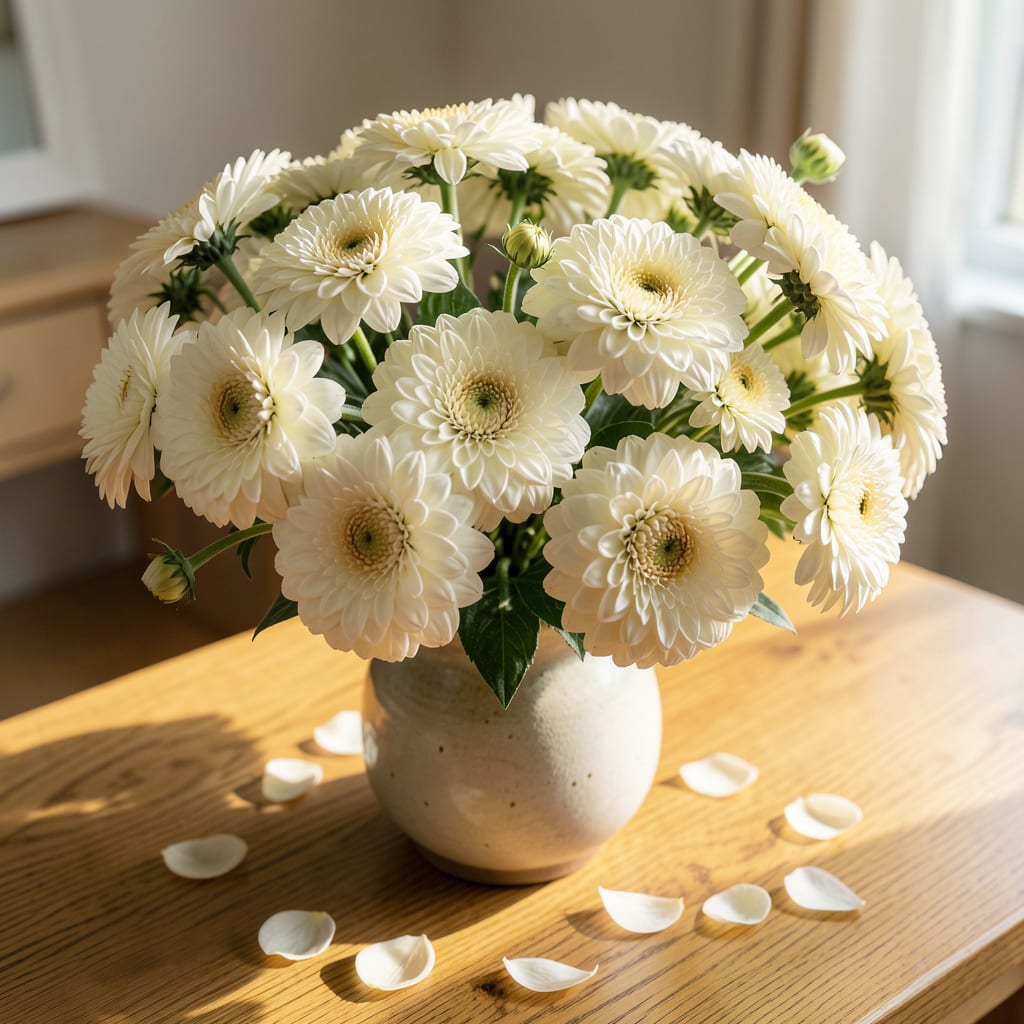
I planted my first Profusion Double White zinnias on a whim last spring. By July, they were the stars of my garden—pure white blooms that kept coming, no deadheading required.
These tough little plants laugh at heat, handle drought like champs, and attract pollinators all season. Perfect for beds, borders, or containers when you want non-stop color without the fuss.
📚 In This Guide
Here’s the method I use to get vibrant blooms that last from early summer straight through to frost.
Select a spot that receives full sun for at least 6-8 hours daily. This variety thrives in bright, direct light and will produce more flowers with consistent exposure. I’ve found that morning sun is particularly beneficial as it dries any dew quickly, reducing the risk of fungal issues.
Ensure the soil is well-draining—these plants dislike soggy roots. A slight slope or raised bed can help prevent water from pooling. Test drainage by digging a 1-foot deep hole, filling it with water, and checking if it drains within 1 hour.
Work the soil to a depth of 12-15 inches, removing any rocks or debris. Mix in 2-3 inches of compost to improve fertility and structure. This variety isn’t overly fussy, but rich, loose soil encourages strong root development and abundant blooms.
Aim for a soil pH between 6.0 and 7.0. A simple soil test kit can confirm this. If your soil is too acidic, add lime; if it’s too alkaline, incorporate sulfur. I always test in early spring so I have time to adjust before planting.
Sow seeds directly in the garden after the last frost when soil temperatures reach 70°F. Plant seeds ¼ inch deep and space them 6-12 inches apart. For faster results, start seeds indoors 4-6 weeks before the last frost and transplant seedlings once they have 2-3 true leaves.
If using seedlings, dig a hole slightly larger than the root ball and place the plant so the top of the root ball is level with the soil surface. Backfill and press the soil gently to remove air pockets. Water immediately after planting to help the roots settle.
Water deeply at the base of the plants to keep the soil evenly moist but not waterlogged. Aim for 1 inch of water per week, including rainfall. I water in the early morning to allow foliage to dry during the day, which helps prevent disease.
Apply a 2-3 inch layer of organic mulch, such as shredded bark or straw, around the plants. Mulch helps retain moisture, suppress weeds, and regulate soil temperature. Keep the mulch a few inches away from the stems to avoid rot.
Feed the plants with a balanced, water-soluble fertilizer every 2-3 weeks throughout the growing season. I use a 10-10-10 formula and follow the package instructions for dilution rates. This encourages continuous blooming and healthy growth.
Deadhead spent flowers regularly to promote new blooms. Simply pinch or cut off the faded flowers just above a set of leaves or a bud. This variety is self-cleaning, meaning it drops spent blooms on its own, but deadheading still encourages more prolific flowering.
Small adjustments make a big difference in how these flowers thrive.
Sunlight Strategy: That 6-8 hours of full sun daily isn’t just a suggestion—it’s essential. I learned the hard way that even partial shade results in leggy plants with fewer blooms. If your garden has limited sun, consider containers you can move to follow the light.
Soil Prep Insight: When working the soil to 12-15 inches deep in Step 2, don’t rush this. The first year I skimped on depth, my zinnias struggled to establish strong roots. Take the time to remove all rocks and debris—the looser the soil, the happier these plants will be.
Planting Precision: That ¼ inch planting depth for seeds might seem shallow, but it’s perfect for this variety. Plant deeper and you risk poor germination; shallower and the seeds can dry out. Trust the process—it works.
Watering Wisdom: The 1 inch per week rule in Step 4 is your guide, but here’s the thing: it’s better to water deeply twice a week than a little every day. This encourages roots to grow downward, making plants more drought-resistant.
Water deeply once or twice a week, depending on rainfall. These zinnias are drought-tolerant once established, but consistent moisture encourages vibrant blooms. Avoid overhead watering to prevent mildew.
Start seeds indoors 4-6 weeks before the last frost or sow directly after frost danger passes. They thrive in warm soil (70°F+) and bloom best with full sun.
Yes! Zinnia Profusion series is already low-maintenance. For similar ease, try marigolds or cosmos—both are drought-resistant and pollinator-friendly.
Check for insufficient sunlight (they need 6+ hours) or over-fertilization (too much nitrogen reduces blooms). Deadhead spent flowers to encourage continuous flowering.
Absolutely! Use a well-draining potting mix and a container at least 12 inches deep. They’re compact and perfect for patios or balconies.
