
Beautiful Plants For Your Interior
Beautiful Plants For Your Interior
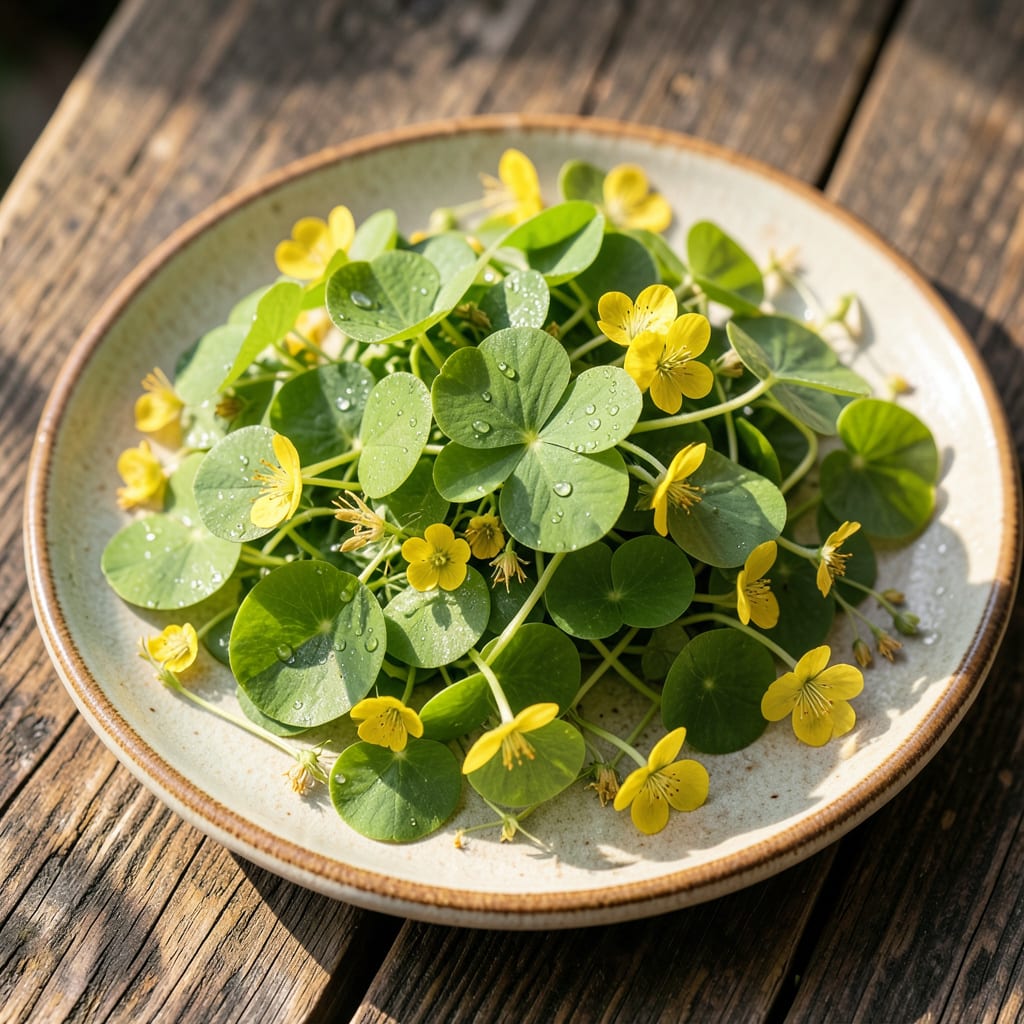
I first spotted yellow woodsorrel popping up between my garden pavers and almost pulled it as a weed.
Then I learned this bright little plant with its lemony greens and cheerful yellow flowers is both edible and surprisingly easy to cultivate. It thrives in poor soil, tolerates partial shade, and spreads happily with minimal care.
📚 In This Guide
Here’s how I spot and safely use this common backyard plant without confusion.
Yellow woodsorrel thrives in disturbed soil, so I always check garden beds, lawn edges, and along pathways first. Look for low-growing clusters with clover-like leaves arranged in groups of three. The leaves are heart-shaped and fold downward when touched or in direct sunlight.
This plant prefers partial shade to full sun and often appears after rain when the soil stays moist. I’ve found it popping up between pavers and in vegetable garden rows. It’s most visible from late spring through fall when the bright yellow flowers bloom.
Focus on the five-petaled yellow flowers that close at night and on cloudy days. Each flower is about ½ inch wide and sits on a slender stem. The seed pods are a giveaway—they’re long, narrow, and ribbed, resembling tiny okra pods.
Rub a leaf between your fingers. You’ll notice a slightly sour, lemony scent that’s characteristic of oxalis species. The stems are often tinged with red or purple, especially in cooler weather. These details help distinguish it from similar plants like clover or creeping wood sorrel.
Before eating any wild plant, I always do a small taste test. Pluck a single leaf and chew it slowly. Yellow woodsorrel has a tangy, citrus-like flavor that’s unmistakable. If the taste is bitter or soapy, it’s not woodsorrel—spit it out immediately.
Only harvest from areas you’re certain haven’t been treated with herbicides or pesticides. I avoid collecting plants from roadsides or public parks where chemical use is likely. A good rule: if you wouldn’t eat a tomato grown there, don’t eat the weeds either.
Pick young leaves and flowers in the morning when they’re most tender. I use clean scissors to snip stems just above the soil line, which encourages regrowth. The leaves can be eaten raw in salads, added to sandwiches, or steeped in hot water for a vitamin C-rich tea.
For a simple preparation, I toss a handful of fresh leaves and flowers with olive oil, salt, and a squeeze of lemon. The flavor pairs well with mild greens like lettuce or spinach. Remember, moderation is key—eating large quantities may cause stomach upset due to the oxalic acid content.
If you’d rather not have it taking over, pull plants by hand when the soil is moist, ensuring you remove the entire root system. I’ve found that a dandelion digger works well for stubborn roots. Because it spreads by seed and rhizomes, consistent removal is necessary to keep it in check.
Alternatively, embrace it as a ground cover in areas where it won’t compete with other plants. Its dense growth suppresses other weeds, and its flowers attract pollinators like bees and butterflies. Just be mindful it can become invasive in ideal conditions.
These practical insights will help you safely identify and enjoy this wild plant.
Identification Tip: The heart-shaped leaves arranged in groups of three are the most reliable clue. I always double-check by looking for the distinctive way they fold downward when touched or exposed to bright sunlight. This behavior is unique to oxalis species.
Safety First: That taste test in Step 3 is non-negotiable. I learned the hard way that some lookalikes can be bitter or soapy—spit out anything that doesn’t taste tangy and citrusy. Only harvest from chemical-free areas you’d trust for vegetables.
Harvesting Strategy: Morning is ideal for picking, as the leaves and flowers are most tender then. Use clean scissors to snip just above the soil to encourage regrowth, as mentioned in Step 4. The young growth has the best flavor and texture.
Usage Reminder: While the leaves make a great salad addition, remember the oxalic acid warning from Step 4. I limit myself to small handfuls at a time to avoid any stomach discomfort, especially when trying it for the first time.
Yes! All parts of yellow woodsorrel are edible, with a tangy, lemony flavor. The leaves, flowers, and seed pods can be eaten raw or cooked, but consume in moderation due to oxalic acid content.
Harvest in spring or early summer when the plant is young and tender. Avoid collecting from areas treated with pesticides or herbicides.
Yes, it can spread quickly in gardens and lawns. To control it, pull plants by hand or use mulch to suppress growth. Regular weeding helps prevent overgrowth.
Yes, yellow woodsorrel resembles clover, but its heart-shaped leaves and yellow flowers help distinguish it. Avoid plants with milky sap or bitter tastes, as they may be toxic.
Add fresh leaves to salads, soups, or teas for a citrusy zing. The seed pods can be pickled or used as a seasoning. Always wash thoroughly before use!
