
Beautiful Plants For Your Interior
Beautiful Plants For Your Interior
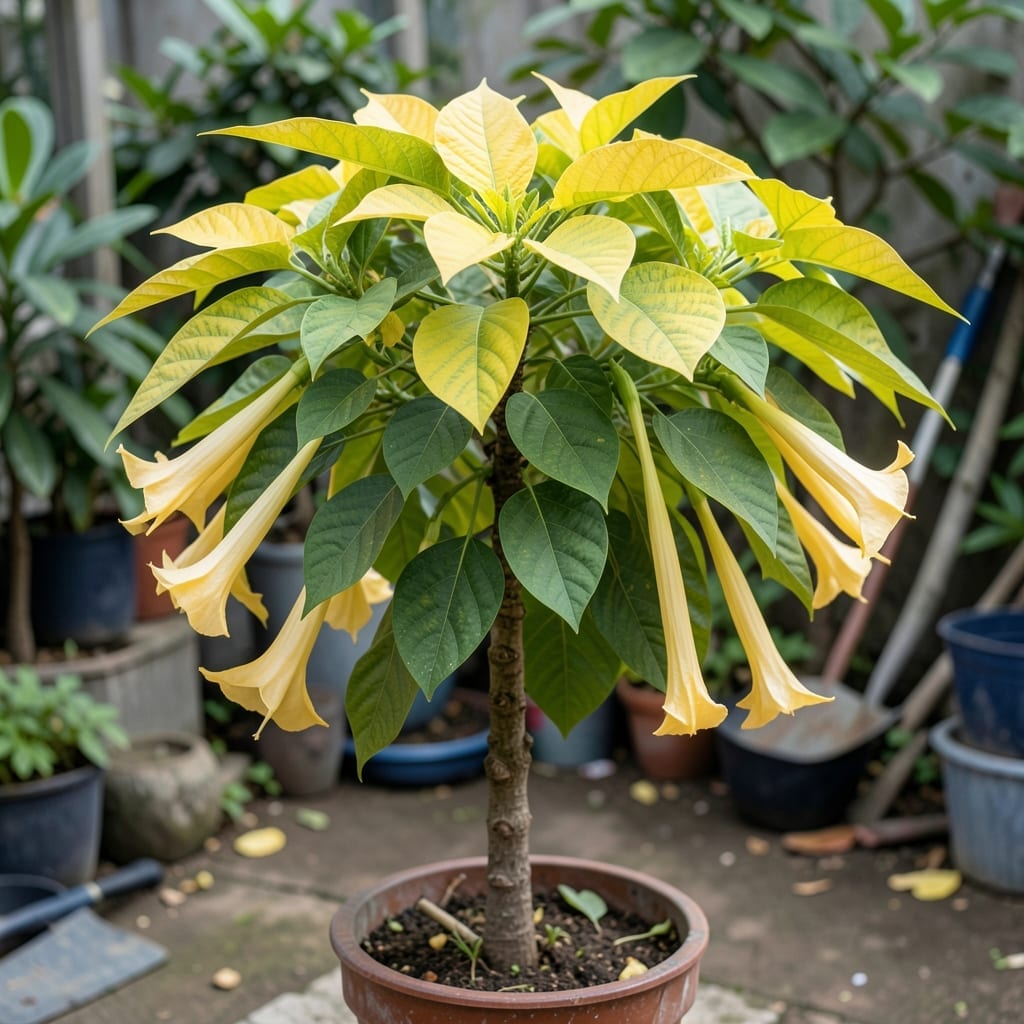
Yellow leaves on your angel trumpet aren’t just unsightly—they’re the plant’s way of waving a white flag. I’ve seen this happen when the soil stays too wet, when nutrients run low, or when pests move in uninvited.
Here’s the thing—most fixes are simple once you know what to look for. Check the roots, test the soil, and inspect the leaves. With the right approach, you can nurse it back to its vibrant green glory.
Nothing exotic—just garden basics to revive your angel trumpet.
| Ingredient | Amount | Notes |
|---|---|---|
| Neem Oil 🌿 | 1 piece | Cold-pressed for pests |
| pH Test Kit 🌡️ | 1 piece | Soil acidity check |
| Balanced Fertilizer 🧪 | 1 lb | 10-10-10 NPK ratio |
| Well-Draining Potting Mix 🌾 | 2 gallons | Peat or coconut coir base |
| Organic Compost 🌱 | 1 gallon | Aged 6+ months |
| Pruning Shears ✂️ | 1 piece | Sharp clean blades |
| Watering Can 💧 | 1 piece | Narrow spout preferred |
| Mulch 🪵 | 1 bag | Straw or wood chips |
[recipe_ingredient_scaler]
Neem oil and pH kits are at any garden center. I grab mine from Home Depot (the good stuff, not the dusty old stock). For fertilizer, look for balanced NPK—10-10-10 works for most cases. Potting mix should be light and fluffy, not compacted yard dirt.
No neem oil? Insecticidal soap works too (trust me on this). pH strips are a cheap alternative to digital meters. If your compost isn’t aged, bagged compost from Lowe’s does the trick. Mulch can be straw, chips, or even shredded leaves.
Store neem oil in a cool, dark place—it lasts 2+ years. Keep fertilizer sealed to prevent moisture damage. I label my potting mix with the date so I know when to refresh it.
Here’s my step-by-step approach to nurse your angel trumpet back to vibrant green health.
Using the watering can, deeply saturate the 2 gallons Well-Draining Potting Mix until water drains from the bottom. Angel trumpets hate soggy roots, so let the top 1-2 inches dry out between waterings. Stick your finger in the soil—if it feels damp beyond the first knuckle, hold off on watering.
If the soil stays wet for days, you’re likely overwatering. Empty any standing water in the saucer immediately. Yellow leaves often signal root stress from too much moisture rather than too little.
Use the pH Test Kit to check your soil’s acidity. Angel trumpets thrive in slightly acidic soil, between 6.0 and 7.0 pH. If the reading is outside this range, amending with the 1 gallon Organic Compost can help stabilize it naturally over 2-3 weeks.
If the soil is too alkaline, mix in a bit of the compost and retest after a week. Avoid sudden pH swings, as they can shock the plant further. You’ll notice new growth resuming its rich green color when the balance is restored.
Examine the undersides of leaves for aphids, spider mites, or whiteflies—common culprits behind yellowing foliage. If you spot pests, mix 1 tbsp of the Neem Oil with 1 quart of water and spray evenly over the leaves, focusing on the undersides. Reapply every 7-10 days until the infestation clears.
Neem oil disrupts pests’ life cycles without harming beneficial insects. Always apply in the evening to avoid burning the leaves in direct sunlight. You’ll see improvement as new leaves emerge pest-free and the yellowing slows.
Using the pruning shears, snip off severely yellowed leaves at their base. This redirects the plant’s energy toward healthy growth. Sterilize the shears with rubbing alcohol between cuts to prevent spreading any potential disease.
After pruning, sprinkle 1 lb Balanced Fertilizer lightly around the base of the plant, following the package instructions for dosage. Water it in thoroughly. Yellow leaves can also indicate nutrient deficiency, and a balanced fertilizer provides the nitrogen, phosphorus, and potassium the plant needs to recover.
You should see fresh, green growth within 2-3 weeks as the plant responds to the care.
Spread the 1 bag Mulch evenly around the base of the plant, keeping it 2-3 inches away from the stem to prevent rot. The mulch helps retain moisture, regulate soil temperature, and reduce stress on the roots.
Use a 2-3 inch layer for best results. As the mulch breaks down, it will also slowly enrich the soil with organic matter. This step supports long-term recovery and prevents future yellowing caused by environmental stress.
Angel trumpet plants thrive in slightly acidic to neutral soil. Test your soil’s pH using a home kit, aiming for a range of 6.0 to 7.0. If the pH is too high or low, amend with sulfur or lime to correct it. Yellow leaves often signal nutrient uptake issues tied to imbalanced pH.
Overwatering or poor drainage can lead to yellowing leaves. Water only when the top 1-2 inches of soil are dry. Use a well-draining potting mix and ensure containers have drainage holes. Consistency in moisture levels prevents stress that triggers discoloration.
Yellow leaves may indicate a nitrogen deficiency. Feed your plant with a balanced, water-soluble fertilizer every 2-4 weeks during the growing season. Avoid over-fertilizing, as excess salts can burn roots. A slow-release option works well for steady nutrient supply.