
Beautiful Plants For Your Interior
Beautiful Plants For Your Interior
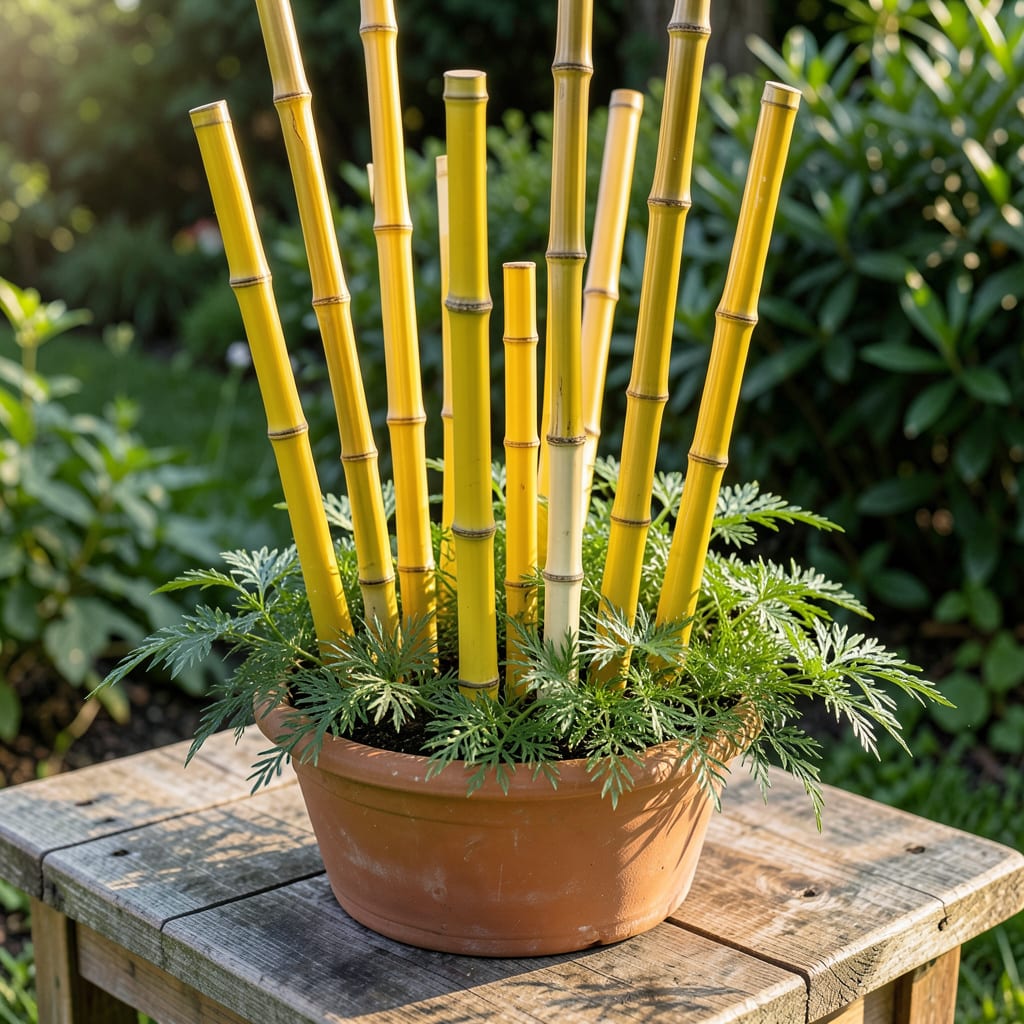
This bamboo transformed my backyard from exposed to private in one season. The golden stripes catch sunlight like liquid gold, creating living walls that grow faster than you’d expect.
It handles heat and humidity like a champ, but give it well-draining soil and room to run—this one spreads. The payoff is dense, rustling privacy that looks better every year.
📚 In This Guide
Here’s the method I use to establish this fast-growing privacy screen with minimal fuss.
Select a site with full sun to partial shade—this bamboo thrives in at least 6 hours of direct sunlight daily. The soil should be well-draining, as waterlogged roots will rot. I always test drainage by digging a 1-foot deep hole, filling it with water, and checking if it drains within 2 hours.
Avoid planting near underground utilities or structures, as the roots can spread aggressively. For containment, consider installing a 2-foot deep rhizome barrier around the planting area. This prevents unwanted spread while still allowing the bamboo to form a dense screen.
Loosen the soil in a wide area, at least 3 feet in diameter for each plant, to encourage root establishment. Mix in 2-3 inches of compost to improve fertility and drainage. The hole should be twice as wide as the root ball and just as deep—this gives roots room to spread outward.
If your soil is heavy clay, add sand or pine bark fines to break it up. I’ve found that amending the native soil (rather than replacing it) helps the bamboo transition better. Water the hole thoroughly before planting to settle the soil and remove air pockets.
Gently remove the bamboo from its container and loosen any circling roots. Place it in the hole so the top of the root ball is level with the surrounding soil. Backfill with the amended soil, pressing lightly to eliminate air gaps. Water deeply immediately after planting to help the soil settle around the roots.
For stability, especially in windy areas, stake the culms (stems) with bamboo stakes and soft ties. This prevents rocking, which can damage new roots. Space plants 3-5 feet apart for a dense privacy screen—closer spacing fills in faster but may require more frequent thinning later.
Spread a 2-3 inch layer of organic mulch (like wood chips or straw) around the base, keeping it 6 inches away from the culms to prevent rot. Mulch retains moisture, suppresses weeds, and insulates roots. Water deeply 2-3 times per week for the first month, then reduce to once a week once established.
Monitor for stress signs like yellowing leaves or wilting, which often indicate under or overwatering. This variety is drought-tolerant once established, but consistent moisture during the first growing season is critical for strong root development.
Fertilize in early spring with a balanced, slow-release fertilizer to support new growth. Prune any dead or weak culms at ground level to direct energy toward healthy stems. For a tidy appearance, remove lower branches up to 2-3 feet from the ground—this also improves airflow and reduces pest issues.
To control height, trim the top third of culms after they reach your desired height. This encourages bushier growth and maintains your screen’s shape. I check for new shoots in spring and summer, removing any that appear outside the desired area immediately to prevent unwanted spread.
Here’s what I’ve learned through trial and error to get this privacy screen thriving.
The Sunlight Factor: The 6 hours of direct sunlight mentioned in Step 1 is non-negotiable for vibrant, healthy growth. If your site gets less, you’ll notice weaker culms and slower spread. I always map the sun’s path across my yard before planting to confirm I’m hitting that minimum.
Drainage Test: That 1-foot deep hole test in Step 1 is your best insurance against root rot. If the water doesn’t drain within 2 hours, don’t plant yet—improve drainage with sand or organic matter first. I learned this the hard way after losing two plants to soggy soil.
Spacing Strategy: The 3-5 feet apart guideline in Step 3 balances quick coverage with long-term health. If you go closer than 3 feet, you’ll get a dense screen faster but will need to thin aggressively within a few years. I started at 4 feet apart and was happy with the results.
Mulch Placement: In Step 4, keeping mulch 6 inches away from the culms prevents rot while still retaining moisture. I’ve seen gardeners pile mulch right up against the stems, which always leads to problems. Use that 2-3 inch layer but respect the buffer zone.
This hardy bamboo can grow 2-4 feet per year under ideal conditions, reaching heights of 15-25 feet. Fast growth makes it perfect for quick privacy screens, but regular pruning helps control its spread.
Yes! Phyllostachys aureosulcata tolerates temperatures down to -10°F (-23°C), making it suitable for USDA zones 5-9. Mulch roots in winter for extra protection in harsher areas.
Install a rhizome barrier (HDPE plastic, 2-3 feet deep) or plant in large containers. Regularly check for escaping roots and trim them to keep growth contained.
For compact areas, consider clumping bamboos like Bambusa multiplex or Fargesia varieties. They grow densely but won’t spread aggressively like running bamboos.
Yellow leaves may signal overwatering, nutrient deficiency, or poor drainage. Test soil moisture and fertility, and ensure the plant gets partial sun. Prune dead foliage to encourage healthy growth.
