
Beautiful Plants For Your Interior
Beautiful Plants For Your Interior
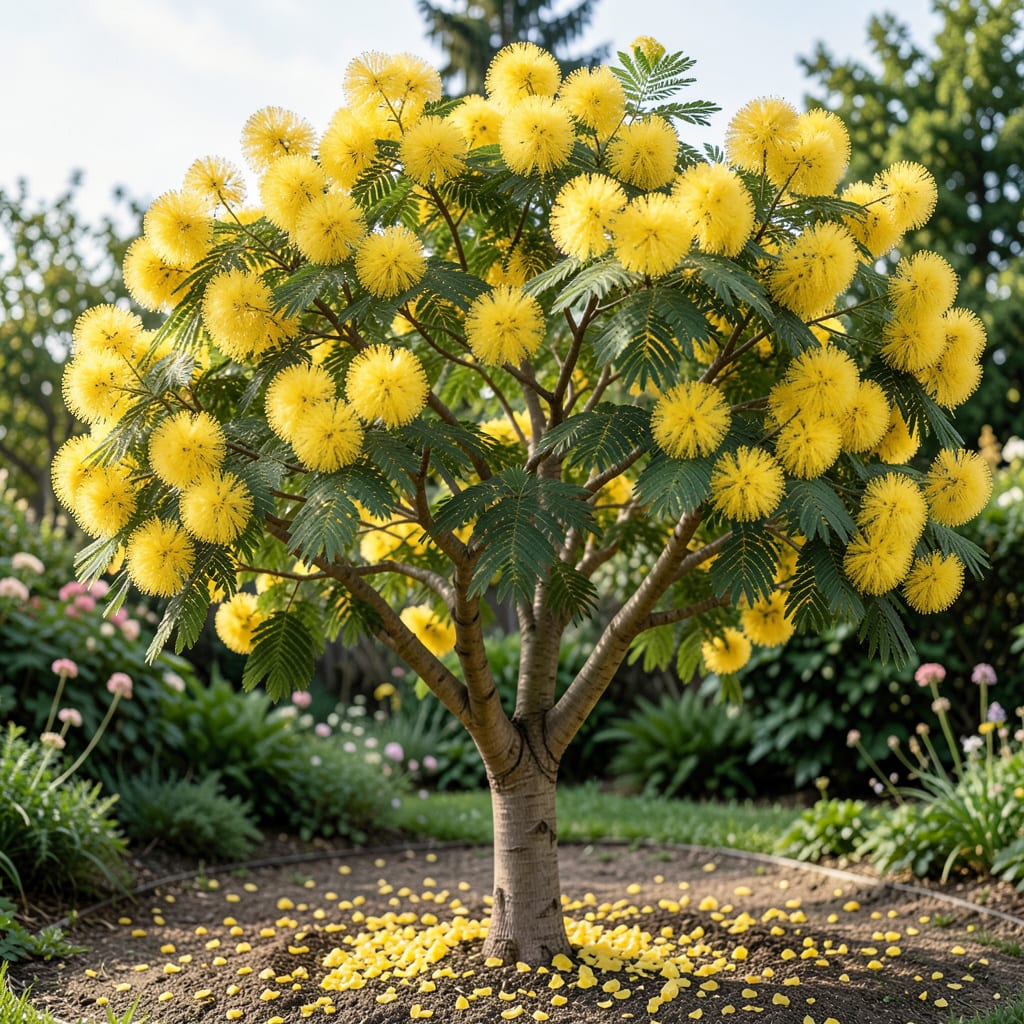
That first whiff of mimosa blooms hits different every summer afternoon. I planted mine three years back, and now the golden puffballs perfume my entire yard with their honeyed scent.
It thrives in full sun with well-drained soil, growing 20-30 feet tall with feathery foliage. You’ll get fragrant yellow flowers from late spring through summer, plus shade that feels like a natural umbrella.
📚 In This Guide
Here’s the straightforward method I use to establish these fragrant beauties in any sunny landscape.
Select a spot with full sun exposure—mimosa trees thrive with at least 6-8 hours of direct sunlight daily. The soil should drain well; these trees hate soggy roots. I test drainage by digging a 1-foot deep hole and filling it with water. If it drains within 1 hour, you’re good to go.
Avoid low-lying areas where water pools after rain. The ideal location also has room for the tree’s mature spread of 20-30 feet. Keep it at least 15 feet away from structures, driveways, or other trees to prevent future conflicts as it grows.
Dig a hole that’s twice as wide as the root ball but no deeper. Mimosa trees establish best when planted at the same depth they grew in the nursery container. I use the handle of my shovel to measure—if the root ball is 12 inches across, the hole should be 24 inches wide.
Loosen the soil at the sides and bottom of the hole with your shovel. This encourages roots to spread outward quickly. If your soil is heavy clay, mix in some compost to improve drainage, but don’t add more than 20% amendments—too much can create a “container effect” that prevents roots from growing outward.
Gently remove the tree from its container and check for circling roots. If you see any, tease them apart with your fingers to encourage outward growth. Place the tree in the hole, ensuring the top of the root ball sits 1-2 inches above the surrounding soil level—it will settle after watering.
Backfill with the original soil, tampling lightly as you go to remove air pockets. Create a 3-inch high watering berm around the edge of the hole to help direct water to the roots. Water thoroughly with 10-15 gallons immediately after planting to settle the soil.
Water deeply 2-3 times per week for the first 3-4 months, tapering off as the tree establishes. The soil should feel moist but not waterlogged at a depth of 2-3 inches. I check by sticking my finger in the soil—if it comes out clean, it’s time to water.
Apply a 2-3 inch layer of mulch around the base, keeping it 6 inches away from the trunk to prevent rot. Watch for wilting leaves in the first week—this is normal as the tree adjusts. If wilting persists beyond 5-7 days, increase watering frequency slightly.
Once established, mimosa trees are relatively drought-tolerant but perform best with occasional deep watering during dry spells. Fertilize in early spring with a balanced 10-10-10 formula, following package instructions. Prune only to remove dead or crossing branches—these trees bleed sap heavily when cut.
Monitor for pests like spider mites, which love the fine foliage. A strong blast of water often dislodges them, but for severe infestations, use horticultural oil. The tree’s fragrant yellow blooms should appear in late spring to early summer, filling your landscape with their sweet, honey-like scent.
Here’s what I’ve learned from planting and caring for these trees over the years.
Sunlight Requirement: Don’t compromise on the 6-8 hours of direct sunlight daily mentioned in Step 1. I tried planting one in partial shade once, and it grew leggy with sparse blooms. Full sun is non-negotiable for those fragrant yellow flowers and healthy growth.
Drainage Test: That 1-foot deep hole test in Step 1 works perfectly. If water doesn’t drain within 1 hour, either pick a new spot or improve drainage with amendments. Soggy roots are the fastest way to kill a mimosa tree.
Planting Depth: In Step 3, that 1-2 inches above soil level is crucial. I’ve seen trees planted too deep that struggled for years. The root ball will settle after watering with those 10-15 gallons, so don’t be tempted to plant it flush with the ground.
Watering Wisdom: During that first 3-4 months mentioned in Step 4, stick to the 2-3 times per week schedule. Overwatering is just as bad as underwatering. Use that finger test at 2-3 inches deep—it never fails me.
Water regularly during its first growing season, then reduce frequency. Prune in late winter to shape the tree and remove dead branches. Mimosa trees thrive in full sun and well-drained soil.
Expect fragrant, fluffy yellow blooms from late spring to early summer, typically May through July. The exact timing can vary slightly based on climate and local growing conditions.
Yes! Consider acacia, golden chain trees, or laburnum for comparable yellow flowers. These trees also offer vibrant color and can adapt to various landscapes.
Lack of flowers may be due to insufficient sunlight, poor soil drainage, or improper pruning. Ensure it gets at least 6-8 hours of sun daily and avoid heavy, waterlogged soil.
In some regions, mimosa trees can be invasive due to their self-seeding nature. Check local regulations and consider removing seedlings promptly to control spread.
