
Beautiful Plants For Your Interior
Beautiful Plants For Your Interior
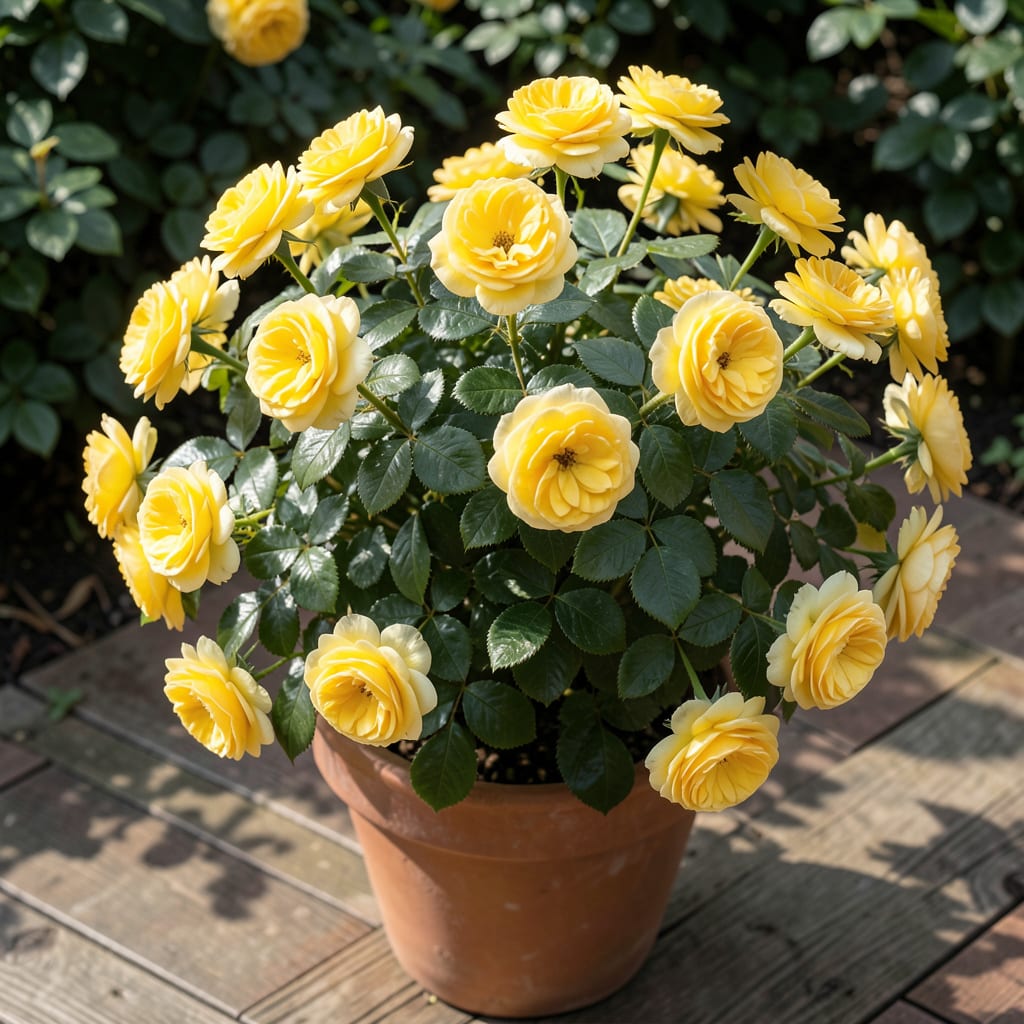
This rose changed my approach to gardening forever. 🌟 Yellow double knockout roses deliver months of vibrant blooms with almost zero fuss—no deadheading, no constant spraying, just reliable color from spring to frost.
I planted mine in full sun with decent drainage, and it laughed at drought while neighbors’ fussy roses wilted. The disease resistance means you spend more time admiring than worrying. Even my black thumb can’t kill these.
📚 In This Guide
Here’s the foolproof approach I use to get these shrubs thriving with maximum blooms and minimal effort.
Choose a location with full sun exposure (at least 6-8 hours of direct sunlight daily). This variety tolerates partial shade but blooms most prolifically in unfiltered sun. I always test the spot by marking where the afternoon shadow falls—any area that stays shaded past 3 PM won’t work.
The soil should drain well—dig a 12-inch deep test hole and fill it with water. If it drains within 1 hour, you’re good. If water remains after 2 hours, amend with compost or choose a raised bed. Roses despise wet feet, and this leads to root rot that’s hard to reverse.
Dig a hole twice as wide as the root ball but only as deep. The crown (where roots meet stems) should sit 1-2 inches above the surrounding soil level to prevent settling. I mound a small cone of soil in the hole center to support the root ball at the perfect height.
Backfill with native soil, gently firming as you go to eliminate air pockets. Water deeply with 5 gallons of water to settle the soil—you’ll see it drop 1-2 inches initially. This is normal. Add more soil if needed to maintain the crown height, then water again to ensure complete saturation.
For the first 2-3 weeks, water every 2-3 days unless rain provides 1 inch of moisture. After establishment, reduce to once weekly with deep soaking. I check soil moisture by sticking my finger 2 inches deep—if it feels dry, it’s time to water.
Always water at the base, never overhead, to prevent fungal diseases. A 2-3 inch layer of mulch around the plant (keeping it 3 inches away from the stems) retains moisture and suppresses weeds. You’ll notice the mulch also keeps roots cooler during 90°F+ days.
This variety blooms on new wood, so prune in early spring when you see new growth emerging. Remove any dead, diseased, or crossing branches first. Then shape the plant by cutting back one-third of the previous year’s growth to 12-18 inches tall.
Deadhead spent blooms regularly by snipping just above a 5-leaflet leaf. This encourages new flower production. I carry a small pair of bypass pruners in my pocket during the growing season—it makes the task effortless and keeps the plant looking tidy. You’ll get a second flush of blooms 4-6 weeks after each deadheading session.
Apply a balanced rose fertilizer (10-10-10 or 12-12-12) in early spring as new growth appears. I use 1 cup of granular fertilizer per plant, scattering it 6 inches from the base and lightly scratching it into the soil. Water thoroughly afterward to activate the nutrients.
Repeat the application every 6-8 weeks through the growing season, with the final feeding no later than 6 weeks before your first expected frost. Over-fertilizing leads to excessive leafy growth at the expense of blooms, so stick to the schedule. You’ll see darker green leaves and more abundant flowers when feeding properly.
Here’s what I’ve learned from years of growing these vibrant blooms with minimal fuss.
Sunlight Strategy: That 6-8 hours of direct sun isn’t just a suggestion—it’s the difference between sparse blooms and a bush covered in yellow doubles. I once planted one in a spot that hit shade at 3 PM sharp, and the difference in flower production was shocking. Test your location by tracking shadows at different times of day.
Drainage Test: Don’t skip the 12-inch deep test hole. If water hasn’t drained within 1 hour, your roses will suffer. I learned this after losing two bushes to root rot in a low spot. Raised beds or amending with compost can save you from the same heartache.
Planting Precision: The crown sitting 1-2 inches above soil level might seem fussy, but it prevents settling that can bury the stems and cause rot. I mound soil in the hole center like a little throne for the root ball—it keeps everything at the perfect height.
Watering Wisdom: Those first 2-3 weeks of every 2-3 days watering are critical for establishment. After that, deep weekly soaks encourage strong root growth. And never water overhead—keeping leaves dry prevents fungal issues that can ruin your blooms.
Water deeply 1-2 times per week, ensuring the soil is moist but not soggy. During extreme heat, increase frequency. These roses are drought-tolerant once established, but consistent moisture encourages vibrant blooms.
Prune in late winter or early spring, just as new growth begins. Remove dead or diseased wood and shape the bush to encourage airflow. Light pruning after each bloom cycle can also promote continuous flowering.
Consider ‘Julia Child’ (a bright yellow floribunda) or ‘Sunflare’ (a disease-resistant shrub rose). Both offer similar color and low-maintenance benefits. Check local nurseries for availability.
Yellow leaves often indicate overwatering, poor drainage, or nutrient deficiencies. Test soil pH (aim for 6.0-6.5) and ensure proper drainage. A balanced fertilizer can help restore health.
They thrive in well-draining, loamy soil enriched with organic matter. Amend heavy clay or sandy soil with compost for better results. These roses are adaptable but perform best in fertile, slightly acidic soil.
