
Beautiful Plants For Your Interior
Beautiful Plants For Your Interior
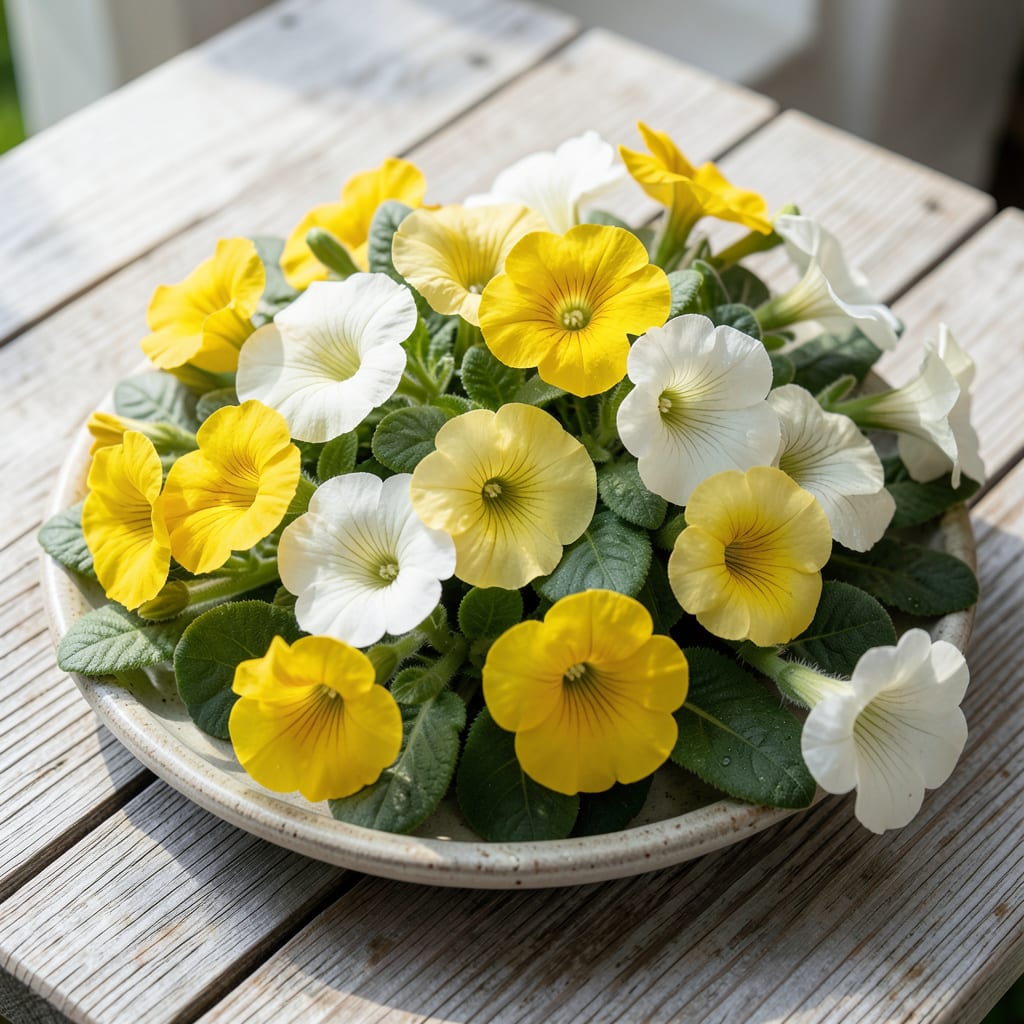
I still remember the first time I saw bicolor petunias swaying in the breeze, their sunny centers framed by crisp white edges. It was like the garden had dressed up for a party.
These cheerful bloomers thrive in full sun with well-drained soil, rewarding you with waves of color from spring until frost. They’re drought-tolerant once established, making them perfect for busy gardeners or hot climates.
📚 In This Guide
Here’s the method I rely on to get stunning bicolor blooms from spring through fall.
Choose a spot that receives full sun for at least 6-8 hours daily. Petunias thrive in bright light, and insufficient sun leads to leggy growth and fewer flowers. I always check the area at midday when the sun is strongest—this is when your plants will do most of their growing.
Ensure the soil drains well. If water pools after rain, amend with compost or sand. You’ll see healthy growth when the soil remains moist but never soggy for more than an hour after watering.
Loosen the soil to a depth of 12-15 inches and remove any weeds or debris. Petunias have shallow roots, so a loose, fertile top layer matters most. I mix in a 2-3 inch layer of compost to provide nutrients without overwhelming the plants.
If planting in containers, use a well-draining potting mix. For garden beds, a slightly acidic to neutral pH (around 6.0-7.0) works best. Test your soil if you’re unsure—yellowing leaves often signal pH issues.
Space plants 10-12 inches apart to allow for air circulation and growth. Dig a hole slightly larger than the root ball, place the plant in, and gently firm the soil around it. Water immediately after planting to settle the soil and remove air pockets.
If starting from seeds, sow them on the soil surface (they need light to germinate) and press them in lightly. Keep the soil consistently moist until germination, which typically occurs in 7-14 days. Once seedlings have 2-3 true leaves, thin them to the recommended spacing.
Water petunias when the top 1 inch of soil feels dry to the touch. Aim for 1 inch of water per week, including rainfall. I water at the base to keep leaves dry and prevent disease—wet foliage in the evening invites trouble.
Fertilize every 2-3 weeks with a balanced, water-soluble fertilizer to encourage continuous blooming. You’ll see a surge in flower production within a week of feeding if the plants were previously nutrient-deficient.
Remove spent blooms regularly to encourage new flowers. Pinch off the faded blooms just above a set of leaves or a branching point. This prevents seed formation and redirects energy to new growth.
For bushier plants, trim back the stems by one-third every 4-6 weeks. This promotes branching and results in a fuller, more compact plant. Don’t hesitate to cut back leggy stems—petunias recover quickly and reward you with more blooms.
Small adjustments in your approach can make a noticeable difference in your results.
Sunlight Strategy: That 6-8 hours of daily sun mentioned in Step 1 is non-negotiable for vibrant blooms. If your garden only gets morning sun, prioritize east-facing spots where the light is strongest. I learned this the hard way after planting a batch in partial shade—they grew tall and sparse with barely any flowers.
Soil Prep Insight: When loosening the soil to 12-15 inches in Step 2, don’t skip the compost layer. That 2-3 inch addition transforms mediocre soil into a nutrient-rich home for your petunias. The difference in growth rate and bloom quantity between amended and unamended soil is remarkable.
Watering Wisdom: The 1 inch of water per week guideline from Step 4 works best when delivered in the morning. Evening watering often leads to damp foliage overnight, which invites fungal issues. Stick your finger in the soil—if the top inch feels dry, it’s time to water, regardless of the calendar.
Pruning Perspective: That one-third trim every 4-6 weeks in Step 5 might feel drastic, but petunias bounce back fast. The first time I did this, I was nervous, but within two weeks, my plants were twice as bushy with significantly more blooms. Don’t overthink it—just cut and watch them thrive.
Water them weekly, ensuring well-draining soil, and place in full sun (6+ hours daily). Deadhead faded blooms to encourage more flowers. Fertilize lightly every 2-3 weeks with a balanced formula for vibrant growth.
Plant after the last frost in spring when soil temps reach 60°F. They thrive in warm weather, so late spring to early summer is ideal. In mild climates, you can also plant in early fall.
Yes! Use pots with drainage holes and a lightweight potting mix. Containers allow easy movement for optimal sunlight. Water more frequently, as potted petunias dry out faster.
Lack of sunlight, over-fertilization, or insufficient water may be the cause. Ensure they get enough light, avoid high-nitrogen fertilizers, and keep the soil moist but not soggy.
Try bicolor varieties like ‘Purple Wave’ or ‘Easy Wave’ for similar vibrancy. Marigolds or pansies also offer cheerful, multicolored blooms for garden beds.
