
Beautiful Plants For Your Interior
Beautiful Plants For Your Interior
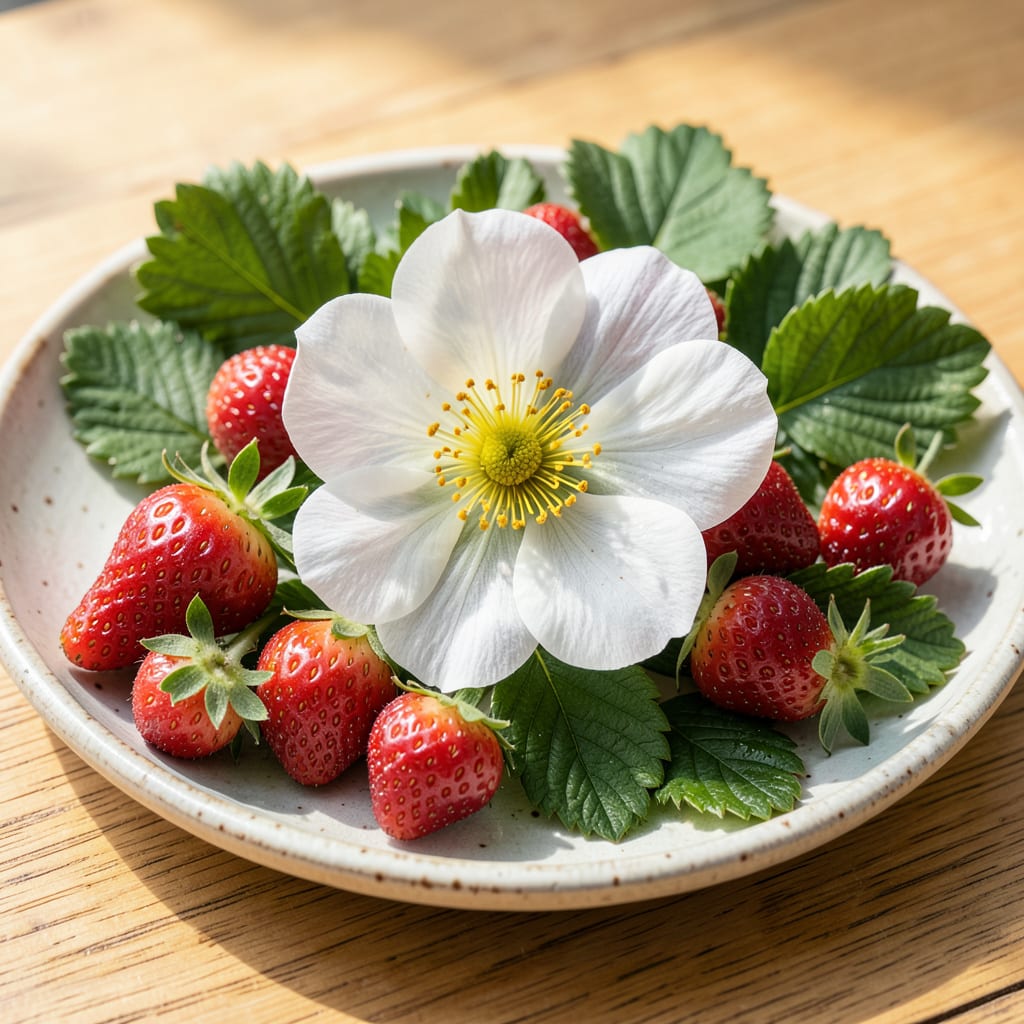
Those little yellow flowers peeking through your lawn might be more than weeds. I’ve spotted wild strawberries thriving in sun-dappled corners where nothing else grows, their bright blooms promising sweet fruit.
The plants spread fast, forming a low-maintenance ground cover that attracts pollinators. With minimal care, you’ll get both pretty flowers and edible berries—just watch for the telltale three-part leaves and tiny white centers.
📚 In This Guide
Here’s how I distinguish true wild strawberry blooms from lookalikes in any garden setting.
Wild strawberry flowers display five white petals with a bright yellow center of numerous stamens. The petals are slightly rounded and often overlap at the edges, creating a delicate, cup-shaped bloom. I always check for this exact petal count—some impostors have four or six petals.
The center should appear densely packed with tiny yellow structures. If you see a single central column or different coloration in the middle, it’s not a wild strawberry. The flowers grow in small clusters on slender stems that rise just above the foliage.
True wild strawberry plants have trifoliate leaves—each leaf divided into three oval leaflets with serrated edges. The leaves grow in a low, spreading habit from a central crown. I look for the characteristic hairy stems and leaf petioles that distinguish wild strawberries from other yellow-centered flowers.
The plants form runners (stolons) that root at nodes, creating new plantlets. This growth pattern helps confirm identification, as many lookalikes lack this spreading behavior. The foliage typically stays under 3 inches tall unless growing in particularly rich soil.
After pollination, the flower’s center swells into a small, green receptacle that eventually turns red. I check for this developing fruit at the base of the spent flower. The fruit forms on the outside of the former bloom, not from the ovary within as in most berries.
Wild strawberry fruits are tiny—usually 1/4 to 1/2 inch in diameter—and covered with small seeds. If the plant produces larger fruit or the seeds are arranged differently, it’s likely a different species. The fruit develops gradually over 4-6 weeks from pollination.
Wild strawberries thrive in full sun to partial shade and prefer well-drained, slightly acidic soils. I typically find them in meadows, woodland edges, or disturbed areas. They bloom from early spring through early summer, with peak flowering in most regions occurring in May.
The plants are hardy in USDA zones 4-8 and often grow in patches where conditions are ideal. If you’re seeing similar flowers in deep shade or very wet areas, they’re probably not wild strawberries. The blooms close at night and in rainy weather, another helpful identification clue.
Here are the key details that separate accurate identification from common mistakes in the field.
Flower Structure Check: In Step 1, always verify the exact count of five white petals with a bright yellow center of numerous stamens. Some lookalikes have four or six petals, and the center should never appear as a single column. The cup-shaped bloom with overlapping edges is a definitive trait of wild strawberries.
Foliage Confirmation: For Step 2, focus on the trifoliate leaves with serrated edges and hairy stems. This is non-negotiable—if the leaves aren’t divided into three oval leaflets or the stems lack that characteristic hairiness, you’re likely looking at an impostor. The low, spreading growth pattern with runners is another dead giveaway.
Fruit Development Clue: Step 3’s mention of the tiny fruit (1/4 to 1/2 inch) forming on the outside of the bloom is critical. Unlike most berries, wild strawberries develop their fruit from the receptacle, not the ovary. If the fruit is larger or the seeds are arranged differently, it’s not the real deal.
Wild strawberries (Fragaria vesca) typically have white flowers, but yellow-flowering varieties exist due to natural mutations or specific cultivars. These are still edible and safe if correctly identified.
Yes! The flowers, leaves, and berries of wild strawberries are edible. Yellow blooms are just as safe as white ones—just ensure you’ve correctly identified the plant to avoid lookalikes like Potentilla.
Wild strawberry flowers (yellow or white) usually bloom in spring to early summer, depending on climate. In warmer regions, they may appear as early as April, while cooler areas see blooms in May or June.
Check for five-petal flowers, trifoliate leaves with serrated edges, and low-growing runners. Wild strawberries also have a distinct strawberry scent. Avoid plants with smooth leaves or different growth habits.
Ensure it’s getting full sun to partial shade and well-drained soil. Lack of fruit may also mean the plant is young or needs pollinators. Hand-pollinate gently with a brush if bees are scarce.
