
Beautiful Plants For Your Interior
Beautiful Plants For Your Interior
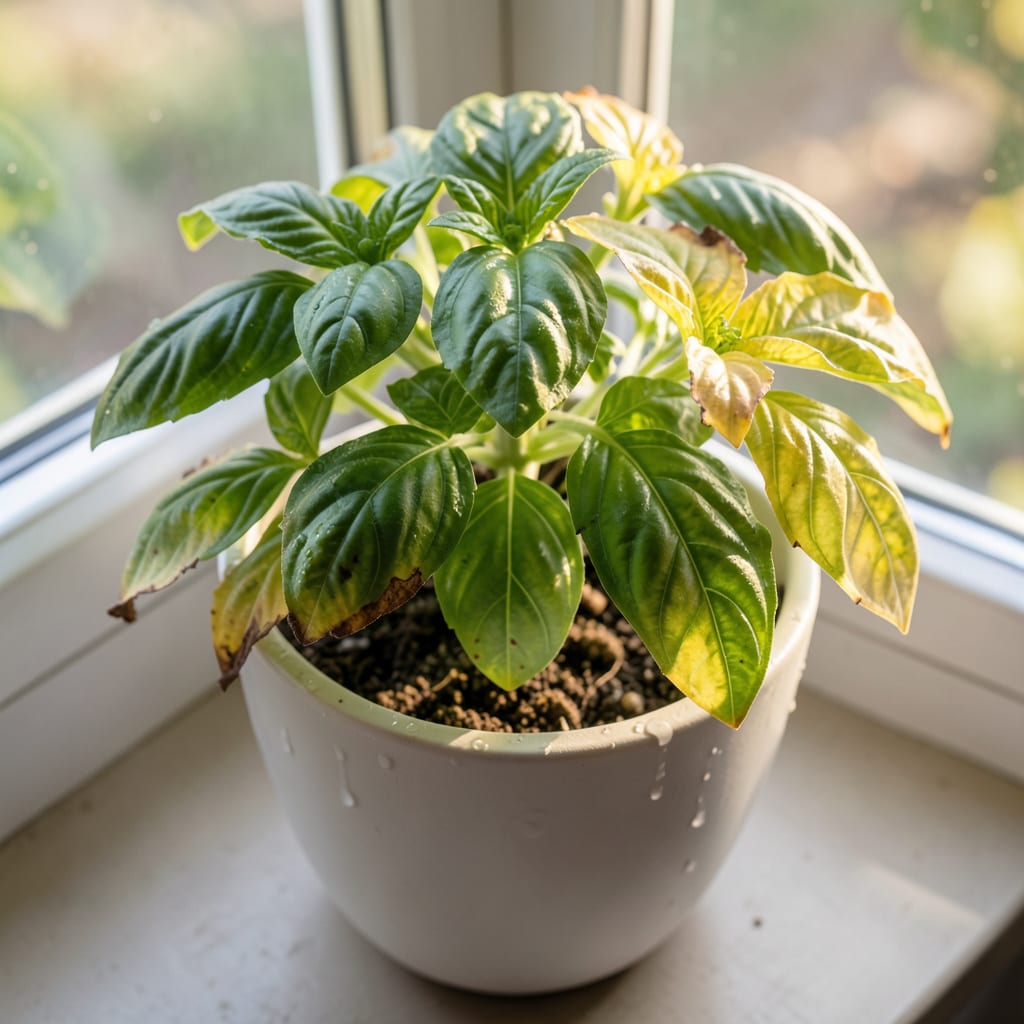
Yellow basil leaves hit me like a gut punch last summer. 🌱 I’d nurtured those plants from seed, only to watch the lower leaves turn sickly yellow overnight while the tops stayed green.
Turns out, it’s usually one of three culprits: too much water, not enough nutrients, or a pest party I didn’t RSVP to. The good news? Basil bounces back fast once you fix the problem.
You’ll spot the difference within 3-5 days of adjusting your care. New growth comes in vibrant green, and the yellow leaves stop spreading like wildfire through your plant.
Works for potted plants, garden beds, or windowsill herbs. Here’s how to diagnose and revive yours.
Yellowing basil leaves are a sign of distress, often caused by several common issues. Here’s why it happens and what’s going wrong beneath the surface.
Basil thrives in well-draining soil. When roots sit in soggy conditions, they suffocate and rot, unable to absorb oxygen or nutrients. This triggers chlorosis (yellowing) as chlorophyll production halts. Check for waterlogged soil—if it feels like a wet sponge, you’re overwatering.
Basil needs 6–8 hours of direct sunlight daily to photosynthesize efficiently. Without enough light, the plant can’t produce sufficient chlorophyll, leading to pale or yellow leaves. Low-light conditions also weaken the plant, making it more susceptible to pests and diseases.
A lack of nitrogen, magnesium, or iron often manifests as yellowing. Nitrogen deficiency starts with lower leaves turning yellow, while magnesium shortage causes interveinal chlorosis (yellowing between veins). Iron deficiency, common in alkaline soils, also leads to yellowing, especially in new growth.
Sap-sucking pests like aphids, spider mites, or whiteflies drain the plant of vital nutrients, causing stress and discoloration. Their feeding disrupts the plant’s vascular system, leading to stunted growth and yellow, mottled leaves. Inspect the undersides of leaves for tiny invaders or webbing.
Basil is sensitive to cold. Temperatures below 50°F (10°C) can shock the plant, slowing its metabolism and nutrient uptake. Heat stress (above 90°F/32°C) can also scorch leaves, turning them yellow or brown. Sudden temperature swings are particularly damaging.
Don’t panic—yellow basil can often bounce back with the right care! Here’s how to tackle each common issue and restore your plant’s lush green leaves.
Let the soil dry out slightly between waterings. Stick your finger an inch into the soil—if it’s damp, wait a few days. Prevention: Use well-draining pots and water only when the topsoil feels dry. 💡 Pro tip: Add perlite to the soil mix to improve drainage.
Give your basil a deep soak until water drains from the bottom. Prevention: Check soil moisture regularly, especially in hot weather. Mulch can help retain moisture without waterlogging.
Use a balanced, water-soluble fertilizer (like 10-10-10) every 2-4 weeks. Yellow lower leaves? Add a nitrogen boost. Prevention: Refresh potting soil annually or use compost for steady nutrients.
Spray leaves with neem oil or insecticidal soap to evict pests. For severe infestations, prune heavily affected areas. Prevention: Inspect leaves weekly and keep plants in clean, airy spaces.
Move potted basil indoors if nights drop below 50°F (10°C). Shield outdoor plants with row covers. Prevention: Avoid placing basil near drafts or heat sources.
Remove yellow or moldy leaves immediately. Space plants to allow airflow, and water at the base (not overhead). Prevention: Use a fungicide spray if problems persist.
Water when the top 1-2 inches of soil feel dry. Typically every 2-3 days in hot weather, less in cooler months. Overwatering is a common cause of yellow leaves.
No, yellow leaves won’t recover, but new growth will be healthy once you fix the issue. Remove yellow leaves to redirect energy to new shoots.
A balanced 10-10-10 liquid fertilizer works well. For nitrogen deficiency, use a higher-nitrogen formula. Apply every 2-4 weeks during growing season.
Basil loves sun but can scorch in extreme heat. If leaves yellow with brown edges, provide afternoon shade in temperatures above 90°F (32°C).
