
Beautiful Plants For Your Interior
Beautiful Plants For Your Interior
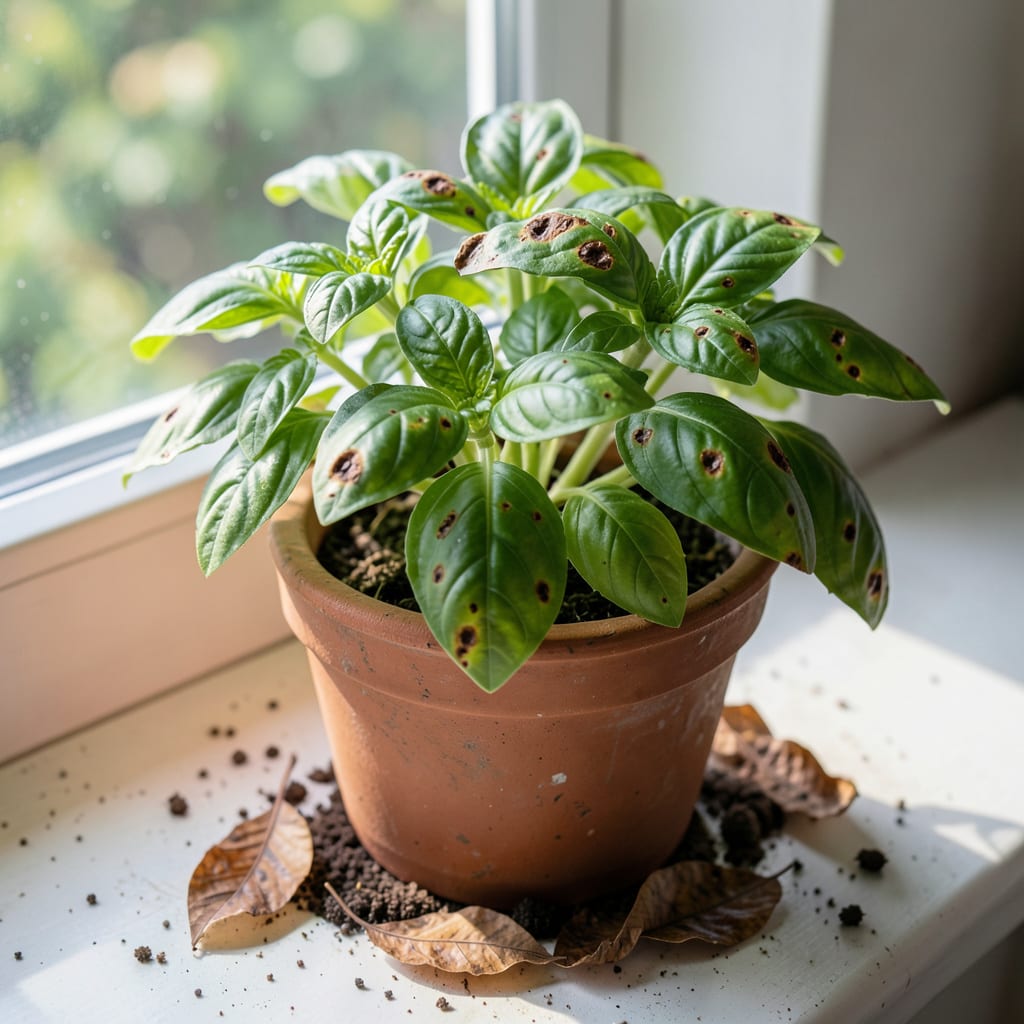
Brown spots on basil leaves always look worse than they are. I’ve seen this issue dozens of times, and the good news is most causes are fixable with a few simple adjustments.
Usually it’s too much water sitting on the leaves, not enough air moving around the plant, or soil that stays soggy. Basil hates wet feet. The spots start small, then spread if you don’t catch them early.
You’ll stop the damage within 3-5 days once you adjust your watering and improve airflow. The plant recovers quickly when you give it the right conditions.
Works for potted plants, garden beds, or windowsill herbs. Here’s exactly what to look for and how to fix it.
Brown spots on your basil plant are a sign of distress, and several factors can trigger them. Below are the most common causes, explained with actionable insights.
Downy mildew and leaf spot diseases (caused by Colletotrichum or Pseudoperonospora belbahrii) thrive in humid, poorly ventilated environments. These pathogens create dark, water-soaked spots that expand into brown or black lesions. Fungal spores spread via water splashes, so overwatering or wet foliage accelerates infection.
Basil roots suffocate in soggy soil, leading to root rot. As roots decay, they fail to absorb nutrients, causing leaves to develop brown, crispy spots. Waterlogged soil also promotes fungal growth. Check drainage holes in pots and ensure soil dries slightly between waterings.
Too much direct sunlight can scorch leaves, creating dry, brown patches—especially if the plant is dehydrated. Conversely, cold drafts (below 50°F/10°C) or sudden temperature drops shock basil, leading to necrotic spots. Basil thrives in consistent warmth (65–85°F/18–29°C) and partial shade in hot climates.
Sap-sucking pests like aphids, spider mites, or thrips pierce leaf tissues, causing yellow halos around brown spots. Their feeding disrupts chlorophyll, leading to discoloration. Inspect leaf undersides for tiny insects or webbing.
A lack of magnesium or potassium can cause interveinal browning, while calcium deficiency leads to tip burn. Over-fertilization (especially with high-nitrogen mixes) may also burn roots, manifesting as leaf spots. Test soil pH (ideal: 6.0–7.5) and adjust with compost or balanced fertilizer.
Here’s how to tackle brown spots on your basil, tailored to each likely cause:
Remove affected leaves with clean scissors and discard them away from the plant. Spray the remaining foliage with a copper-based fungicide or a homemade mix of 1 tsp baking soda + 1 quart water + a drop of dish soap. Improve airflow by spacing plants and watering at the base to keep leaves dry. Prevention tip: 💡 Avoid overhead watering and thin dense growth to reduce humidity.
Let the top 1–2 inches of soil dry out before watering again. Ensure your pot has drainage holes, and use well-draining soil. If root rot is suspected, repot the basil in fresh soil after trimming any black, mushy roots. Prevention tip: 🌡️ Stick your finger in the soil—if it feels damp, wait another day.
Move potted basil to a spot with bright, indirect light (4–6 hours of morning sun is ideal). For garden plants, use shade cloth during peak afternoon hours. If leaves are crispy, trim them to redirect energy to healthy growth. Prevention tip: ✨ Acclimate seedlings gradually to outdoor light to avoid shock.
Wipe leaves with a damp cloth to remove spider mites or aphids. For stubborn infestations, spray with neem oil (mix 1 tbsp oil + 1 tsp dish soap + 1 quart water) every 5–7 days. Prevention tip: 🎯 Inspect new plants before bringing them near your basil, and encourage beneficial insects like ladybugs.
Use a balanced, water-soluble fertilizer (10-10-10) every 2–4 weeks, but avoid over-fertilizing—basil prefers moderate nutrients. Yellowing leaves with brown edges often signal a potassium or magnesium shortage; try a compost tea or Epsom salt solution (1 tbsp per gallon of water). Prevention tip: 🔥 Refresh potted soil every growing season.
Yes, if caused by fungal infections or pests. Isolate affected basil immediately and avoid touching other plants after handling it. Wash hands and tools with soap to prevent spreading.
Remove severely damaged leaves with clean scissors to prevent further spread. If only small areas are affected, trim just the spotted parts. Always disinfect tools between cuts.
Water when the top 1-2 inches of soil feel dry. Typically 2-3 times per week in warm weather. Always water at the base, not the leaves, and use pots with drainage.
Over-fertilizing can burn roots and leaves, creating brown patches. Use a balanced 10-10-10 fertilizer every 2-4 weeks and always follow package instructions.
