
Beautiful Plants For Your Interior
Beautiful Plants For Your Interior
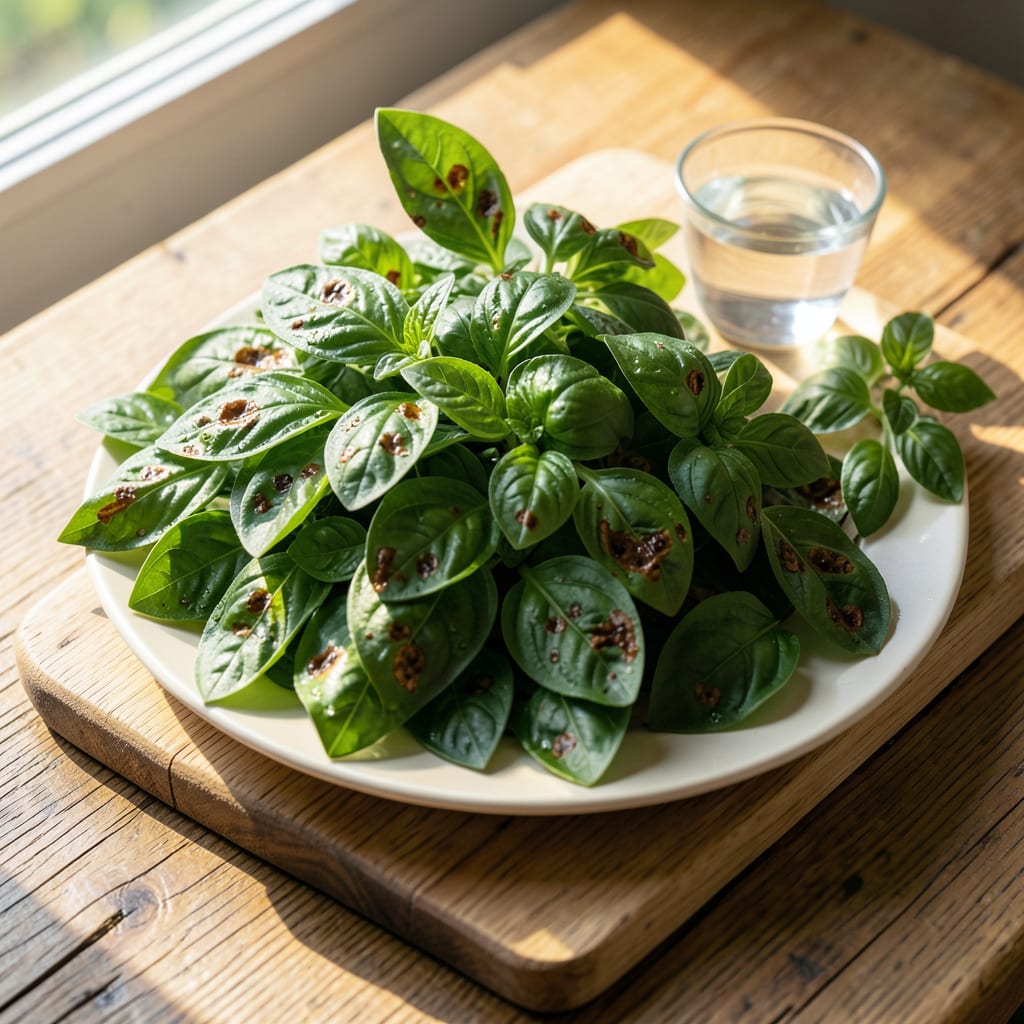
Those brown spots on your basil aren’t just ugly—they’re a distress signal. I’ve seen this exact pattern before, and the good news is it’s usually fixable with the right diagnosis.
Most cases come down to four culprits: fungal infections, hungry pests, inconsistent watering, or nutrient shortages. Each leaves a slightly different mark, but the solution path is similar once you know what you’re dealing with.
You’ll notice the leaves perking up within 3-5 days once you address the root cause. The key is acting fast before the problem spreads to healthy growth.
Works for potted basil on windowsills or garden plants alike. Here’s how to play detective and nurse your plants back to health.
Basil leaves developing brown spots can stem from several underlying issues, often tied to environmental stress, pathogens, or pests. Here’s a breakdown of the most frequent culprits:
Fungi like Colletotrichum (anthracnose) or Pseudoperonospora belbahrii (downy mildew) thrive in damp, poorly ventilated conditions. These pathogens infect basil leaves, causing irregular brown or black spots, often with yellow halos. Overhead watering or high humidity accelerates spore spread, making proper airflow and dry foliage critical for prevention.
Sap-sucking pests such as aphids, spider mites, or thrips pierce leaf tissues, leading to discolored, necrotic spots. Their feeding disrupts cell integrity, and the damage may appear as stippling or brown patches. Check the undersides of leaves for tiny insects or webbing—a telltale sign of infestation.
Root rot from waterlogged soil restricts nutrient uptake, stressing the plant. As roots suffocate, leaves develop brown, crispy edges or spots. Basil prefers consistently moist but well-draining soil—soggy conditions invite both fungal growth and root decay.
Extreme temperatures (below 50°F or above 90°F) or sudden light changes can shock basil, triggering leaf discoloration. Sunburn from intense direct sunlight may cause dry, brown patches, while cold drafts lead to dark, water-soaked spots. Acclimate plants gradually to new conditions.
A lack of key nutrients, particularly potassium or magnesium, can manifest as brown spotting between leaf veins. Test soil pH (ideal: 6.0–7.5) and amend with balanced fertilizer if deficiencies are suspected. Yellowing accompanied by spots often signals a nitrogen shortage.
Don’t let brown spots ruin your basil harvest! Here’s how to treat the most common causes and keep your plants thriving.
If downy mildew or leaf spot is the culprit, start by removing infected leaves with clean scissors to prevent spread. Space out your plants to improve airflow, and water at the base (not the leaves) to reduce moisture. For a natural fix, spray with a baking soda solution (1 tsp baking soda + 1 quart water + a few drops of dish soap) every 5–7 days. Prevention tip: 💡 Avoid overhead watering and thin crowded plants early.
For aphids, spider mites, or thrips, blast them off with a strong stream of water. Apply neem oil or insecticidal soap (follow label instructions) to deter pests. Check the undersides of leaves weekly for early signs. Prevention tip: 🌡️ Introduce beneficial insects like ladybugs or use reflective mulch to confuse pests.
Let the top inch of soil dry out between waterings. Ensure pots have drainage holes, and use well-draining soil. If root rot is suspected, trim blackened roots and repot in fresh soil. Prevention tip: ✨ Stick your finger in the soil—if it’s damp, wait to water!
If leaves scorch from too much direct sun, move potted basil to a spot with afternoon shade or use a sheer curtain to filter light. Acclimate seedlings gradually to outdoor sun. Prevention tip: 🎯 Basil loves 6–8 hours of morning sun—adjust accordingly.
With these fixes, your basil will bounce back in no time! 🌿
Yes, fungal infections and pests can spread quickly. Isolate affected basil and treat immediately with neem oil or a baking soda spray to prevent contamination.
Ensure good airflow, water at the base, and avoid soggy soil. Keep basil in 6-8 hours of morning sun and check leaves weekly for early signs.
Not always. Overwatering, sunburn, or nutrient deficiencies can also cause spotting. Check soil moisture, light exposure, and leaf patterns for clues.
