
Beautiful Plants For Your Interior
Beautiful Plants For Your Interior
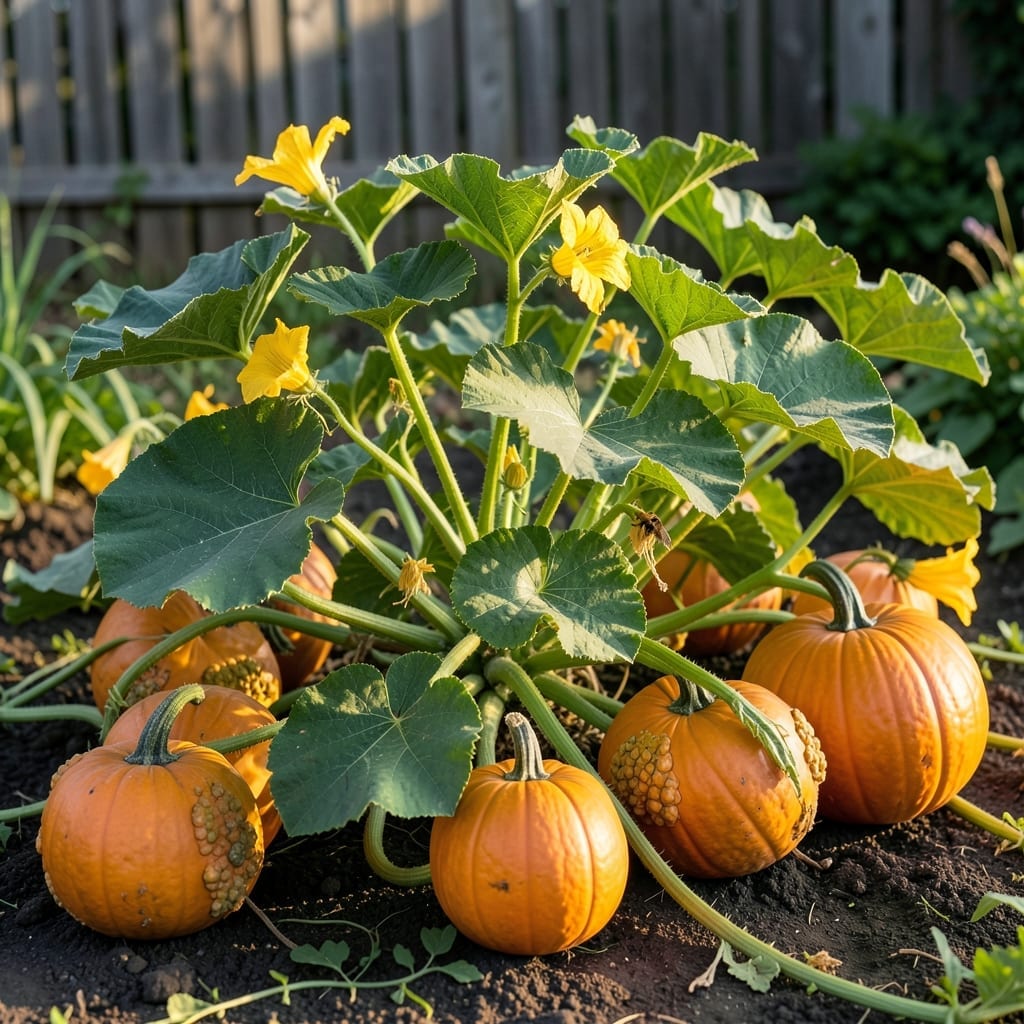
Those bumpy growths on your pumpkins aren’t just ugly—they’re a red flag. 🌱 I’ve lost entire crops to warty pumpkins before learning what causes them and how to stop it.
Usually, it’s a virus, pest damage, or environmental stress messing with your plants. The good news? Most cases are preventable with simple changes to your growing routine.
Healthy pumpkins start with strong vines. Keep your patch clean, rotate crops yearly, and watch for early signs of trouble like yellowing leaves or stunted growth.
With the right care, you’ll harvest smooth, vibrant orange gourds every time. No more crossing your fingers and hoping for the best.
Pumpkins develop warts due to several biological and environmental factors. Here’s a breakdown of the primary causes:
Fungi like Phytophthora and Pythium thrive in wet, poorly drained soil. These pathogens infect the pumpkin’s skin, causing raised, wart-like bumps. Overwatering or heavy rainfall creates ideal conditions for fungal spores to spread.
Some pumpkin varieties are naturally prone to warts due to their genetic makeup. Heirloom or less-resistant cultivars may develop rough, bumpy surfaces as they mature, even in optimal growing conditions.
Insects like aphids or cucumber beetles pierce the pumpkin’s skin, creating entry points for bacteria or fungi. The resulting tissue damage can manifest as warts or scabs as the pumpkin heals.
Extreme temperature swings or inconsistent watering stress the plant, leading to irregular growth. Heat or drought can cause the rind to form unevenly, producing wart-like protrusions.
Dealing with warts on your pumpkins? Here’s how to tackle each cause with simple, effective solutions.
Remove affected pumpkins immediately to prevent spreading. Apply a copper-based fungicide to healthy plants as a protective barrier. Rotate crops yearly to reduce fungal spores in the soil.
Prevention tip: 💡 Water at the base of plants to keep foliage dry, and space vines for airflow.
Introduce beneficial insects like ladybugs to control aphids and squash bugs. For severe infestations, use neem oil or insecticidal soap. Inspect leaves weekly for early signs of pests.
Prevention tip: 🎯 Plant companion flowers like marigolds to repel pests naturally.
Ensure consistent watering—1–2 inches per week—to avoid drought stress. Use mulch to retain moisture and regulate soil temperature. If heat is the issue, provide shade cloth during peak sunlight.
Prevention tip: ✨ Test soil pH (ideal: 6.0–6.8) and amend with compost for balanced nutrients.
Remove and destroy infected plants to stop viral spread. Disinfect tools with bleach solution (1 part bleach to 9 parts water) after use. Choose disease-resistant pumpkin varieties for future planting.
Prevention tip: 🌡️ Avoid working with wet plants, as viruses enter through wounds more easily.
With these steps, your pumpkins can stay smooth and healthy all season long!
Yes, if caused by fungal infections or pests. Remove affected pumpkins immediately and treat the area with a copper-based fungicide to prevent spreading. Isolate healthy plants.
Only if the warts are from environmental stress or genetics. Discard pumpkins with fungal or pest-related warts, as these can harbor harmful pathogens. Always wash the rind thoroughly.
Rotate crops, use mulch to retain moisture, and space vines for airflow. Plant disease-resistant varieties and inspect leaves weekly for pests. Consistency is key.