
Beautiful Plants For Your Interior
Beautiful Plants For Your Interior
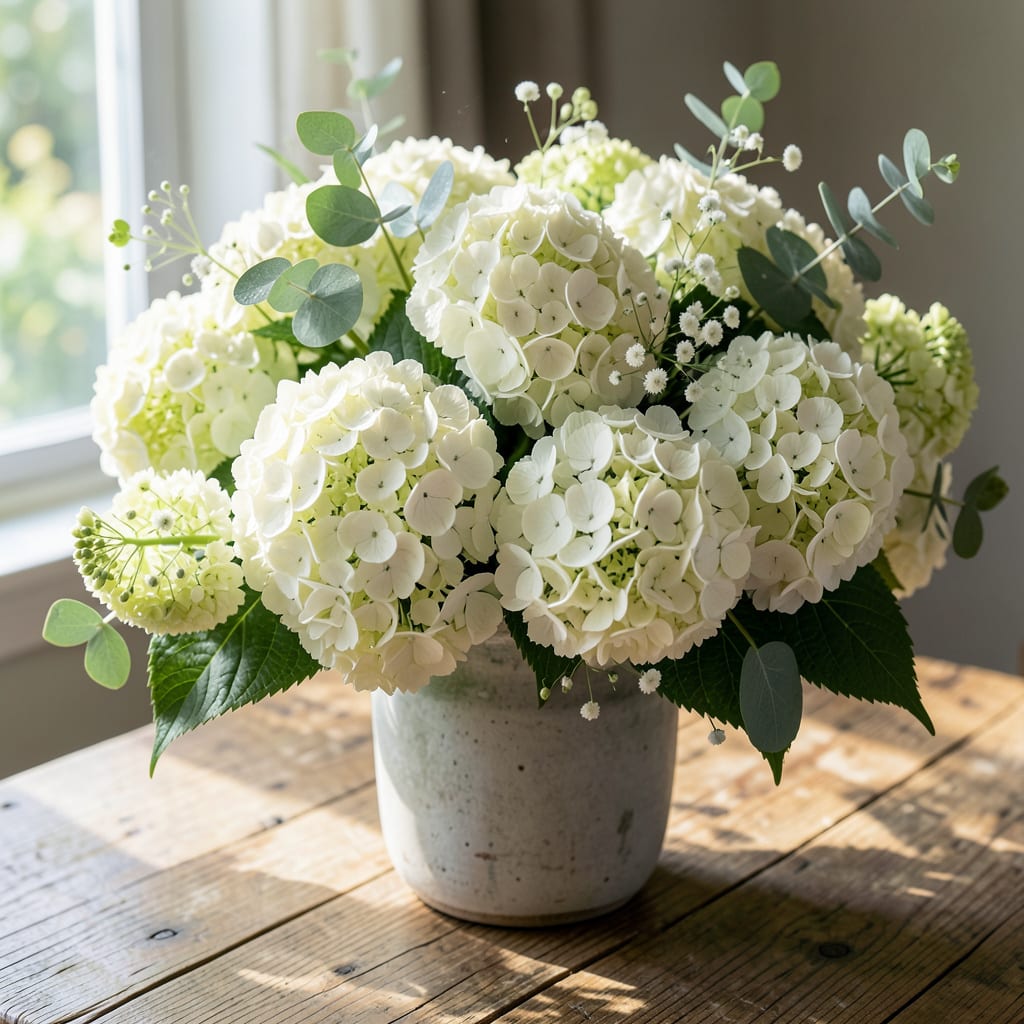
White Wedding hydrangeas transformed my summer garden last year. Their massive, creamy-white blooms appear in mid-summer and keep going until frost, creating a stunning display that stops neighbors in their tracks.
These shrubs thrive in full sun to partial shade and handle urban pollution better than most. With minimal care—just consistent moisture and occasional pruning—they reward you with reliable color and vigor season after season.
📚 In This Guide
Here’s the method I trust to produce abundant, creamy-white blooms every season with minimal fuss.
Select a location with full sun to partial shade, ideally receiving 4-6 hours of direct sunlight daily. White Wedding hydrangeas tolerate a range of light conditions but bloom most profusely in bright, indirect light. Avoid deep shade, as it reduces flower production significantly.
Test your soil’s drainage by digging a 12-inch-deep hole and filling it with water. If it drains within 1-2 hours, the site is suitable. Amend heavy clay or sandy soil with organic matter like compost to improve structure and moisture retention.
Dig a hole twice as wide as the root ball but no deeper. This encourages roots to spread outward, establishing the plant more quickly. Gently remove the hydrangea from its container and loosen any circling roots to prevent girdling as it grows.
Place the plant in the hole so the top of the root ball sits 1-2 inches above the surrounding soil level. This accounts for settling and ensures the crown stays above waterlogged ground. Backfill with native soil, water deeply, and mulch with 2-3 inches of organic mulch to retain moisture.
Water deeply 2-3 times per week during the first growing season, ensuring the soil stays evenly moist but not soggy. Established plants are more drought-tolerant but still perform best with consistent moisture. Use a soaker hose or drip irrigation to keep foliage dry and prevent disease.
Apply a balanced, slow-release fertilizer in early spring as new growth emerges. Avoid high-nitrogen formulas, as they promote leafy growth at the expense of blooms. I use a 10-10-10 or 12-4-8 ratio for optimal results, repeating the application in early summer if the plant shows sluggish growth.
Panicle hydrangeas bloom on new wood, so prune in late winter or early spring before new growth starts. Remove dead or weak stems at the base, then trim back the remaining stems by one-third of their height to encourage vigorous, flower-filled growth.
This timing ensures you won’t cut off potential blooms, which can happen if you prune too late in the season. Always use clean, sharp pruners to make precise cuts just above a set of healthy buds. The plant will reward you with larger, more abundant flower clusters.
Stake tall stems in early summer if they begin to flop under the weight of their blooms. Use soft ties to avoid damaging the bark. In colder climates, apply a thick layer of mulch around the base in late fall to insulate the roots during winter.
Watch for signs of stress, like wilting or yellowing leaves, which often indicate under- or overwatering. Adjust your care routine accordingly, and your White Wedding hydrangea will thrive, producing its signature creamy-white panicles from mid-summer through fall.
The secret is in the details—get these right and your blooms will be spectacular.
Sunlight Strategy: The 4-6 hours of direct sunlight mentioned in Step 1 is your sweet spot. I’ve found that morning sun with afternoon shade produces the most vibrant blooms, especially in hotter climates. Avoid the deep shade trap—it’s the most common reason for sparse flowering.
Drainage Test Insight: That 12-inch-deep hole in Step 1 isn’t just busywork. If water lingers beyond 1-2 hours, your soil needs amendment. I add compost to heavy clay and a bit of sand to loose soil—this simple fix has saved several of my hydrangeas from root rot.
Planting Height Hack: The 1-2 inches above soil level in Step 2 is non-negotiable. I made the mistake of planting flush once, and after a heavy rain, the crown stayed too wet. The slight elevation lets water drain away from the base, which is critical for long-term health.
Pruning Precision: In Step 4, trimming back by one-third of their height might seem aggressive, but it’s the key to those lush, abundant panicles. I use sharp bypass pruners and always cut just above a bud node—this encourages the strongest new growth where it matters most.
This hydrangea typically reaches 6–8 feet tall and 5–6 feet wide at maturity. Its upright, bushy habit makes it perfect for privacy screens or statement plantings. Pruning can help control its size if needed.
Expect stunning white, cone-shaped blooms from mid-summer to early fall. The flowers often transition to a soft pink or greenish hue as they age, adding seasonal interest.
It thrives in partial sun (4–6 hours of sunlight daily) but tolerates full sun in cooler climates. In hot regions, afternoon shade helps prevent leaf scorch. Well-drained soil is key.
This is natural! As the flowers mature, they often shift from white to green or pink. If blooms stay green, it may indicate higher soil pH—consider testing and amending if you prefer whiter flowers.
Yes! Try ‘Little Lime‘ or ‘Bobby Dazzler’ panicle hydrangeas. Both offer similar beauty in compact forms (3–5 feet tall), ideal for containers or small gardens.
