
Beautiful Plants For Your Interior
Beautiful Plants For Your Interior
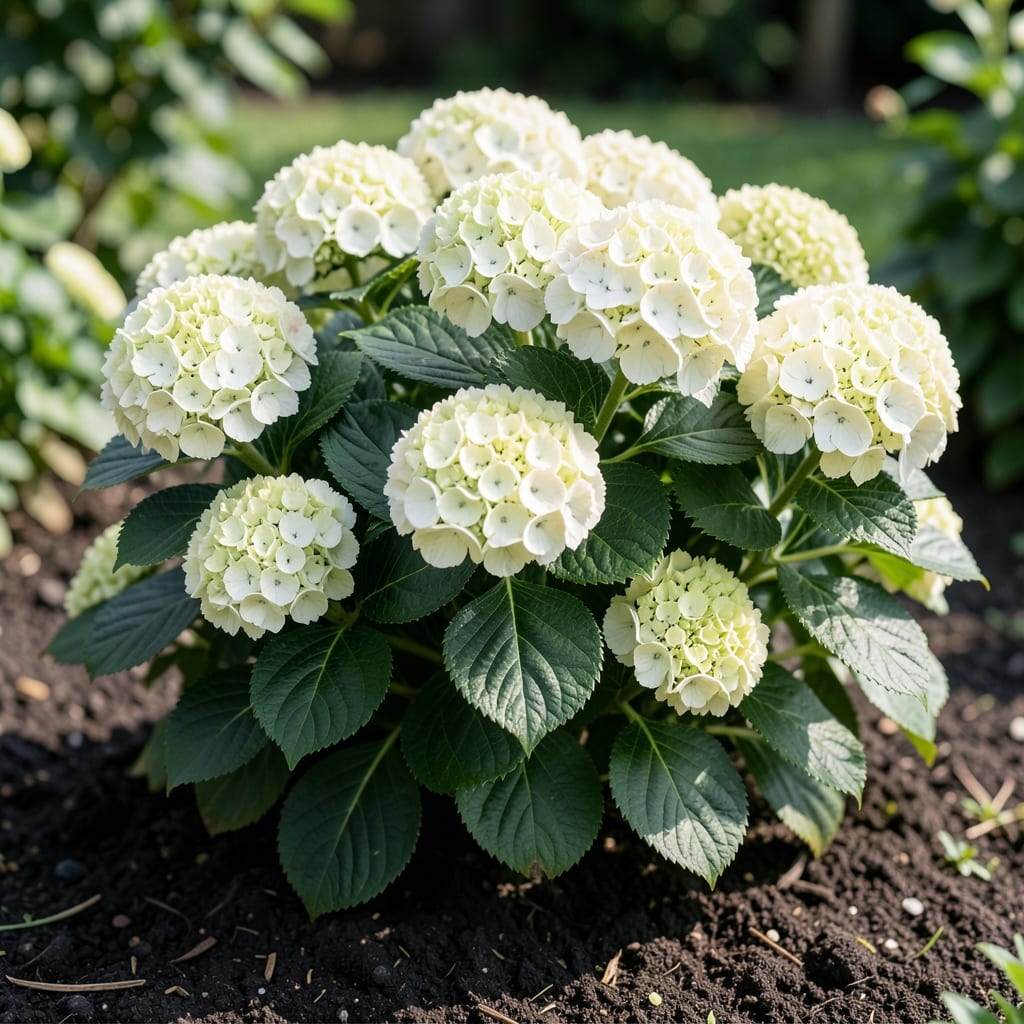
White Wedding hydrangeas stopped me in my tracks the first time I saw them blooming. Those massive, creamy-white flower heads transform any garden space into something special.
They thrive in partial shade with consistent moisture, and the secret to season-long blooms is simple: rich soil and proper pruning. I’ve kept mine flourishing for years with just these basics.
📚 In This Guide
Here’s how to ensure your hydrangeas produce stunning white blooms from early summer through fall.
White Wedding hydrangeas thrive in partial shade—morning sun with afternoon shade is ideal. In hotter climates, dappled shade under a tree works best to prevent leaf scorch. Avoid deep shade, as it reduces blooming and leads to weak, leggy growth.
Soil must be well-draining and rich in organic matter. Test drainage by digging a 1-foot-deep hole, filling it with water, and timing how long it takes to empty. If water stands for more than 30 minutes, amend the soil with compost or pine bark fines to improve drainage.
Dig a hole twice as wide as the root ball but no deeper. Planting too deep suffocates roots and stunts growth. Set the root ball in the hole so the top sits 1-2 inches above the surrounding soil—hydrangeas settle over time.
Space plants 4-6 feet apart to allow for mature width. Backfill with native soil mixed with compost, then water deeply to remove air pockets. Mulch with 2-3 inches of organic material like pine straw or shredded bark, keeping it 2 inches away from the stem to prevent rot.
Keep soil consistently moist but not soggy—hydrangeas wilt dramatically when thirsty. Water deeply at the base 2-3 times per week during the first growing season, then taper to 1-2 times weekly once established. Use a soaker hose to avoid wetting foliage, which invites fungal diseases.
Fertilize lightly in early spring with a balanced, slow-release fertilizer (10-10-10). Avoid high-nitrogen formulas, which promote leafy growth at the expense of blooms. A second application in early summer supports continuous flowering, but stop fertilizing by late July to prevent tender new growth before frost.
White Wedding blooms on new wood, so prune in late winter or early spring before buds swell. Remove dead or crossing branches first, then shape the plant by cutting back one-third of the oldest stems to the ground. This rejuvenates the plant and encourages vigorous new growth.
Avoid pruning in fall or mid-summer, as this can remove next year’s flower buds. If your hydrangea isn’t blooming, it’s often due to pruning at the wrong time or cutting back too aggressively. Always sterilize pruners with rubbing alcohol between cuts to prevent disease spread.
Apply a 2-inch layer of mulch annually to retain moisture and regulate soil temperature. In colder climates, mound mulch 6-8 inches high around the base in late fall for winter protection, then pull it back in spring as growth resumes.
Deadhead spent blooms regularly to encourage new flower production. If blooms turn greenish, it’s often a sign of too much shade or nutrient imbalance—adjust conditions accordingly. With proper care, your White Wedding hydrangea will reward you with abundant, long-lasting white blooms year after year.
Mastering a few key details will transform your hydrangea care from good to exceptional.
Planting Depth Secret: In Step 2, resist the urge to bury the root ball completely. That 1-2 inches above soil level is critical—hydrangeas naturally settle, and planting too deep suffocates the roots. I learned this the hard way after losing three plants to this exact mistake.
Drainage Test Hack: For Step 1’s drainage test, use a stopwatch for the 30-minute mark. If water lingers longer, don’t just add compost—mix in perlite or coarse sand too for serious drainage improvement. Trust me, soggy roots are the silent killer of hydrangeas.
Pruning Precision: Step 4’s timing is non-negotiable: late winter or early spring only. Pruning in fall removes the very buds that would become next summer’s blooms. Sterilizing pruners with rubbing alcohol between cuts isn’t just good practice—it prevents disease spread that can devastate your entire plant.
Watering Wisdom: The 2-3 times weekly watering in Step 3 is a baseline, not a rule. In extreme heat, check soil moisture daily by sticking your finger 2 inches down—if it’s dry, water deeply at the base. A wilted hydrangea recovers quickly, but chronic underwatering stunts growth permanently.
Ensure they get partial shade, consistent moisture, and well-draining soil. Prune old wood right after blooming to encourage new growth and repeat flowers.
This is natural! White hydrangeas often develop a green tint as they age, especially in hot weather. To maintain whiter blooms, keep soil pH neutral (6.0–7.0) and avoid excessive nitrogen.
Spring or early fall is ideal. This gives roots time to establish before extreme heat or cold. Avoid planting in peak summer to reduce stress on the shrub.
If your soil is highly alkaline (pH >7.5), consider planting ‘Limelight’ hydrangeas, which thrive in various pH levels and offer creamy white blooms regardless of soil conditions.
Wilting often means underwatering or heat stress. Water deeply at the base (not overhead) in the early morning. Mulch to retain moisture, and trim spent blooms to redirect energy.