
Beautiful Plants For Your Interior
Beautiful Plants For Your Interior
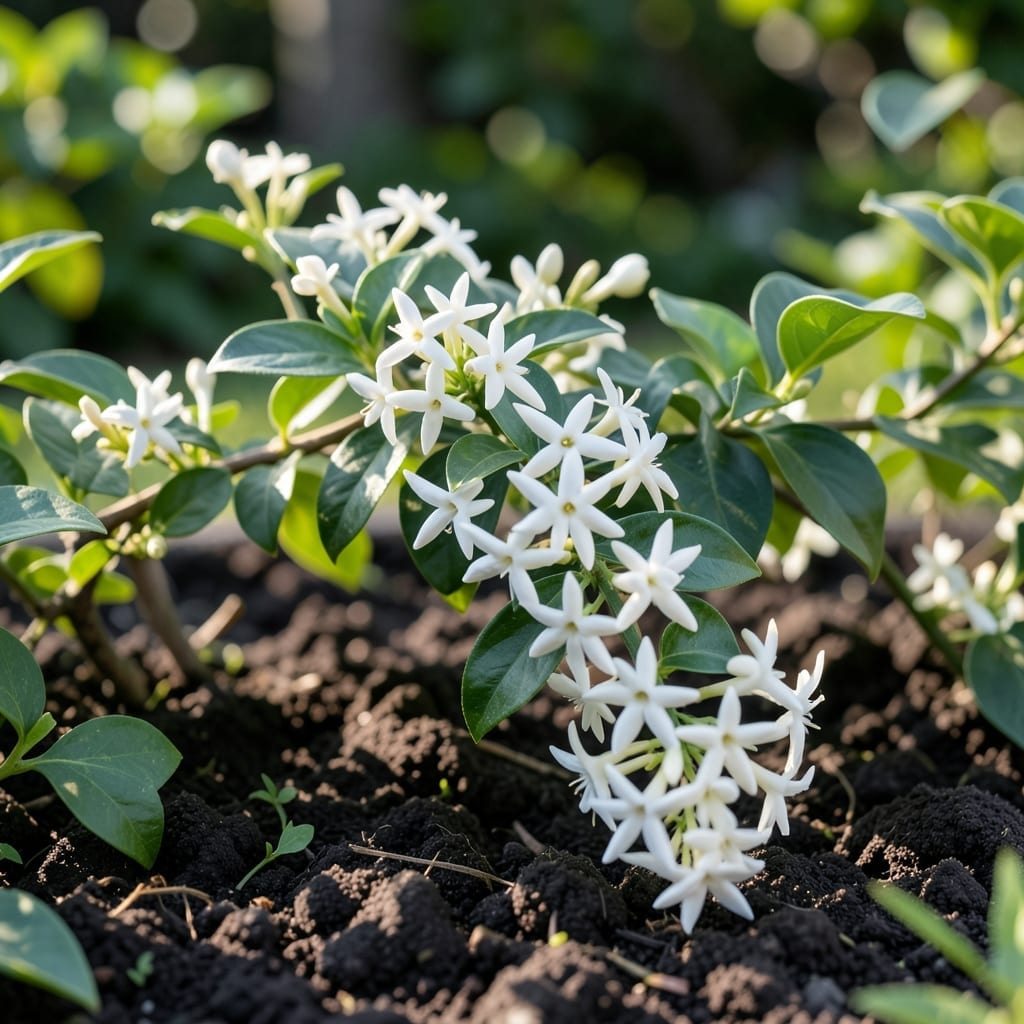
That first whiff of white star jasmine in bloom stops me in my tracks every time. It climbs trellises and fences with glossy green leaves, then explodes with fragrant white flowers that perfume the entire garden.
This vine thrives in partial shade or full sun, tolerates a range of soils, and keeps its good looks year-round. With minimal care, you’ll get decades of beauty and that unforgettable scent drifting through your outdoor space.
📚 In This Guide
Here’s the simple method I use to establish these fragrant vines for lasting garden impact.
Select a spot with full sun to partial shade—white star jasmine thrives in 6+ hours of sunlight but tolerates afternoon shade in hot climates. I always test the soil first: it should drain well but retain some moisture. Avoid low areas where water pools after rain.
These vines need support, so plant near a trellis, fence, or wall. The structure should be at least 6 feet tall to accommodate mature growth. If planting near a building, leave 12 inches of space between the base and the structure for proper airflow.
Dig a hole that’s twice as wide and just as deep as the root ball. I loosen the soil at the bottom and sides of the hole to encourage root expansion. Mix a handful of compost into the removed soil to give the plant a nutrient boost as it establishes.
Check the soil pH—white star jasmine prefers slightly acidic to neutral (6.0-7.0). If your soil is too alkaline, amend with sulfur or peat moss before planting. This step prevents yellowing leaves later on.
Remove the plant from its container and gently tease apart any circling roots. Place it in the hole so the top of the root ball sits 1 inch above the surrounding soil level—this prevents settling that can bury the stem too deep.
Backfill with the amended soil, pressing lightly to remove air pockets. Create a 3-inch-high soil ring around the plant to help direct water to the roots. Water deeply immediately after planting until the soil is thoroughly moist but not waterlogged.
Water your jasmine 2-3 times weekly for the first month, then reduce to 1-2 times weekly once established. The key is consistent moisture without soggy soil. I check by sticking my finger 1 inch into the soil—if it feels dry, it’s time to water.
Apply a 2-3 inch layer of mulch around the base to retain moisture and suppress weeds. Keep the mulch 3 inches away from the stem to prevent rot. Fertilize lightly with a balanced product in early spring, then again after the first bloom cycle.
Begin training vines onto their support as soon as they’re 12 inches long. I use soft garden twine to gently tie stems to the structure, being careful not to constrict growth. The vines will eventually twine themselves, but early guidance creates a fuller, more controlled shape.
Prune after flowering to maintain shape and encourage bushier growth. Remove any dead or damaged stems first, then trim back overly long vines by one-third. Always use clean, sharp tools to make clean cuts that heal quickly.
Small details make the difference between struggling vines and thriving, fragrant blossoms.
Sunlight Strategy: That 6-8 hours of daily sunlight is non-negotiable for abundant blooms. In hotter climates, I’ve found morning sun with afternoon shade prevents leaf scorch while still delivering the energy the plant needs. If your space only gets partial sun, choose the brightest spot available.
Planting Depth Insight: Digging a hole twice as wide as the root ball but no deeper is key. I buried my first jasmine too deep and it struggled for months. The crown should sit at soil level—burying it too low can cause rot and stunted growth. When in doubt, err on the shallow side.
Watering Wisdom: During those first 4-6 weeks, consistency is everything. I check the top inch of soil daily—if it’s dry, I water deeply. After establishment, the plant becomes more drought-tolerant, but those early weeks set the foundation for healthy growth.
Support System: Install your 5-6 foot tall structure at planting time, not later. I learned this the hard way when I waited until the vines were already sprawling—it was much harder to train them to climb afterward. Use soft ties that won’t cut into the stems as they thicken.
White star jasmine is a moderate grower, typically adding 1-2 feet per year under ideal conditions. With proper care, including well-draining soil and regular watering, it can reach its mature size of 10-20 feet in 3-5 years.
Plant in early spring or fall to avoid extreme temperatures. This gives the roots time to establish before summer heat or winter cold. Morning sun and afternoon shade are ideal for healthy growth.
Consider Confederate jasmine (Trachelospermum jasminoides) for similar fragrance, or star jasmine (Trachelospermum asiaticum) for a more compact option. Both thrive in similar conditions and offer lush, evergreen foliage.
Yellow leaves often signal overwatering, poor drainage, or nutrient deficiencies. Check soil moisture and ensure the plant isn’t sitting in water. A balanced fertilizer can help restore vibrant green foliage.