
Beautiful Plants For Your Interior
Beautiful Plants For Your Interior
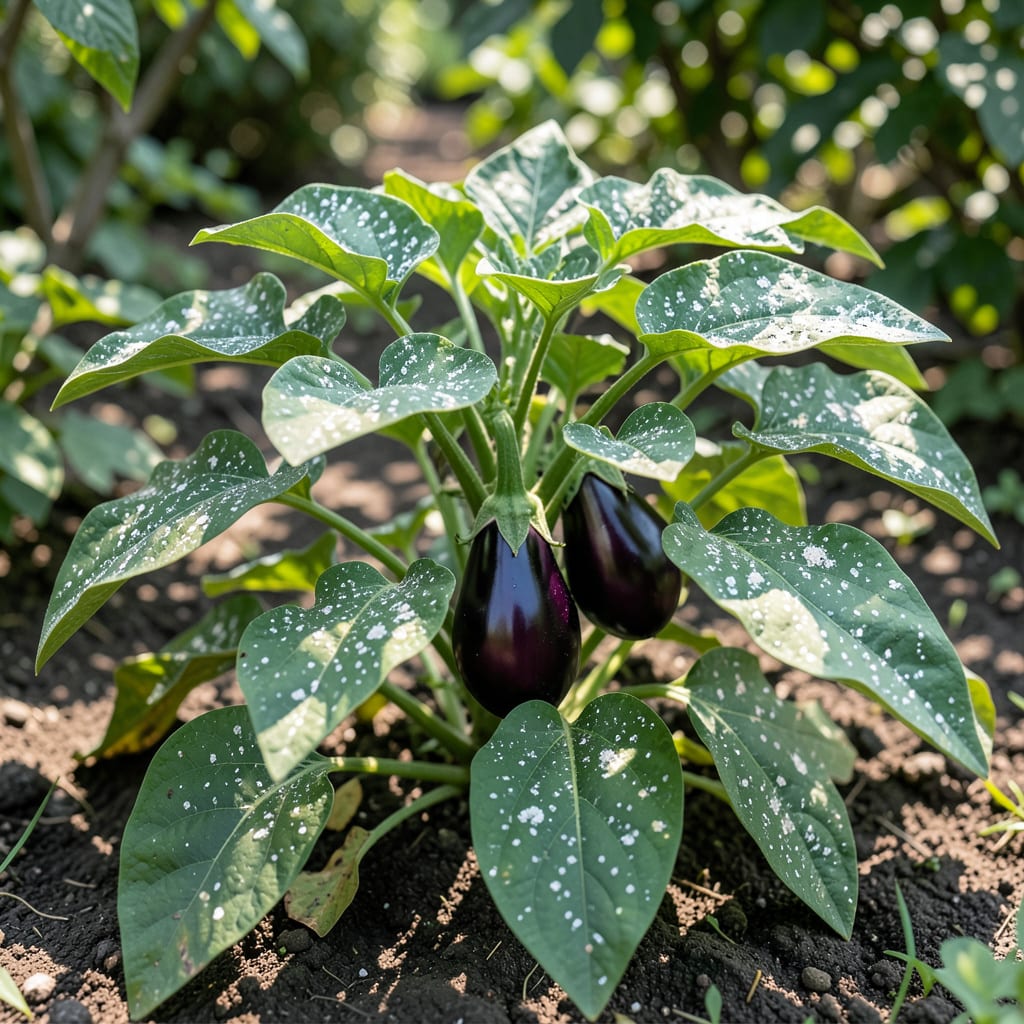
White spots on eggplant leaves ruined my harvest last summer. I watched the powdery mildew spread overnight, turning healthy plants into struggling sticks within days.
Here’s the thing—this isn’t just bad luck. Poor air circulation, high humidity, and wet foliage create the perfect storm for fungal outbreaks. Even overcrowded plants in a small garden bed can trigger it.
I turned it around with simple fixes: better spacing, morning watering, and a homemade spray that stopped the spread in 48 hours. The plants recovered faster than I expected.
Now my eggplants stay productive all season. You can fix this too, without harsh chemicals or expensive treatments.
White spots on eggplant foliage usually trace back to a few key culprits. Below are the most common causes, each with its own tell-tale signs and underlying science.
Podosphaera xanthii and Leveillula taurica are the fungal species most often responsible. These pathogens thrive in warm, dry days followed by cool, humid nights. They produce microscopic hyphae that extract nutrients from leaf cells, leaving a white, powdery coating on the surface.
Stagnant, moisture-laden air creates the perfect breeding ground for fungal spores. When relative humidity exceeds 60% and leaves remain wet for extended periods, spores germinate within hours, rapidly spreading across the foliage.
Eggplants prefer consistent warmth (70–85°F). Sudden drops below 60°F at night, combined with daytime heat, stress the plant and weaken its natural defenses, making it more susceptible to fungal infections like powdery mildew.
Dense canopies reduce airflow and sunlight penetration, creating a microclimate that favors fungal growth. Without adequate spacing (18–24 inches between plants), moisture lingers, and spores spread efficiently from leaf to leaf.
Addressing white spots on eggplant leaves starts with identifying the cause and applying the right fix. Below are targeted solutions for common culprits, along with prevention tips to keep your plants healthy.
Mix 1 tablespoon baking soda, 1 teaspoon dish soap, and 1 gallon of water. Spray this solution on affected leaves every 5–7 days until the spots disappear. Prevention tip: 💡 Improve air circulation by spacing plants 18–24 inches apart and watering at the base to avoid wetting the leaves.
Dilute 2 tablespoons neem oil in 1 gallon of water and add 1 teaspoon of mild soap. Spray the mixture on both sides of the leaves, focusing on the undersides where pests like spider mites or whiteflies hide. Repeat every 7–10 days or after rain. Prevention tip: ✨ Introduce beneficial insects like ladybugs to your garden to naturally control pest populations.
Apply a copper-based fungicide according to the product’s instructions, typically every 7–14 days. Remove and destroy severely infected leaves to prevent the fungus from spreading. Prevention tip: 🌡️ Avoid overhead watering and keep the garden free of debris where fungi can thrive.
If the spots are due to excessive sunlight, provide 30–50% shade using a shade cloth during the hottest part of the day. Prevention tip: 🎯 Gradually acclimate young plants to direct sunlight and ensure they receive 6–8 hours of light daily without over-exposure.
For all issues, early intervention is key. Regularly inspect your eggplant leaves, and act at the first sign of trouble to keep your garden thriving!
Yes, fungal spores can travel through air and water. Keep infected plants isolated and avoid touching healthy ones after handling affected foliage.
Inspect leaves every 2-3 days during humid weather. Early detection makes treatment much easier and more effective.
The fruit remains edible if the issue is powdery mildew. Wash thoroughly, but discard any eggplants with visible mold or rot.
