
Beautiful Plants For Your Interior
Beautiful Plants For Your Interior
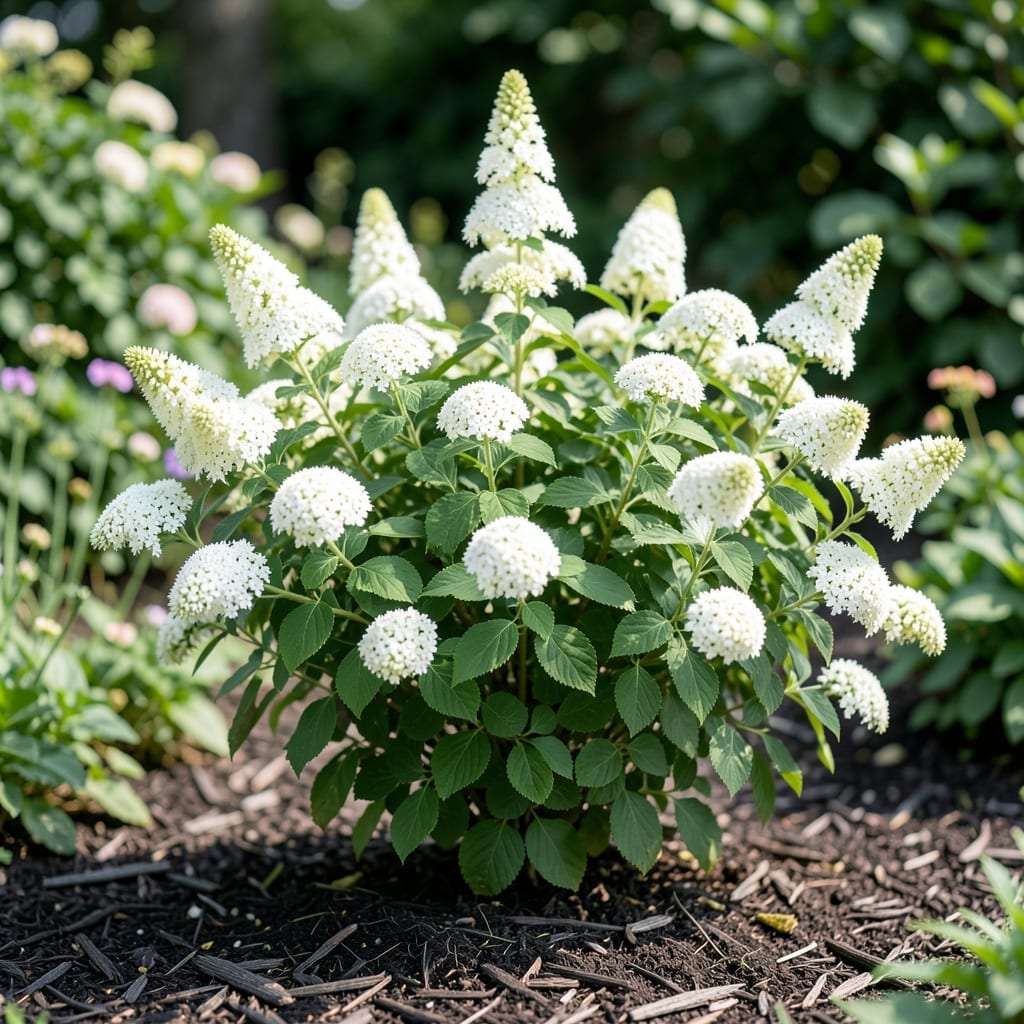
Spring explodes on this shrub before most plants wake up. I planted mine three years ago and now every April it erupts in clouds of white blooms that stop neighbors in their tracks.
It laughs at drought once established, thrives in full sun, and asks almost nothing in return. The only upkeep is a quick trim after flowering to keep its shape tidy. Honestly, it’s the definition of low-maintenance beauty.
📚 In This Guide
Here’s the method I trust for establishing healthy, resilient spirea with minimal fuss.
Select a location that receives full sun to partial shade, as white spirea thrives in 6+ hours of direct sunlight daily. Avoid low-lying spots where water pools—this shrub tolerates drought but despises soggy roots. I always test drainage by digging a 12-inch-deep hole and filling it with water; if it doesn’t drain within 2-3 hours, pick another site.
Soil should be well-draining and moderately fertile. White spirea adapts to various soil types, but it performs best in loam with a pH of 6.0–7.5. If your soil is heavy clay, amend it with compost to improve structure. A quick soil test before planting saves years of stunted growth.
Dig a hole that’s twice as wide as the root ball and just as deep. This loose soil around the edges encourages roots to spread outward quickly. I use the handle of my shovel to measure depth—it’s a foolproof way to avoid planting too deep, which suffocates the stem.
Remove any rocks, weeds, or debris from the hole. Rough up the sides with your shovel to prevent a glazed effect that can block root penetration. Place the shrub in the hole to check depth; the top of the root ball should sit 1 inch above the surrounding soil to allow for settling.
Gently remove the shrub from its container and loosen any circling roots with your fingers. If the roots are tightly bound, make three vertical cuts through the root ball with a clean knife to stimulate outward growth. This step prevents girdling, which can kill the shrub years later.
Backfill the hole with native soil, pressing down lightly to eliminate air pockets. I water halfway through backfilling to help the soil settle around the roots. Once filled, create a 3-inch-high watering berm around the base to direct moisture to the roots during the first year.
Water deeply immediately after planting, soaking the soil until it’s moist 12 inches down. White spirea is drought-tolerant once established, but consistent moisture is critical for the first 4-6 weeks. Check soil moisture by sticking your finger 2 inches deep—if it’s dry, it’s time to water.
Apply a 2-3 inch layer of organic mulch (wood chips or shredded bark) around the base, keeping it 3 inches away from the stem to prevent rot. Mulch conserves moisture, suppresses weeds, and insulates roots. Avoid volcanic rock or synthetic mulches—they don’t break down to improve soil health.
After flowering (typically in late spring to early summer), prune back the oldest stems to the ground to encourage new growth. I use sharp bypass pruners and cut at a 45-degree angle just above a leaf node. This rejuvenation pruning keeps the shrub compact and promotes more blooms next season.
Fertilize lightly in early spring with a balanced 10-10-10 slow-release fertilizer, following package instructions. Over-fertilizing leads to excessive foliage and fewer flowers. Monitor for pests like aphids or spider mites, but don’t treat unless damage is visible—white spirea is remarkably pest-resistant.
Small details in planting make a huge difference for this shrub’s long-term success.
Site Selection Insight: That 6+ hours of direct sunlight requirement in Step 1 isn’t just preference—it’s critical for abundant blooms. I’ve seen spirea planted in deep shade produce sparse flowers and leggy growth. The 2-3 hours drainage test mentioned is non-negotiable; standing water will rot the roots faster than drought will kill it.
Planting Depth Warning: In Step 2, when you place the shrub with the root ball 1 inch above soil level, resist the urge to sink it deeper for stability. I learned this the hard way after losing three shrubs to stem rot. The settling will bring it to perfect level naturally.
Root Preparation Technique: Those three vertical cuts through the root ball in Step 3 aren’t just busywork. This prevents the dreaded “girdling root” phenomenon where roots circle the stem and slowly strangle the plant. Even if the root ball looks loose, make those cuts—it’s like giving your shrub a head start on establishing.
Mulching Precision: The 3 inches away from the stem rule for mulch in Step 4 exists for a reason. I’ve seen well-meaning gardeners create “mulch volcanoes” around trunks, which traps moisture and invites disease. That 2-3 inch layer of wood chips is perfect for moisture retention without suffocating the base.
White spirea is drought-tolerant once established. Water deeply 1-2 times per week for the first year, then reduce to occasional watering during dry spells. Avoid overwatering to prevent root rot.
Prune immediately after flowering in late spring or early summer. This gives the shrub time to set new buds for the next season. Avoid pruning in fall, as it may remove next year’s blooms.
Watch for aphids, spider mites, or leaf spot diseases. Treat pests with insecticidal soap and improve air circulation to prevent fungal issues. Healthy plants rarely face serious problems.
It thrives in full sun but tolerates partial shade. However, flowering may be reduced in shady spots. For best blooms, plant in an area with at least 6 hours of sunlight daily.
Consider Bridal Wreath Spirea (Spiraea arguta) or Anthony Waterer Spirea for comparable beauty and low maintenance. Both offer stunning spring blooms and drought resistance.