
Beautiful Plants For Your Interior
Beautiful Plants For Your Interior
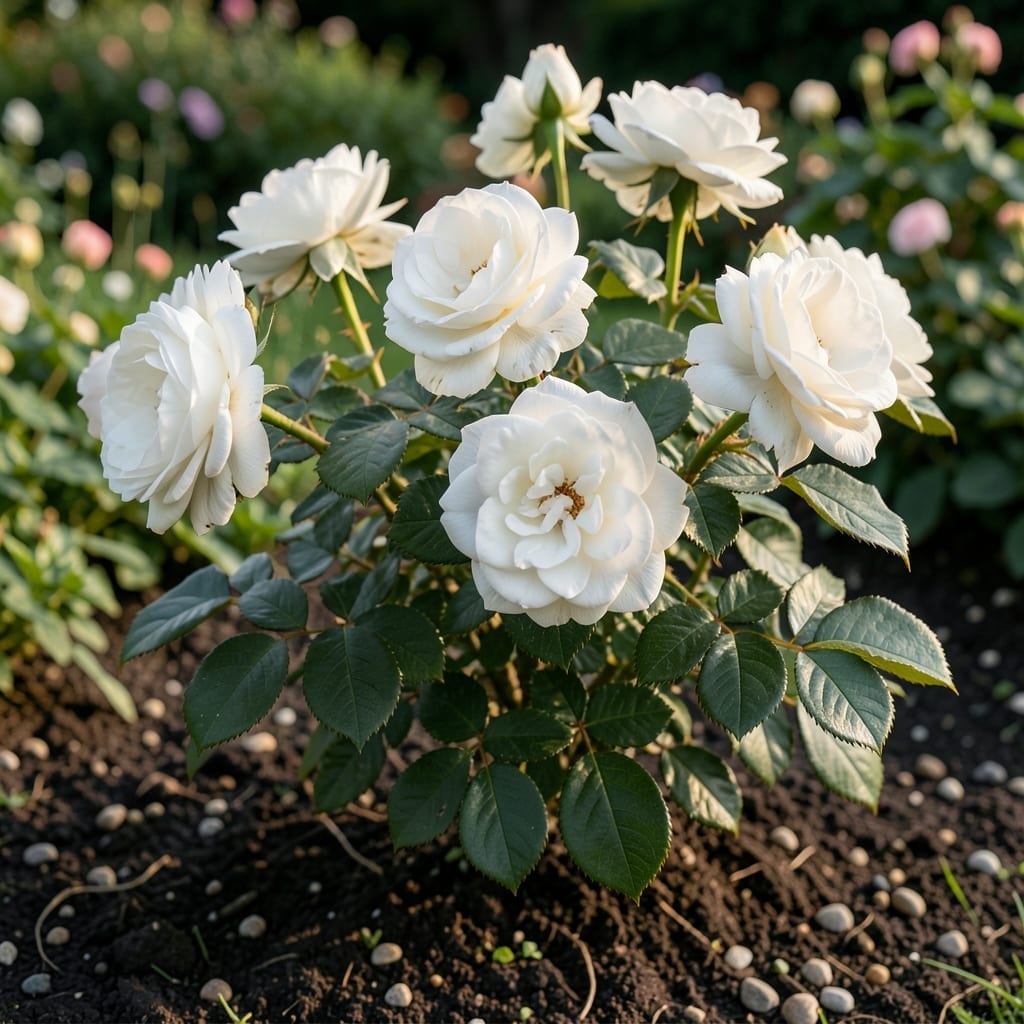
White Knockout roses changed my garden game with their disease-resistant beauty and relentless blooms. These aren’t your grandmother’s fussy roses—they thrive with minimal fuss and maximum impact.
You’ll get season-long flowers that laugh at heat, humidity, and most pests. Perfect for borders, containers, or that sunny spot where nothing else seems to work. Here’s how to keep them stunning year after year.
📚 In This Guide
This approach keeps your shrubs healthy and blooming from spring through fall with minimal effort.
Choose a spot with full sun (at least 6-8 hours of direct light daily). White Knockout roses tolerate partial shade but produce fewer blooms. I always test the location by observing how the light moves across the area throughout the day.
The soil should drain well—clay-heavy spots will drown the roots. Dig a hole twice as wide as the root ball and just as deep. If your soil is poor, amending with compost at planting time gives the shrub a strong start.
Established shrubs need 1-2 inches of water per week, delivered in 1-2 deep soakings rather than daily light sprinkles. Shallow watering encourages weak root systems. I water at the base in the early morning to let foliage dry before evening, which prevents fungal issues.
Check soil moisture by sticking your finger 2 inches deep—if it feels dry, it’s time to water. During extreme heat, you may need to increase frequency, but always prioritize depth over frequency.
White Knockout roses are heavy feeders. Apply a balanced, slow-release fertilizer (like 10-10-10) in early spring as new growth appears. I follow up with a second application in early summer to fuel the next flush of blooms.
Avoid high-nitrogen fertilizers late in the season—they’ll promote leafy growth at the expense of flowers. Always water after fertilizing to help nutrients reach the roots and prevent burn.
Prune in early spring, just as the buds begin to swell but before they open. Remove any dead, damaged, or crossing branches first. Then, shape the shrub by cutting back about one-third of the previous year’s growth, focusing on opening the center for better airflow.
Thin out crowded branches to reduce humidity inside the plant, which lowers the risk of disease. I also deadhead spent blooms regularly to encourage more flowers—this variety blooms on new wood, so it responds well to frequent light pruning.
Use clean, sharp pruners to make 45-degree cuts just above an outward-facing bud. This directs new growth away from the center, improving the shrub’s shape and health.
Knockout roses are bred for disease resistance, but they’re not immune. Watch for black spot (dark spots with yellow halos on leaves) or powdery mildew (white, powdery coating on foliage). At the first sign, I remove affected leaves and dispose of them in the trash—not the compost—to prevent spread.
Aphids and spider mites can also appear, especially in dry conditions. A strong blast of water often dislodges them, but for persistent infestations, I use insecticidal soap or neem oil, applying in the evening to avoid harming pollinators.
These insights will help you keep your plants thriving with minimal effort.
Watering Precision: The 1-2 inches of water per week guideline is crucial—use a rain gauge or straight-sided container to measure rainfall. Check soil moisture at the 2-inch depth with your finger; if it feels dry, it’s time to water. Early morning watering prevents fungal issues by allowing foliage to dry quickly in sunlight.
The Fertilization Sweet Spot: Stick to the 4-6 week schedule with 10-10-10 fertilizer for optimal results. Applying more frequently can lead to salt buildup in the soil, while spacing it out beyond 6 weeks may reduce bloom production. Always water before and after to prevent root burn, as mentioned in Step 2.
Pruning for Maximum Blooms: When cutting back canes by one-third in early spring, make your cuts at a 45-degree angle just above an outward-facing bud. This encourages new growth to spread outward rather than inward, improving air circulation and reducing disease risk. For deadheading, the 5-leaflet leaf cutoff point ensures you’re not removing too much foliage.
Winter Protection Strategy: The 6-8 inches of soil or mulch around the base insulates the graft union from freeze-thaw cycles. In colder climates, combine this with burlap wrapping for canes, but remember to remove protection in early spring when new growth appears to prevent moisture buildup.
Water deeply 1-2 times per week, depending on rainfall. These drought-tolerant roses prefer consistent moisture but avoid soggy soil. Early morning watering reduces disease risk.
Prune in early spring just as new growth appears, or after the first bloom cycle. Remove dead or weak stems to encourage healthy, abundant blooms.
They’re disease-resistant but may face black spot, powdery mildew, or aphids. Treat with neem oil or fungicides if needed, and ensure good air circulation.
Yes! Use a large container (15+ gallons) with well-draining soil. Ensure full sun (6+ hours) and regular watering, as potted plants dry out faster.
Check for insufficient sunlight, over-fertilization, or improper pruning. These roses thrive in full sun and benefit from balanced fertilizer applied in spring.