
Beautiful Plants For Your Interior
Beautiful Plants For Your Interior
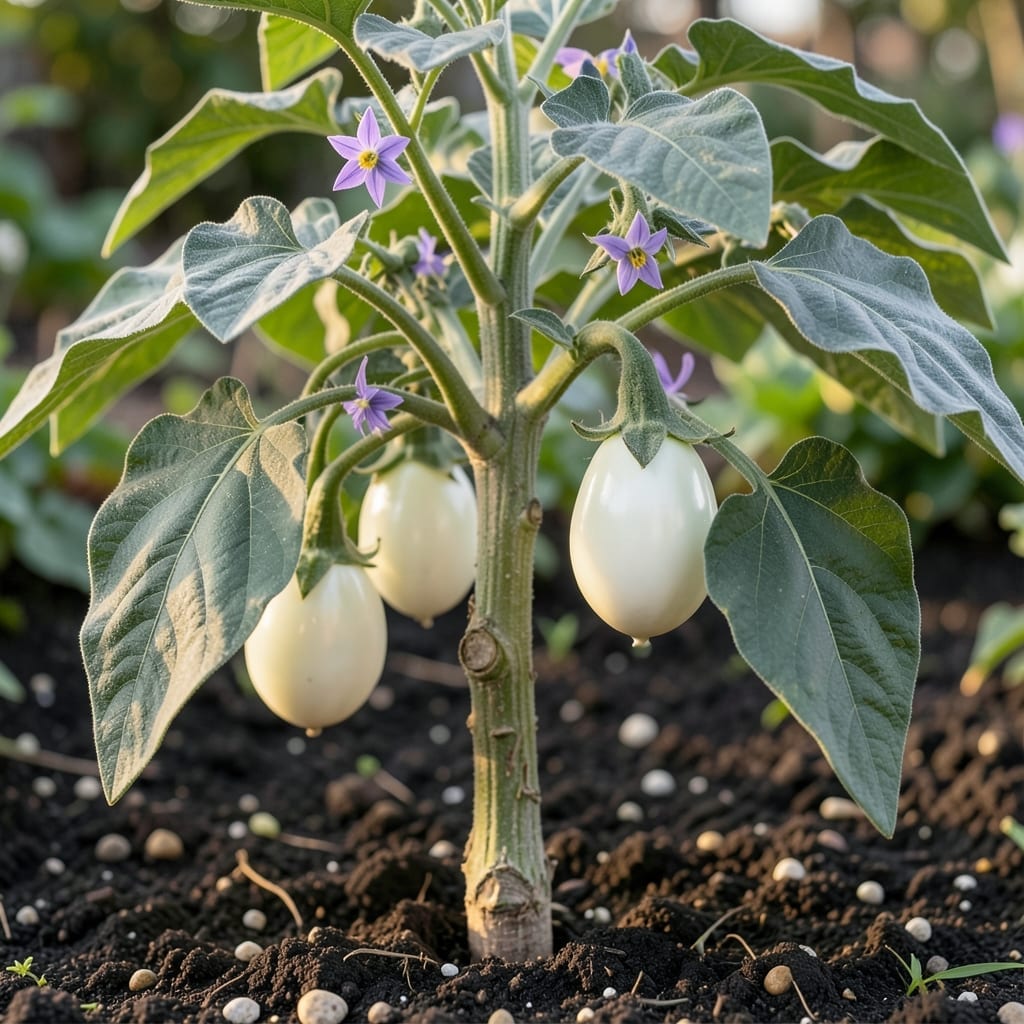
This eggplant variety changed my garden game. White Knight produces creamy, mild fruits that resist bitterness even in heat, unlike those purple types that turn tough and seedy by August.
I’ve grown it organically for three seasons now—60 days from transplant to harvest with minimal fuss. The plants stay compact but pump out glossy white fruits that look stunning against dark foliage.
📚 In This Guide
This method delivers robust plants and a bountiful harvest every time.
Begin seeds indoors 8-10 weeks before your last frost date to give them a head start. Use a high-quality seed-starting mix and plant seeds ¼ inch deep in individual cells or small pots. Eggplant seeds need 70-85°F to germinate, so a heat mat can help speed up the process.
Keep the soil consistently moist but not soggy. You’ll see the first seedlings emerge in 7-14 days. Once they sprout, move them to a bright location with 12-16 hours of light daily—a grow light works best if natural sunlight is limited.
When seedlings have 3-4 true leaves and outdoor temperatures stay above 50°F at night, it’s time to harden them off. Start by placing them outside for 1-2 hours in a shaded spot, gradually increasing exposure over 7-10 days.
Transplant into well-draining soil enriched with compost. Space plants 18-24 inches apart in rows 24-30 inches apart. Water deeply after planting to help them settle in. Avoid disturbing the roots as much as possible to reduce transplant shock.
Eggplants thrive in full sun, so choose a location that gets at least 6-8 hours of direct sunlight daily. If your garden doesn’t get enough sun, consider using containers so you can move them to sunnier spots as needed.
Keep the soil consistently moist, especially during dry spells. I water at the base of the plant in the morning to allow the foliage to dry during the day, which helps prevent disease. Mulch around the plants to retain moisture and suppress weeds.
As plants grow, they may need support to keep them upright, especially if they’re heavy with fruit. I use stakes or cages to provide stability. Prune off any suckers that appear below the first flower to direct energy toward fruit production.
Watch for pests like flea beetles or aphids, which can damage leaves and stunt growth. A layer of row cover early in the season can help protect young plants. Regularly check the undersides of leaves for signs of trouble.
White Knight eggplants are ready to harvest when the skin is glossy and the fruit feels firm to the touch. They typically mature in 70-80 days from transplanting. Use a sharp knife or pruners to cut the fruit from the plant, leaving a short stem attached.
Harvest frequently to encourage continued production. If the fruit starts to turn yellow or feel soft, it’s overripe and should be removed to allow the plant to focus on developing new fruit. Regular harvesting keeps the plant productive and healthy.
Small adjustments in your approach can make a big difference in the success of your harvest.
Seed Starting Secret: Plant seeds exactly ¼ inch deep—any deeper and they may struggle to emerge. The 70-85°F temperature range for germination is non-negotiable; below that, seeds may take longer than the 7-14 days to sprout or fail entirely. A heat mat can bridge the gap if your home is cooler.
Light Requirements: The 12-16 hours of light daily in Step 1 isn’t just a suggestion. Seedlings that don’t get enough light become leggy and weak. If natural sunlight is limited, a grow light positioned 2-4 inches above the seedlings works perfectly. Trust me, I learned this the hard way after my first batch turned into pale, spindly stems.
Transplanting Timing: Don’t rush the hardening off process in Step 2. The 7-10 days of gradual exposure is critical to prevent shock. Start with just 1-2 hours in a shaded spot, and only increase time and sunlight exposure if the seedlings show no signs of stress, like wilting.
Sun and Spacing: In Step 3, the 6-8 hours of direct sunlight daily is key for strong, productive plants. If your garden falls short, containers are your best bet—move them to follow the sun. Also, stick to the 18-24 inches apart spacing; crowding plants leads to poor air circulation and disease.
Rotate crops, use resistant varieties, and maintain proper spacing for airflow. Remove infected plants immediately and avoid overhead watering to reduce humidity around foliage.
Look for white, powdery spots on leaves, yellowing, or stunted growth. Leaves may curl or drop prematurely. Act fast—early treatment with fungicides or neem oil can save your crop.
Avoid consuming heavily infected eggplants. While mild cases may not harm you, the fruit quality suffers. Always wash produce thoroughly and discard severely diseased plants.
Try planting disease-resistant eggplant varieties like ‘Black Beauty‘ or ‘Ichiban’. Companion planting with basil or marigolds can also deter pests and reduce disease spread.
Poor drainage, crowded plants, or contaminated soil often cause recurring infections. Sterilize tools, improve soil health with compost, and ensure plants have enough sun and airflow.