
Beautiful Plants For Your Interior
Beautiful Plants For Your Interior
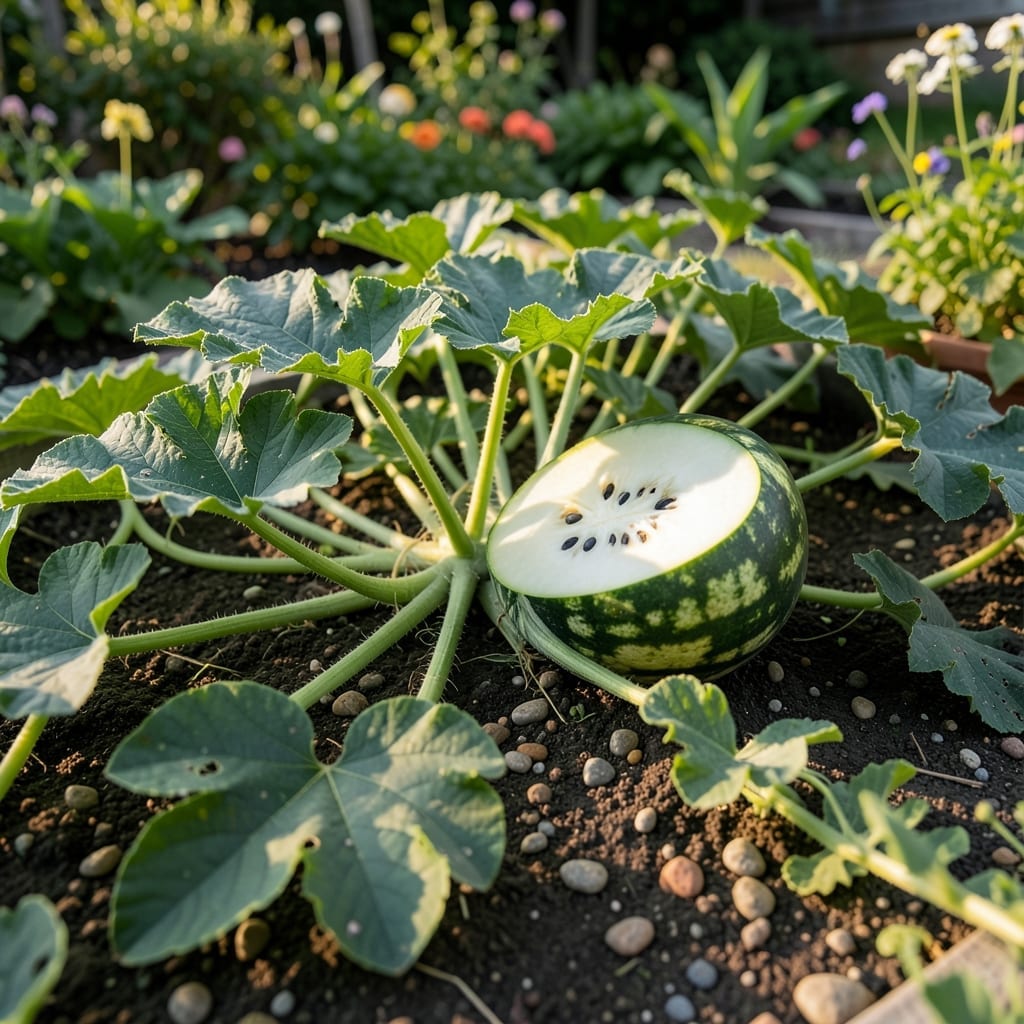
I discovered the hard way that white inside a watermelon isn’t always bad. 🌱 My first reaction was panic, but some varieties naturally have white flesh, and others just need more time to ripen.
The real problem starts when it’s a sign of disease or poor growing conditions. I’ve learned to spot the difference between harmless immaturity and serious issues like blossom end rot or fungal infections.
Prevention comes down to consistent watering, proper soil nutrition, and choosing disease-resistant varieties. These simple steps saved my next harvest from the same disappointment.
You’ll get better at reading your melons’ signals with experience. The key is knowing when to wait and when to act.
White streaks or patches inside a watermelon can be alarming, but they’re usually not a health risk. Here’s why it happens, broken down by the most common causes:
Watermelons develop their signature red or pink hue as they ripen. If picked too early, the flesh may stay white or pale due to insufficient lycopene—the pigment responsible for the red color. Lycopene production depends on sunlight, temperature, and time on the vine. A watermelon harvested before peak ripeness won’t develop its full color or sweetness.
Extreme heat or cold during growth can disrupt pigment formation. High temperatures (above 90°F) may inhibit lycopene synthesis, while sudden cold snaps can stall maturation. This stress often results in white or streaked flesh, especially in the center of the fruit where heat exposure is most direct.
Inconsistent watering—either too much or too little—can lead to poor pigment development. Overwatering dilutes the sugars and pigments, while drought stress can halt lycopene production. Watermelons need steady moisture (about 1–2 inches per week) to develop evenly colored, sweet flesh.
Some heirloom or specialty watermelon varieties (like ‘Carolina Cross’ or ‘White Wonder’) naturally have white or pale flesh. These aren’t defective—they’re bred for unique traits. However, if you’re growing a standard red variety and see white flesh, it’s likely due to one of the above environmental factors.
If you’ve cut open a watermelon and found white, underripe, or pale flesh, don’t toss it just yet! Here’s how to address the most common causes and prevent it next time.
If the white flesh is firm and lacks sweetness, the melon may not be fully ripe. Unlike some fruits, watermelons don’t ripen further after picking. Solution: Choose a new watermelon with a creamy yellow spot (not white) on its underside and a hollow sound when tapped. For future picks, check the tendril near the stem—it should be dry and brown.
Prevention tip: 💡 Buy watermelons in late summer (peak season) for the sweetest, most reliable results.
White, mushy, or stringy texture often signals chilling injury from refrigerator storage below 50°F (10°C). Solution: Move the watermelon to room temperature for 24 hours before eating. If the damage is severe, use the flesh in smoothies or juices where texture is less noticeable.
Prevention tip: ✨ Store whole watermelons at room temperature. Only refrigerate after cutting.
Pale, watery flesh can result from excess water during growth, diluting sugars. Solution: If you’re growing watermelons, reduce watering as the fruit matures (1–2 inches of water per week is plenty). For store-bought melons, opt for organic or locally grown options where watering is better managed.
Prevention tip: 🎯 Test soil moisture—water only when the top inch is dry.
White, cottony, or moldy patches inside mean fungal contamination (e.g., Fusarium or Powdery Mildew). Solution: Do not eat affected areas. If the infection is limited, trim generously around the spot. For severe cases, discard the melon to avoid health risks.
Prevention tip: 🌡️ Inspect melons for external mold or bruises before purchase.
Yes, if it’s firm and just underripe. Discard if it’s mushy or has a bad odor.
Underripe flesh is firm and pale. Diseased flesh is soft, stringy, or moldy.
Use it in smoothies, juices, or salsas where texture matters less.
Try ‘White Wonder’ or ‘Carolina Cross’. They’re bred for this trait!