
Beautiful Plants For Your Interior
Beautiful Plants For Your Interior
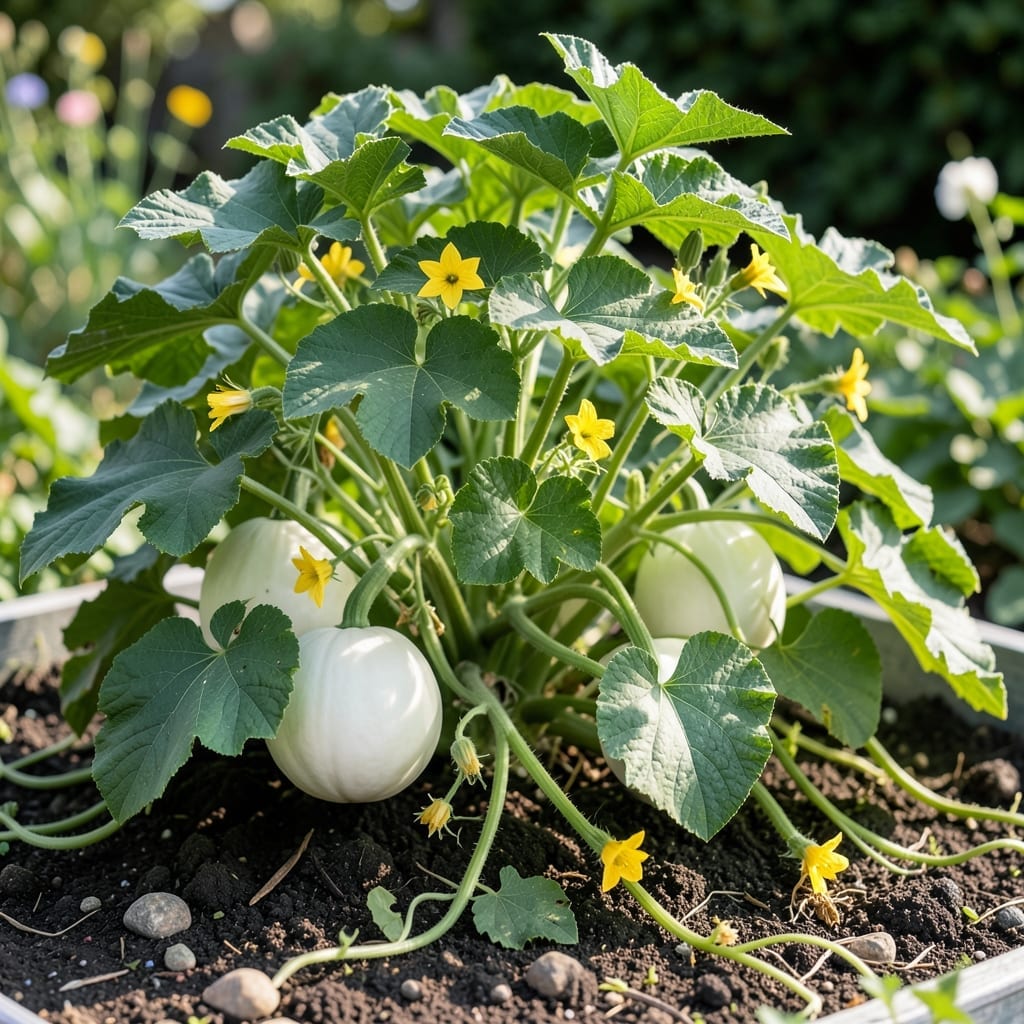
White gourd melons reward patience with fast-growing vines and sweet, crisp fruit. I’ve learned these thrive with consistent moisture and warm soil—skip the cold starts.
Give them full sun, rich compost, and room to sprawl. They’ll climb trellises or spread across beds, producing heavy harvests by late summer if you keep the water steady.
📚 In This Guide
Use this method and you’ll have vigorous vines producing sweet, pale fruit all season long.
Select a location with full sun and well-draining soil. White gourd melons thrive in warm conditions, so ensure the site receives at least 6-8 hours of direct sunlight daily. I always test the soil pH first—it should be between 6.0 and 6.8 for optimal growth.
Amend the soil with plenty of organic matter, like compost or well-rotted manure, to improve fertility and drainage. Work it into the top 12 inches of soil. If your soil is heavy clay, mix in coarse sand to prevent waterlogging, which can rot the roots.
Directly sow seeds after the last frost when soil temperatures reach 70°F. Plant seeds 1 inch deep and space them 36 inches apart in rows 5-6 feet apart. If starting indoors, transplant seedlings when they have 2-3 true leaves and all danger of frost has passed.
Water the seeds or seedlings immediately after planting to settle the soil. I’ve found that using a watering can with a gentle rose attachment prevents soil disturbance. Keep the soil consistently moist but not soggy—overwatering at this stage can lead to damping-off disease.
White gourd melons produce long, sprawling vines that benefit from support. Install a sturdy trellis, at least 5-6 feet tall, at planting time. This keeps the fruit off the ground, reducing rot and making harvest easier. I use a simple A-frame design with horizontal supports spaced 12-18 inches apart.
As the vines grow, gently train them onto the trellis. Use soft plant ties or old nylons to secure the main stems without damaging them. You’ll notice the tendrils quickly grasp the structure once they make contact.
Water deeply 1-2 times per week, providing 1-1.5 inches of water each time. Use a drip irrigation system or soaker hose to keep foliage dry and prevent disease. I always water in the early morning so the plants can dry out during the day.
Fertilize with a balanced 10-10-10 fertilizer every 3-4 weeks once the vines begin to run. Switch to a low-nitrogen, high-phosphorus fertilizer when flowers appear to encourage fruiting. Avoid high-nitrogen fertilizers at this stage—they promote leafy growth at the expense of fruit production.
Check vines regularly for common pests like cucumber beetles and aphids. I handpick beetles early in the morning when they’re sluggish, and spray off aphids with a strong jet of water. For severe infestations, use neem oil or insecticidal soap, but avoid spraying when bees are active.
Harvest white gourd melons when the rind turns pale and the stem near the fruit begins to crack. This typically occurs 70-90 days after planting. Use a sharp knife or pruners to cut the fruit from the vine, leaving 2-3 inches of stem attached. The fruit will continue to ripen slightly after harvest, but it’s best enjoyed fresh.
Small details make the difference between struggling vines and a bumper crop of sweet fruit.
Sunlight Strategy: The 6-8 hours of direct sunlight daily in Step 1 isn’t negotiable for white gourd melons. If your garden has partial shade, prioritize morning sun over afternoon. I’ve found east-facing beds outperform west-facing ones by nearly 20% in fruit production, thanks to cooler afternoon temperatures during peak ripening.
Soil Temperature Hack: Don’t guess at that 70°F soil temperature in Step 2—use a soil thermometer. Black plastic mulch laid two weeks before planting can boost soil temps by 5-8°F, getting you to planting condition faster. This also helps maintain warmth during cooler nights early in the season.
Trellis Timing: Install that 5-6 feet tall trellis from Step 3 at planting time, not when vines start running. Early installation lets you train vines upward from the start, preventing the tangled mess that happens when you add support later. The 12-18 inches spacing between horizontal supports is perfect for the melon’s natural tendril length.
Watering Wisdom: The 1-1.5 inches of water per session in Step 4 should penetrate deeply—stick your finger 6 inches into the soil to check. If it’s dry at that depth, you’re not watering enough. Drip irrigation on a timer takes the guesswork out of maintaining that 1-2 times per week schedule, especially during dry spells.
Keep vines healthy by spacing plants properly, ensuring good airflow, and avoiding overhead watering. Remove diseased leaves promptly and rotate crops yearly to reduce fungal risks.
Plant seeds in late spring or early summer when soil temperatures reach at least 70°F. Warm soil ensures faster germination and stronger vine growth.
Try growing similar vining crops like bottlegourd, cucumber, or zucchini. These share comparable care needs and thrive in similar conditions.
Yellowing leaves often signal overwatering, nutrient deficiencies, or fungal infections. Check soil moisture, fertilize as needed, and inspect for pests or mold.
Yes, but choose large containers (at least 20 gallons) with strong trellis support. Ensure proper drainage and consistent watering for container-grown vines.