
Beautiful Plants For Your Interior
Beautiful Plants For Your Interior
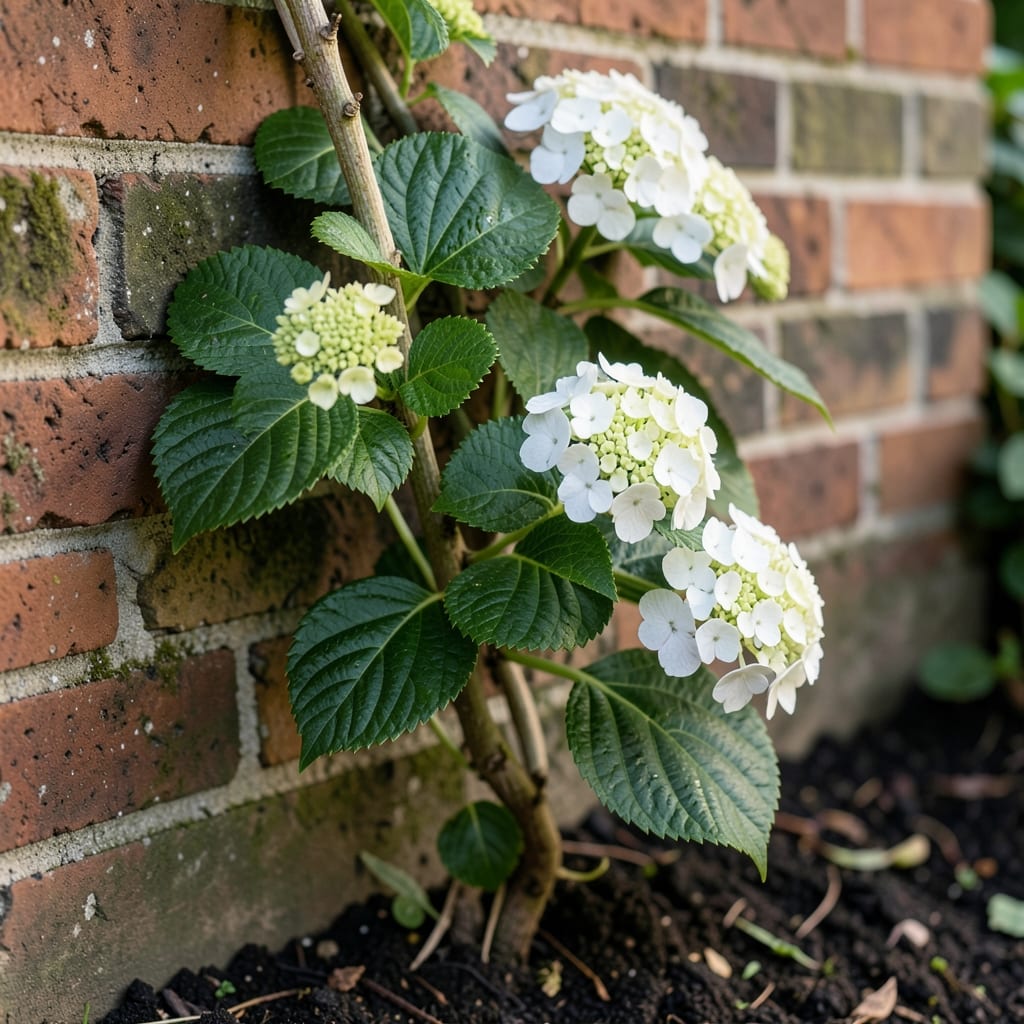
White climbing hydrangea transformed my bare fence into a lush green curtain dotted with snow-white blooms. I was skeptical at first—vines can be finicky—but this one thrives with minimal fuss.
It clings without support, blooms on new wood, and handles partial shade better than most climbers. Within 2-3 years, you’ll have a vertical garden that stops neighbors in their tracks. Just give it room to spread and consistent moisture.
📚 In This Guide
This method ensures vigorous growth and abundant blooms with minimal fuss.
Choose a location with partial shade to full sun, though afternoon shade is ideal in hotter climates. White climbing hydrangea thrives in well-draining, moist, fertile soil with a slightly acidic to neutral pH (6.0-7.0). I always test the soil first—it saves time and prevents poor growth.
Amend the planting area with organic matter like compost or well-rotted manure to improve fertility and drainage. Dig a hole twice as wide and just as deep as the root ball. This gives the roots room to spread and establishes the plant faster.
Remove the plant from its container and gently loosen the roots if they’re circling. Place the hydrangea in the hole so the top of the root ball sits 1 inch above the soil line—this prevents settling and ensures good drainage. Backfill with the amended soil, pressing lightly to remove air pockets.
Water deeply after planting to settle the soil and hydrate the roots. I like to create a 2-3 inch watering ring around the base to help direct moisture to the roots. Mulch with 2-3 inches of organic material, keeping it 2 inches away from the stem to prevent rot.
White climbing hydrangea needs a strong support to grow vertically. Install a trellis, arbor, or fence at planting time to avoid disturbing the roots later. The structure should be at least 6-8 feet tall to accommodate mature growth, which can reach 30-50 feet in ideal conditions.
Secure the vines to the support with soft ties or twine, but avoid anything that could cut into the stems as they thicken. I check the ties every few months to ensure they’re not too tight. This plant climbs by aerial rootlets, so a rough surface like wood or brick helps it grip better than smooth metal.
Keep the soil consistently moist, especially during the first growing season. Water at the base 2-3 times per week in dry periods, ensuring the soil stays evenly damp but not soggy. Drought stress can reduce blooming, so I monitor the soil closely during heatwaves.
Fertilize in early spring with a balanced, slow-release fertilizer (10-10-10 or 12-12-12) to promote healthy growth and flowering. Avoid high-nitrogen fertilizers, as they can encourage leafy growth at the expense of blooms. A second light application in early summer can boost performance, but stop fertilizing by late summer to avoid late-season growth that may not harden off before winter.
Prune white climbing hydrangea right after flowering, typically in late summer or early fall. This plant blooms on old wood, so pruning at the wrong time can remove next year’s flowers. Remove dead, damaged, or diseased wood first, then thin out crowded or crossing stems to improve airflow.
I shape the plant by cutting back overly long vines to maintain the desired form. Avoid heavy pruning—this hydrangea naturally grows in a somewhat unruly manner, and over-pruning can reduce its vigor. If you need to control its spread, trim back the tips of the vines after flowering to encourage branching.
Small details in planting and care make a big difference in how your vines thrive.
Site Selection: The partial shade to full sun requirement is non-negotiable. In hotter climates, that afternoon shade prevents leaf scorch while still allowing for abundant blooms. I’ve seen plants struggle in full sun without adequate water, so don’t skip testing your soil pH first—6.0-7.0 is the sweet spot.
Planting Depth: That 1 inch above the soil line in Step 2 isn’t just a suggestion—it’s critical. Planting too deep can suffocate the roots, while sitting too high exposes them. The watering ring trick I mentioned really does direct moisture right where it’s needed most.
Support Structure: Install your 6-8 feet tall trellis or arbor at planting time. Waiting until later risks disturbing the roots. Use soft, stretchy ties and check them every few months as the vines thicken—this prevents girdling. Wood or brick surfaces work better than smooth metal for the aerial rootlets to grip.
Watering Wisdom: The 2-3 times per week watering in Step 4 assumes dry periods. In cooler, wetter spells, you can scale back. The key is consistency—soil should stay evenly damp but never soggy. Overwatering is just as harmful as drought for this plant.
White climbing hydrangea grows moderately, averaging 1-2 feet per year. With proper care—like consistent watering and support—it can reach 30-50 feet at maturity. Patience pays off with its stunning vertical blooms!
Plant in early spring or fall to avoid extreme heat or cold. This gives roots time to establish before summer blooms or winter dormancy. Aim for well-draining soil and partial shade.
Lack of blooms often stems from insufficient sunlight, improper pruning, or young age. Ensure it gets 4-6 hours of light daily and avoid heavy pruning—this plant blooms on old wood!
Yes, but choose a large pot (at least 20 gallons) with drainage. Use a trellis for support and keep soil moist. Container-grown plants may need winter protection in colder climates.