
Beautiful Plants For Your Interior
Beautiful Plants For Your Interior
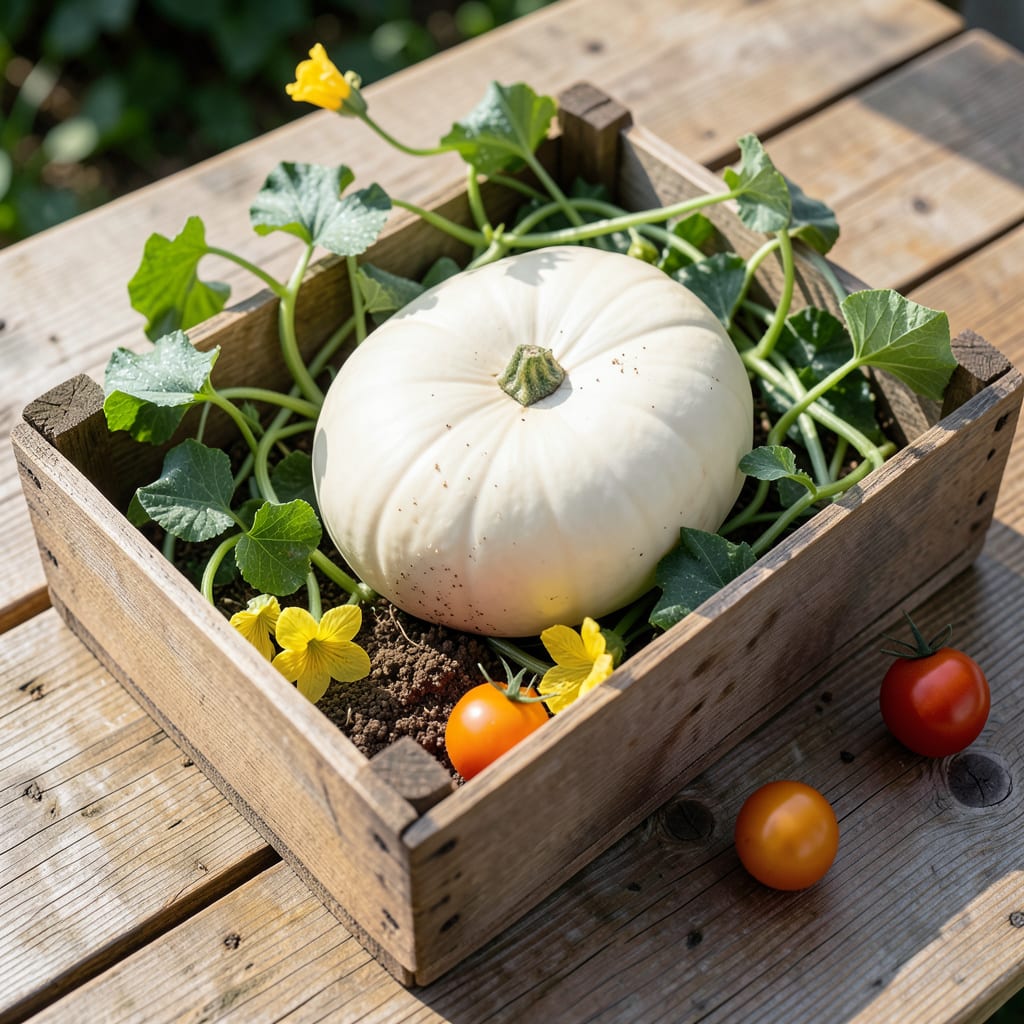
I fell for white bush marrow squash after one bite of its creamy, sweet flesh. This compact variety produces 8-10 pound fruits on vines that stay neat instead of taking over your garden.
It thrives in full sun with rich, well-drained soil. Plant after last frost when soil warms to 70°F. You’ll get reliable harvests with less space than most squash demand.
📚 In This Guide
Here’s the method I’ve refined over years to get heavy yields from compact vines.
Choose a location with full sun exposure—at least 6-8 hours of direct sunlight daily. White bush marrow squash thrives in warm, well-draining soil. I always test my soil by digging a 12-inch hole and checking if water drains within 30 minutes after filling it.
Work the soil to a depth of 12-15 inches, removing rocks and breaking up clumps. Mix in a 2-3 inch layer of compost to improve fertility and drainage. The soil should feel loose and crumbly in your hands, not packed or muddy.
Sow seeds directly after the last frost when soil temperatures reach at least 60°F. Plant seeds 1 inch deep and 2-3 feet apart in rows spaced 4-5 feet apart. I drop two seeds per hole and thin to the strongest plant once they sprout.
If using transplants, set them at the same depth they were in their containers. Water immediately after planting to settle the soil around roots. You’ll see the first true leaves appear in 7-10 days if conditions are right.
Water deeply at the base of plants 1-2 times per week, providing about 1-1.5 inches of water total. The goal is to keep the soil evenly moist but never soggy. I check by sticking my finger 1 inch into the soil—if it feels dry, it’s time to water.
Apply a 2-3 inch layer of organic mulch around plants to retain moisture and suppress weeds. This is especially important as the vines spread and shade the soil. Watch for wilting in hot afternoons—that’s your sign to water more frequently.
White bush marrow squash matures in about 50-60 days. The fruits are ready when the rind hardens and turns a pale ivory color. I check daily once fruits start forming, as they can grow rapidly from small to harvest size in just a few days.
Harvest by cutting the stem with a sharp knife, leaving 1-2 inches of stem attached to the fruit. Don’t carry the squash by the stem, as it can break off. A mature fruit should feel firm and heavy for its size, with a dull sound when tapped lightly.
Regular harvesting encourages the plant to produce more fruits. I’ve found that picking every 2-3 days during peak production keeps the vines productive until the first frost.
Small details make a big difference in growing healthy, productive squash plants.
The Sunlight Essential: Those 6-8 hours of full sun daily aren’t just a suggestion—they’re critical for strong vine growth and fruit development. I’ve noticed plants in partial shade produce smaller, less flavorful squash. If your garden has shady spots, prioritize the sunniest area for planting.
Soil Prep Secret: When you work the soil to 12-15 inches deep in Step 1, don’t rush this process. Breaking up clumps thoroughly and removing rocks prevents stunted root growth. The 2-3 inch layer of compost isn’t just for nutrients—it improves drainage, which is why your water test should show drainage within 30 minutes.
Watering Wisdom: That 1-1.5 inches of water per week might seem like a lot, but remember that squash plants have large leaves that transpire moisture quickly. When you check soil moisture 1 inch down with your finger, err on the side of watering if you’re unsure—squash bounce back better from slightly too much water than too little.
Harvest Timing: During peak production, sticking to that 2-3 day harvesting schedule in Step 4 really does encourage more fruit set. I learned this the hard way when I let a few squash grow too large—the plant seemed to think its job was done and slowed production dramatically.
White bush marrow squash typically matures in 50-60 days from planting. Harvest when the rind is firm and the stem begins to dry for the best flavor and texture.
If unavailable, try zucchini, yellow summer squash, or pattypan squash. These share similar textures and can be used interchangeably in most recipes.
Lack of pollination or poor soil fertility are common culprits. Attract bees with flowers and ensure the soil is rich in organic matter. Avoid over-fertilizing with nitrogen.
Yes! Young, tender white bush marrow squash can be eaten raw, sliced thinly in salads or with dips. Larger squash are best cooked to soften the texture.
Store in a cool, dry place (50-55°F) for up to 2 weeks. For longer storage, refrigerate in a perforated bag for up to a month. Avoid washing until ready to use.
