
Beautiful Plants For Your Interior
Beautiful Plants For Your Interior
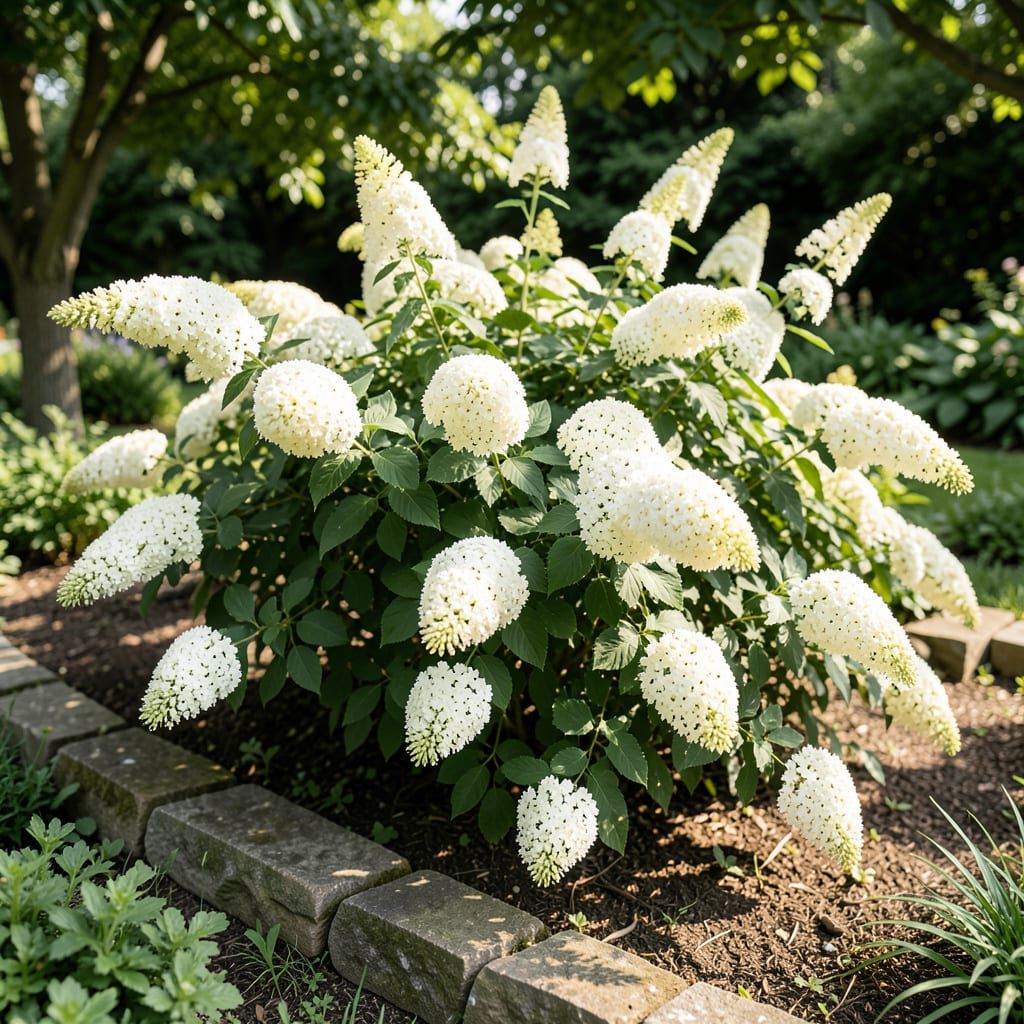
White Bridal Wreath Spirea transforms gardens with its cascading spring blooms. I first planted mine along a fence line, and the arching branches loaded with white flowers stopped traffic.
This shrub thrives in full sun to partial shade with minimal fuss. It handles drought once established and rewards you with years of reliable color. The key is planting in well-draining soil and giving it room to spread.
📚 In This Guide
Here’s the method I rely on to establish this stunning shrub for years of trouble-free beauty.
Select a spot with full sun to partial shade—this shrub thrives in 6+ hours of direct sunlight but tolerates afternoon shade in hotter climates. I’ve found morning sun with dappled afternoon light produces the most vibrant blooms without leaf scorch.
Ensure the soil drains well. Dig a 12-inch deep test hole and fill it with water. If it drains within 1-2 hours, you’re good. Poor drainage causes root rot, so avoid low-lying areas where water pools.
Give it space to grow. Mature plants reach 5-8 feet wide, so plant at least 6 feet apart from other shrubs or structures. This prevents overcrowding and ensures proper air circulation.
Loosen the soil in a 2-foot diameter area to a depth of 18 inches. This encourages roots to spread outward easily. I use a garden fork for this—it breaks up compacted soil without damaging the structure.
Amend the soil with 2-3 inches of compost worked into the top 6 inches. This improves fertility and drainage. Skip heavy clay or sand amendments—this shrub adapts well to most soil types as long as they drain properly.
Check the soil pH. A range of 6.0-7.5 works perfectly. If your soil is too acidic, add a handful of lime. Too alkaline? Mix in some sulfur. Test kits are inexpensive and worth the peace of mind.
Dig a hole twice as wide as the root ball but no deeper. Place the plant in the hole, ensuring the top of the root ball sits 1-2 inches above the surrounding soil level. This prevents settling that could bury the stem.
Backfill with native soil, tampling gently to remove air pockets. Water deeply immediately with 5 gallons of water to settle the soil around the roots. I always build a small berm around the edge to help contain the water.
Apply 2-3 inches of mulch around the base, keeping it 3 inches away from the stem to prevent rot. Wood chips or shredded bark work well. This conserves moisture and suppresses weeds as the plant establishes.
Water deeply once a week during the first growing season, more often in extreme heat. After establishment, this shrub is quite drought-tolerant. I check by sticking my finger 2 inches into the soil—if it’s dry, it’s time to water.
Fertilize lightly in early spring with a balanced 10-10-10 fertilizer. Apply according to package directions, usually about 1 cup per plant. Over-fertilizing leads to excessive leaf growth at the expense of flowers.
Prune immediately after flowering to shape the plant and encourage next year’s blooms. Remove dead or diseased branches anytime. This shrub blooms on old wood, so late pruning cuts off potential flowers.
Let me share what I’ve learned through trial and error to help you avoid common pitfalls.
Sunlight Strategy: In Step 1, the 6+ hours of direct sunlight is non-negotiable for vibrant blooms. I discovered that morning sun with afternoon shade works best in hotter climates, preventing leaf scorch while still delivering those beautiful cascading flowers.
Drainage Test: For the 12-inch deep test hole in Step 1, don’t skip this! If water doesn’t drain within 1-2 hours, consider amending the soil or choosing a different location. Poor drainage will kill your shrub faster than anything else.
Planting Depth: In Step 3, placing the root ball 1-2 inches above soil level might seem counterintuitive, but it prevents settling that could bury the stem. I learned this the hard way after losing a plant to stem rot.
Watering Wisdom: The 5 gallons of water immediately after planting is crucial for settling the soil. Then, during that first growing season, stick to once a week unless you’re in extreme heat. Overwatering is just as dangerous as underwatering.
This shrub typically blooms in late spring to early summer, producing cascading clusters of white flowers. The exact timing depends on your climate zone, but expect blooms around May or June in most regions.
It usually reaches 4 to 8 feet tall with a similar spread. Regular pruning can help control its size, making it ideal for borders, hedges, or as a standalone ornamental shrub.
Consider Vanhoutte spirea (larger, arching branches) or dwarf spirea varieties for smaller spaces. For white blooms, mock orange or deutzia are great alternatives with a similar aesthetic.
Lack of blooms is often due to improper pruning (cutting back too late in the season) or insufficient sunlight. Ensure it gets at least 6 hours of sun daily and prune right after blooming ends.
