
Beautiful Plants For Your Interior
Beautiful Plants For Your Interior
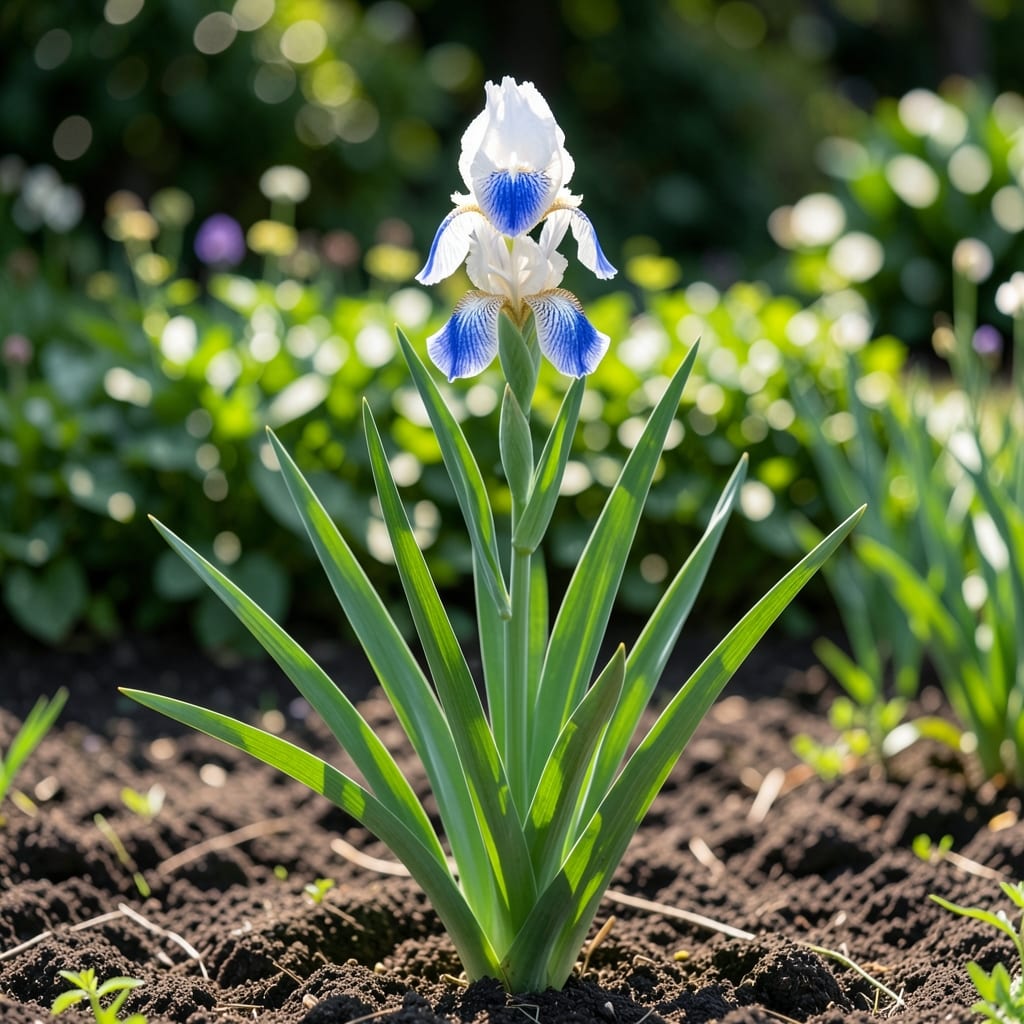
There’s something magical about white blue iris blooms in spring. I’ve grown these striking flowers for years, and they never fail to impress with their delicate colors and elegant form.
With the right planting spot, well-draining soil, and a little attention, you’ll have healthy rhizomes producing reliable blooms year after year. The key is patience—give them a season to establish, and they’ll reward you generously.
📚 In This Guide
Small adjustments in planting and care make a dramatic difference in bloom quality and plant health.
Light Requirements: The 6 hours of sunlight mentioned in Step 1 is non-negotiable for vibrant blooms. Morning sun with afternoon shade works particularly well in hotter climates, as it prevents scorching while still providing adequate energy for flowering.
Soil Depth Matters: When working the soil to 12-15 inches in Step 2, don’t cut corners. Iris rhizomes spread horizontally just below the surface, and shallow preparation restricts their growth. I learned this the hard way when my first planting struggled in compacted soil.
Planting Technique: In Step 3, the instruction to leave rhizome tops exposed or barely covered is critical. Burying them too deep causes rot and prevents flowering entirely. I’ve seen gardeners lose entire plantings by ignoring this simple but vital detail.
Watering Wisdom: The 1 inch of water per week during the first growing season in Step 4 is a guideline, not a rigid rule. Check soil moisture by inserting your finger 2 inches deep—if it’s dry, water deeply. Overwatering is just as harmful as underwatering for establishing iris.
The best time to plant white blue iris is in late summer to early fall, around August to September. This allows the roots to establish before winter, ensuring vibrant blooms in spring.
Keep the soil well-drained and avoid overwatering. Remove dead foliage in fall to reduce fungal risks, and divide clumps every 3-4 years to prevent overcrowding and disease spread.
Consider Siberian iris or Japanese iris for similar elegance. Both thrive in moist soil and offer striking blue-purple blooms with less maintenance.
Lack of sunlight, poor soil fertility, or overcrowding may be the cause. Ensure 6+ hours of sun daily, fertilize lightly in early spring, and divide clumps if needed.