
Beautiful Plants For Your Interior
Beautiful Plants For Your Interior
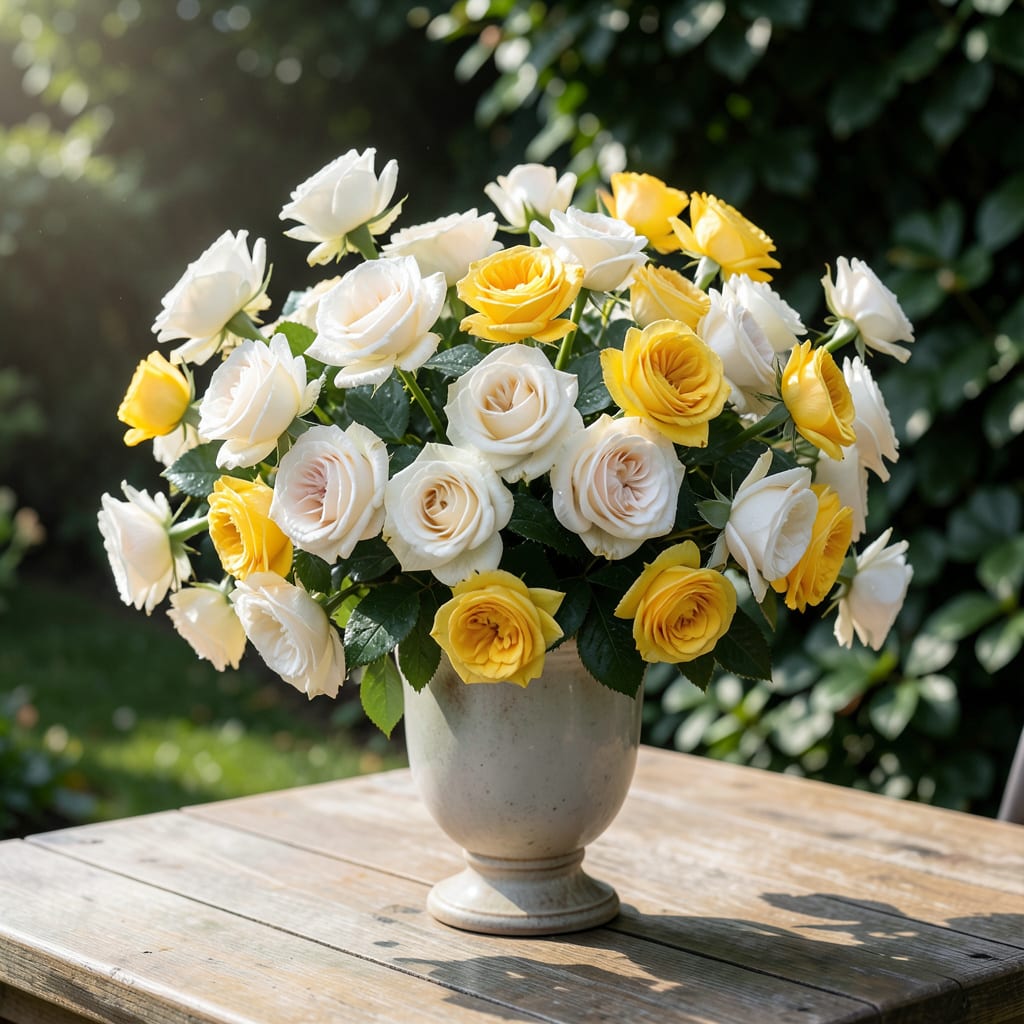
White and yellow roses bring timeless elegance to any garden. I’ve grown these dual-color blooms for years, and they never fail to turn heads with their bright, cheerful display.
The key is giving them plenty of sun, well-draining soil, and consistent watering. With the right care, they’ll reward you with stunning flowers all season long, filling your space with color and fragrance.
📚 In This Guide
Here’s the proven approach I use to establish healthy dual-color rose bushes that bloom spectacularly.
Choose a spot that receives at least 6-8 hours of direct sunlight daily. These roses thrive in full sun, which encourages vibrant blooms and strong stems. Avoid low-lying areas where cold air or water might pool, as roses dislike soggy roots.
Test the soil drainage by digging a 12-inch deep hole and filling it with water. If it drains within 1-2 hours, the location is suitable. Poor drainage leads to root rot, which will kill the plant before it establishes.
Dig a hole that is 18-24 inches wide and 12-18 inches deep. This gives the roots plenty of room to spread and anchor. Mix the removed soil with compost or aged manure to improve fertility and structure.
Loosen the soil at the bottom of the hole with a garden fork to encourage roots to penetrate deeply. If your soil is heavy clay, add perlite or coarse sand to the mix to prevent compaction around the roots.
Place the rose in the hole, ensuring the bud union (the swollen area where the canes meet the roots) sits 1-2 inches above soil level in cold climates or at soil level in warmer regions. This protects the plant from freeze damage and disease.
Backfill the hole with the amended soil, gently firming it around the roots to eliminate air pockets. Water thoroughly with 1-2 gallons to settle the soil and hydrate the roots. You’ll see the soil level drop slightly—add more mix to bring it back to grade.
Spread a 2-3 inch layer of organic mulch, such as wood chips or straw, around the base of the plant. Keep the mulch 2 inches away from the stems to prevent rot. Mulch retains moisture and suppresses weeds that compete for nutrients.
Water deeply 2-3 times per week for the first 4-6 weeks, then reduce to 1-2 times weekly once established. Check soil moisture by sticking your finger 1 inch deep—if it feels dry, it’s time to water.
After planting, prune any damaged or crossing canes to open the center of the bush. This improves air circulation, reducing the risk of fungal diseases. Use clean, sharp pruners to make cuts at a 45-degree angle just above an outward-facing bud.
Apply a balanced 10-10-10 fertilizer after the first bloom cycle, following package instructions. Avoid high-nitrogen fertilizers late in the season, as they promote leafy growth at the expense of flowers. You’ll see stronger canes and more abundant blooms within 6-8 weeks.
These practical insights will help your roses thrive from day one.
Sunlight Strategy: The 6-8 hours of direct sunlight mentioned in Step 1 isn’t just a suggestion—it’s essential for vibrant blooms. I’ve learned the hard way that anything less results in weak stems and pale flowers. Position your planting spot to catch morning sun, which dries dew quickly and prevents fungal issues.
Drainage Test Tip: That 12-inch deep drainage test in Step 1 is your best insurance against root rot. If water sits longer than 1-2 hours, consider raised beds or amending with perlite. Between us, I lost three rose bushes before I started doing this test religiously.
Planting Depth Matters: In Step 3, the bud union placement is critical. For cold climates, keep it 1-2 inches above soil level—this saved my roses during an unexpected late frost. In warmer areas, planting at soil level works, but never bury the union, as it can suffocate the plant.
Watering Wisdom: The 2-3 times weekly watering schedule in Step 4 for the first 4-6 weeks is non-negotiable for establishment. I check soil moisture by the finger test—if the top inch feels dry, it’s time to water deeply. After establishment, you can scale back to 1-2 times weekly as the roots grow deeper.
Yes! These roses thrive in similar conditions—full sun, well-draining soil, and moderate watering. Planting them together creates a striking contrast and harmonious display.
White roses represent purity and innocence, while yellow roses symbolize friendship and joy. Combined, they convey messages of hope, new beginnings, and balanced emotions.
Water deeply 1-2 times a week, fertilize monthly in growing season, and prune in early spring. Watch for pests like aphids and treat promptly with neem oil or insecticides.
Most varieties bloom in late spring to fall, but timing depends on the specific cultivar and climate. Choose complementary types (e.g., hybrid teas or floribundas) for synchronized blooms.
Consider white and yellow tulips, daisies, or daylilies for a comparable dual-color effect. These require less maintenance and still deliver vibrant garden charm.
