
Beautiful Plants For Your Interior
Beautiful Plants For Your Interior
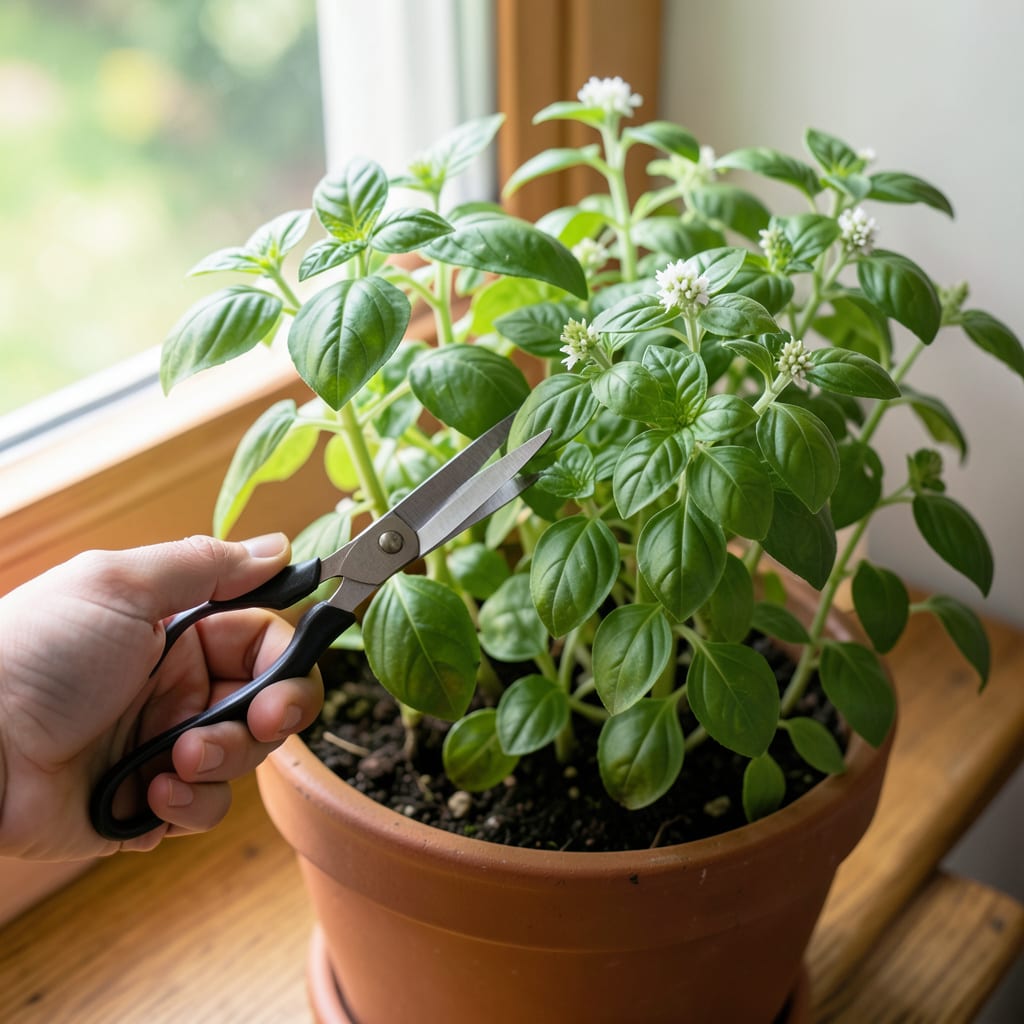
I used to make the same mistake with my 🌿 Basil – cutting in the wrong spot and wondering why it grew tall but sparse. The secret lies in knowing exactly where to make that cut.
With the right technique, you’ll encourage your Basil to grow bushier and produce more leaves all season long. Let me show you how to do it properly.


When I harvest my basil plants, I always look for the leaf pairs along the stem. These are the nodes where new growth will sprout after cutting. By making a clean cut just above these points, you encourage the plant to branch out.
This method works because the auxiliary buds at each node stay dormant until the apex is removed. Once you snip above them, they’ll activate and produce two new stems, creating a fuller plant.
| Cutting Location | Purpose |
|---|---|
| Above leaf pair | Encourages bushiness |
| 1/4 inch above node | Prevents stem dieback |
| Never below node | Avoids bare stems |
I’ve found that cutting too low can leave bare stems that won’t regrow. Always position your shears 1/4 inch above the node to prevent dieback while allowing the plant to heal quickly.
The best time to harvest is when the plant has 6-8 sets of leaves. At this stage, it’s mature enough to handle pruning and will respond by growing more vigorously.
If your basil plant is flowering, it’s a sign it’s trying to go to seed. I recommend cutting back the top third of the plant to redirect energy into leaf production rather than flowers.
For continuous harvests, I never remove more than 1/3 of the plant at once. This ensures there’s always enough foliage left for photosynthesis, which keeps the plant healthy and productive.
Using sharp pruners or clean scissors is crucial. Dull blades can crush stems, making them more susceptible to disease. I always wipe my tools with rubbing alcohol between plants to prevent spreading pathogens.
After cutting, I like to pinch off any small leaves at the base of the stem. This further encourages the plant to focus its energy on producing new growth from the nodes you’ve just exposed.
Remember that morning harvesting gives you the best flavor. The essential oils are most concentrated before the heat of the day sets in, and the plant is at its most hydrated state.
With these techniques, your basil plants will stay productive and bushy all season long, providing you with plenty of fresh leaves for all your gardening needs 🌿
I always start my basil harvesting in the early morning when the essential oils are most concentrated. The first step is selecting the right stems to cut, focusing on those with multiple leaf pairs for best results.
Before making any cuts, I ensure my pruning shears or scissors are sharp and clean. This prevents crushing the stems and reduces the risk of spreading plant diseases between harvests.
I make my cuts at a 45-degree angle to maximize the surface area for water uptake while preventing water from pooling on the stem. This simple technique helps the basil plant heal faster and reduces rot risk.
After harvesting, I immediately remove any flower buds I see. These divert energy from leaf production, and pinching them off keeps my plants focused on growing more foliage instead of seeds.
For container-grown basil, I’m especially careful not to over-harvest. These plants have limited root space, so I take smaller amounts more frequently to maintain steady growth without stressing the plant.
Finally, I always give my basil a light watering after harvesting. This helps the plant recover from the stress of pruning and encourages new growth from the nodes I’ve just exposed ✂️
I see many gardeners make the mistake of cutting single basil leaves instead of entire stems. This approach actually slows growth because it prevents the plant from branching out properly at the nodes.
Another common error is harvesting too much at once. Removing more than 1/3 of the plant stresses it and can lead to stunted growth. I always leave plenty of foliage for photosynthesis.
⚠️ Warning: Never cut below a leaf node – this creates bare stems that won’t regrow and can invite disease.
Using dull pruning tools is another mistake I caution against. Crushed stems heal poorly and are more susceptible to fungal infections. I sharpen my shears regularly for clean cuts.
Harvesting at the wrong time of day affects both flavor and plant recovery. I avoid evening harvesting when the plant is stressed from heat and essential oils are less concentrated.
Finally, I notice some gardeners neglect to remove flower buds. Allowing basil to flower shifts energy from leaf production to seed formation, resulting in bitter-tasting leaves and reduced yield ✂️
Harvest every 2-3 weeks during active growth. This frequency encourages bushier growth while preventing flowering. Always leave at least 2 sets of leaves on each stem to maintain plant health.
Cutting just above nodes activates dormant buds there. This stimulates the plant to produce two new stems from each cut, creating a fuller plant. It prevents leggy growth and maximizes leaf production.
Yes, but ensure they’re sharp and clean. Dull blades crush stems, slowing healing. Always wipe blades with rubbing alcohol between plants to prevent disease spread. Pruning shears are ideal but not required.
Cutting below nodes creates bare stems that won’t regrow. This weakens the plant and can invite disease. Always cut 1/4 inch above the node to protect the growth point.
