
Beautiful Plants For Your Interior
Beautiful Plants For Your Interior
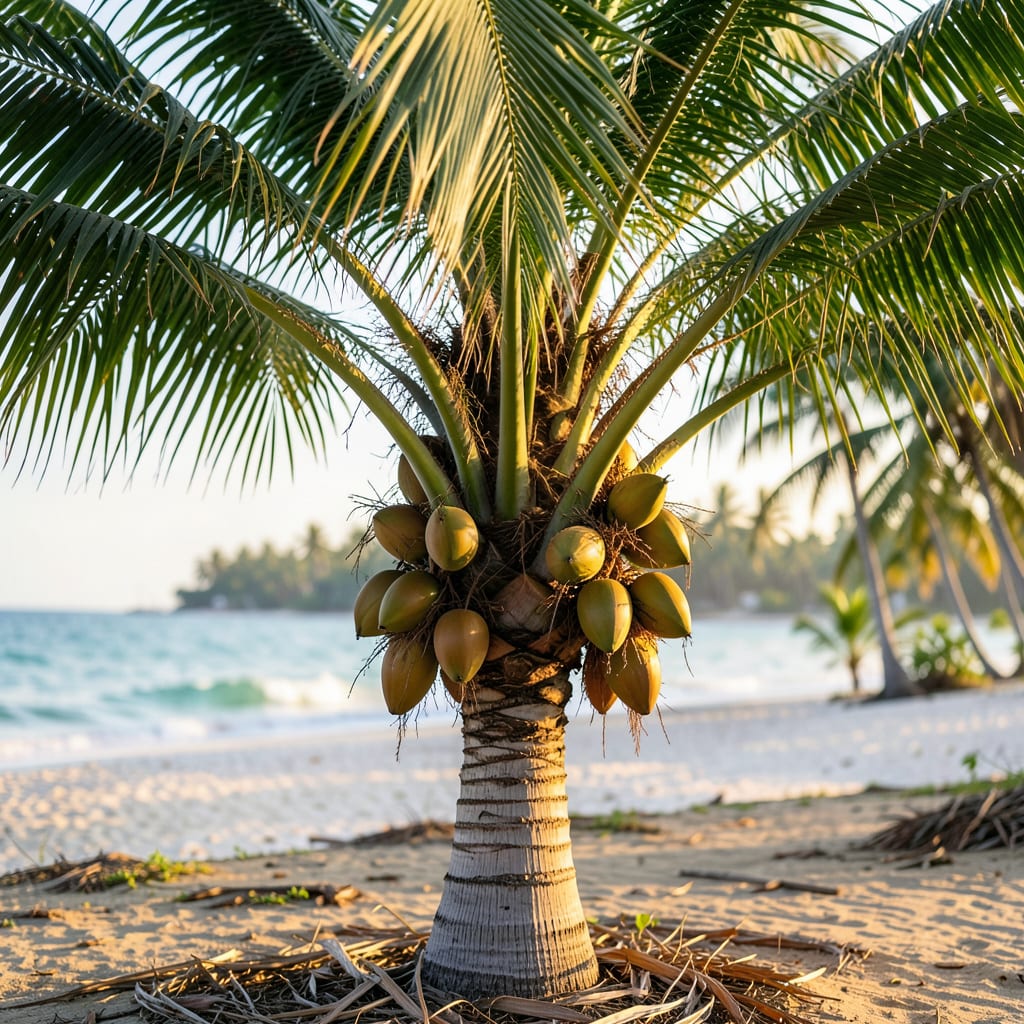
Palm trees are native primarily to tropical and subtropical regions, with the highest diversity in Southeast Asia, South America, and parts of Africa. Over 2,600 species exist, thriving in warm climates near the equator.
These iconic trees have evolved over millions of years to dominate coastal areas, rainforests, and even desert oases. 🌴 What’s fascinating is how their distribution tells a story of Earth’s changing climate—some species in Madagascar, for example, have been isolated for so long they’re found nowhere else. The Amazon basin alone hosts hundreds of unique palm varieties, each adapted to specific soil types and moisture levels.
I’ve noticed that while most people associate palms with beaches, many species actually prefer inland habitats. The oil palm of West Africa and the coconut palm of the Pacific Islands demonstrate how different species have specialized to fill distinct ecological niches across continents.
💡 In This Article
The global spread of palm trees reveals a fascinating story of adaptation to specific environmental conditions. These plants require consistent warmth—most species cannot survive temperatures below 50°F (10°C) for extended periods.
The equatorial belt provides ideal conditions with its stable 77-86°F (25-30°C) year-round temperatures and high humidity levels that prevent moisture loss through their broad leaves.
🌡️ What’s particularly interesting is how different species have evolved to thrive in microclimates within this band, from the waterlogged soils of mangrove swamps to the well-drained slopes of volcanic islands.
Soil composition plays a crucial role in palm distribution. Species like the African oil palm (Elaeis guineensis) flourish in the nutrient-rich, slightly acidic soils of West African rainforests, where they’ve developed extensive root systems to access minerals in the top 12-18 inches of soil.
Contrast this with the coconut palm (Cocos nucifera), which has adapted to sandy, saline coastal soils through specialized root structures that filter salt and anchor the tree during storms. The Amazon basin alone contains over 130 palm species, each occupying distinct niches based on soil pH, drainage, and organic matter content.
Continental drift explains why we see such concentration of palm diversity in certain regions. When Gondwana split about 180 million years ago, it carried ancestral palm species to what are now South America, Africa, Madagascar, and the Indian subcontinent.
Madagascar’s isolation for 88 million years led to the evolution of unique species like the traveler’s palm (Ravenala madagascariensis), which isn’t a true palm but demonstrates convergent evolution.
🌍 The collision of the Indian plate with Asia created the perfect conditions for palm diversification in Southeast Asia, where we now find the highest concentration of species.
The Andes Mountains and Himalayan range act as natural barriers that have shaped palm distribution. In South America, the Amazon’s palm diversity decreases dramatically as you move westward into the Andes, where only cold-tolerant species like the Andean wax palm (Ceroxylon) can survive at elevations above 6,500 feet.
Similarly, in Asia, palm diversity drops sharply north of the Himalayas due to the dramatic temperature shifts. These geographical features have created isolated pockets where unique species evolved, like the Tibetan sacred palm found only in certain Himalayan valleys.
Water availability patterns have led to surprising adaptations. Some desert palms like the California fan palm (Washingtonia filifera) have developed underground storage organs and waxy leaf coatings to conserve water. In contrast, rainforest palms often have drip-tip leaves that channel water away from the trunk to prevent fungal growth.
The raphia palm of African swamps has even developed floating roots that allow it to thrive in permanently waterlogged conditions. These adaptations explain why you’ll find palms dominating ecosystems from the Atacama Desert (where fog provides moisture) to the Congo Basin (with its constant humidity).
Human activity has also influenced palm distribution over the past 5,000 years. The coconut palm’s natural range was likely limited to the Indian Ocean basin, but Polynesian sailors carried it across the Pacific, while Arab traders spread it along African and Asian coasts.
Similarly, the date palm (Phoenix dactylifera) was cultivated in Mesopotamia by 4000 BCE and spread throughout the Middle East and North Africa through trade routes. This human-mediated dispersal explains why some palm species now appear native to regions far from their original homes.
Climate change is now altering these historical distribution patterns. Some tropical palms are migrating poleward at rates of up to 4 miles per decade, while others face habitat loss. The quindío wax palm of Colombia, the world’s tallest palm species, is now endangered due to climate shifts and agricultural expansion.
Understanding these natural distribution patterns helps conservationists prioritize protection efforts for the most vulnerable species and ecosystems.
Yes, about 12 native palm species grow wild in the U.S., primarily in Florida, California, and the Southeast. The cabbage palmetto is Florida’s state tree, while the California fan palm thrives in desert oases. These adapted to local climates over thousands of years.
Europe’s climate is too cold for most palms. The continent lacks the consistent 77-86°F (25-30°C) temperatures palms require. Only the European fan palm survives in Mediterranean regions, where microclimates provide just enough warmth.
Species like the date palm and California fan palm thrive in deserts. They’ve evolved deep root systems and waxy leaves to conserve water. Some even rely on underground aquifers or fog for moisture in arid conditions.
Ocean currents and human activity played key roles. Coconuts float and germinate after months at sea, colonizing new islands. Polynesian sailors intentionally carried palms across the Pacific 3,000+ years ago, creating the tropical landscapes we associate with islands today.
Yes! The needle palm survives down to -5°F (-20°C), while windmill palms handle 5°F (-15°C). These species have thick trunks and fibrous insulation. Many gardeners successfully grow them in zones as cold as USDA Zone 6.
