
Beautiful Plants For Your Interior
Beautiful Plants For Your Interior
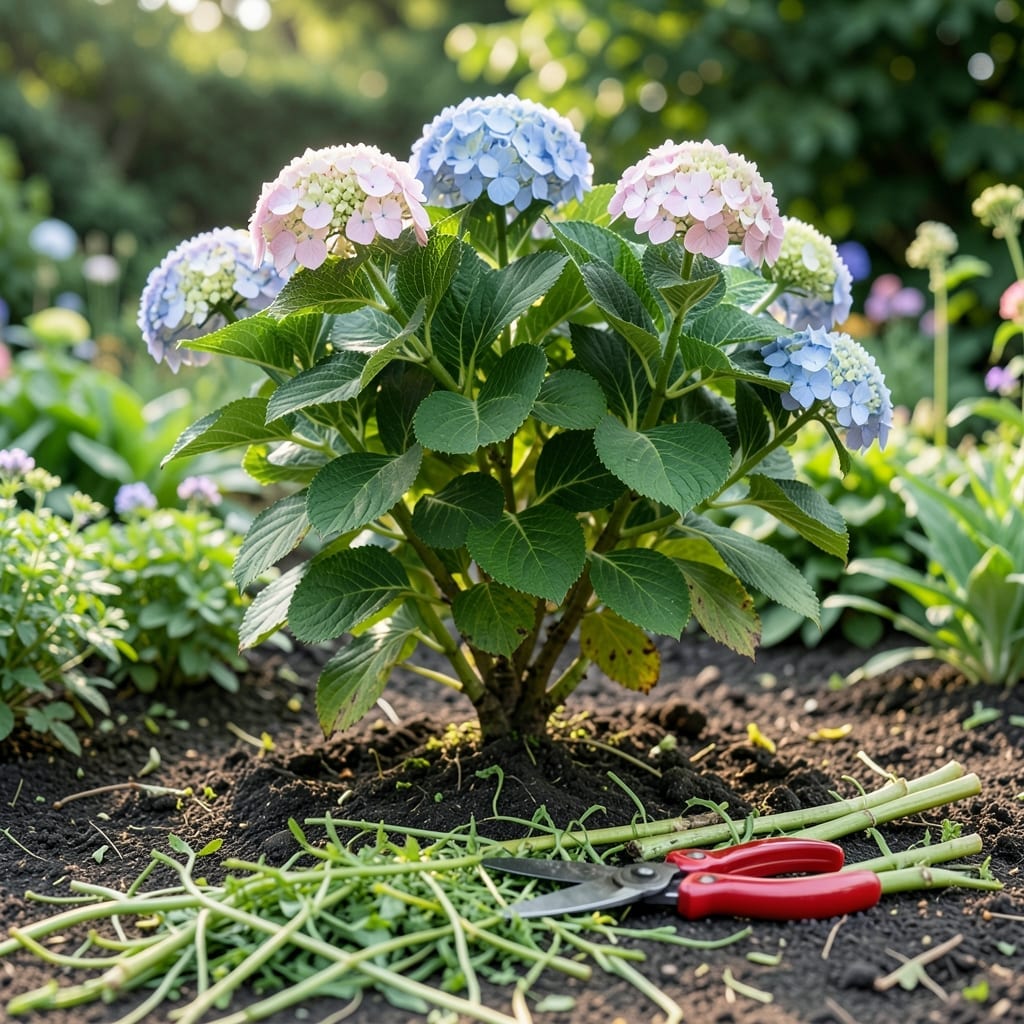
Trimming hydrangeas at the wrong time can cost you a season of blooms. I learned this the hard way when my 🌸 Hydrangea bushes went a whole summer without a single flower.
Timing is everything with these beautiful shrubs. Whether you have bigleaf or panicle varieties, understanding their bloom cycles makes all the difference.
Discover the perfect pruning schedule to keep your bushes healthy and bursting with color. Let me show you exactly when to make those cuts.
I’ve found that the best time to prune depends entirely on your hydrangea type. Each variety has a unique bloom cycle that dictates when you should trim. Getting this right ensures you won’t accidentally cut off next season’s flowers.
For example, bigleaf hydrangeas bloom on old wood, so they need pruning right after flowering. Meanwhile, panicle hydrangeas bloom on new wood, so late winter is ideal for them.
| Variety | Bloom Cycle | Pruning Time |
|---|---|---|
| Bigleaf | Old Wood | After Flowering |
| Panicle | New Wood | Late Winter |
| Oakleaf | Old Wood | After Flowering |
| Smooth | New Wood | Late Winter |
If you have oakleaf hydrangeas, they’re similar to bigleaf varieties. They bloom on old wood, so I always prune them immediately after their flowers fade. This timing allows the plant to set buds for next year’s blooms.
For smooth hydrangeas, like the popular Annabelle, you can prune in late winter. These shrubs bloom on new wood, so early pruning gives them plenty of time to produce fresh growth and flowers.
Climate plays a role too. In colder zones, I wait until the worst frost has passed before pruning. In warmer areas, I can start a bit earlier, but I always avoid trimming during active growth periods.
One trick I use is to look for swollen buds on the stems. If I see these, I know the plant is preparing to bloom, and I’ll hold off on pruning until after the flowers have finished.
Remember, pruning at the wrong time can remove potential blooms. If you’re unsure about your hydrangea type, observe its blooming pattern for a year before making any cuts.
For the best results, I also recommend using sharp, clean pruners. This helps prevent tearing the stems, which can invite disease. Always make cuts at a 45-degree angle just above a healthy bud.
After pruning, I give my hydrangeas a little extra care. A dose of balanced fertilizer and a good watering help them recover and encourage vigorous new growth. ☀️
I always start pruning hydrangeas by identifying the variety first. This ensures I don’t accidentally remove flower buds. For new wood bloomers, like panicle or smooth hydrangeas, I prune in late winter before new growth starts.
For old wood bloomers, like bigleaf or oakleaf, I wait until right after flowering. This timing allows the plant to set buds for next year’s blooms while still giving it time to recover before winter.
I
Next, I thin out weak or crossing stems to open up the center of the plant. This step helps sunlight reach all parts of the hydrangea and promotes better flowering.
For shaping, I trim back about 1/3 of the oldest stems to encourage new growth. I always cut just above a healthy bud to ensure the plant can recover quickly.
After pruning, I give my hydrangeas a balanced fertilizer and a deep watering. This extra care helps them bounce back and produces more vibrant blooms in the coming season. ✂️