
Beautiful Plants For Your Interior
Beautiful Plants For Your Interior
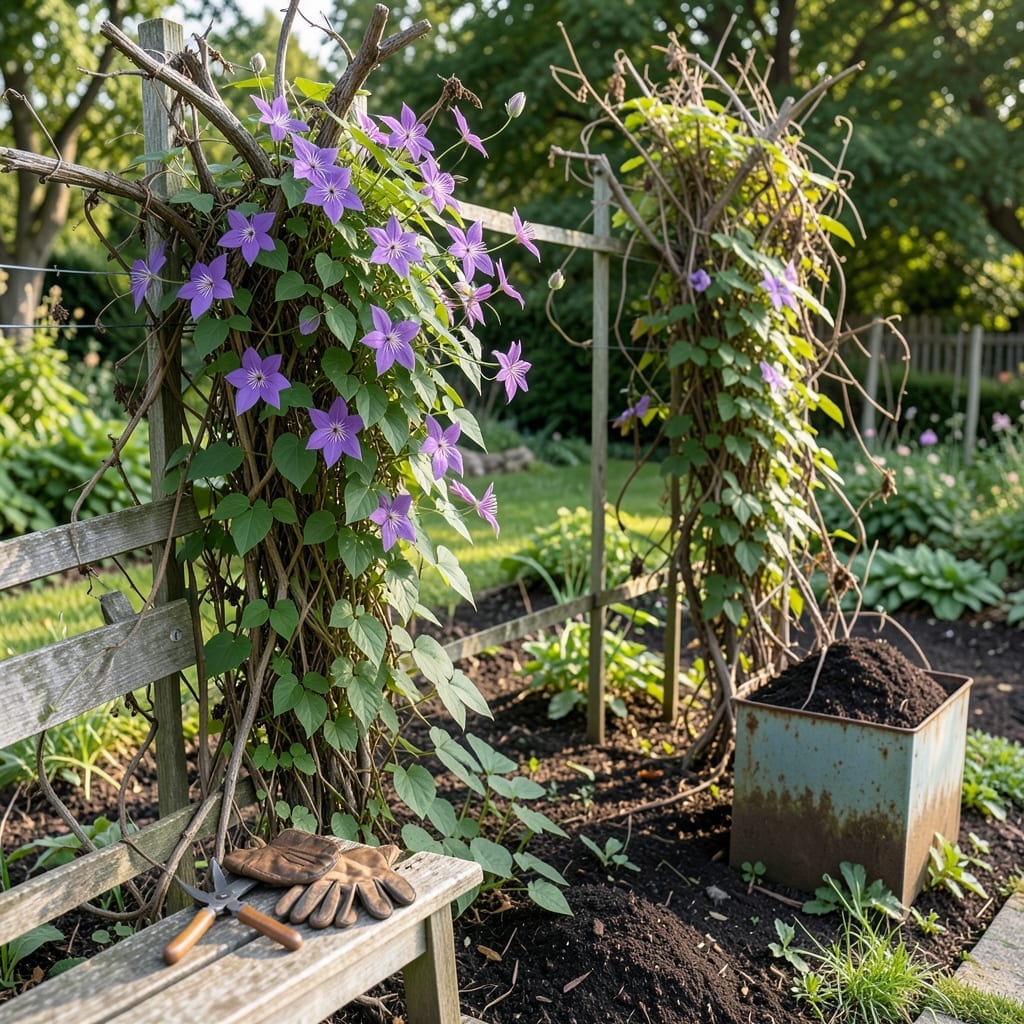
Timing your clematis pruning wrong can mean the difference between a vibrant, blooming 🌿 Clematis and a season of disappointment. Knowing when to trim ensures healthy growth and maximum flowers year after year.
I’ve seen gardeners struggle with this exact issue, cutting back at the wrong time and missing out on those stunning displays. The good news? There’s a simple way to get it right every time.
Discover the key to perfect timing based on your clematis variety. Let me walk you through what you need to know to keep your vines thriving.
I’ve found that the secret to perfect clematis pruning starts with knowing which of the three pruning groups your vine belongs to. Each group has unique timing needs based on when it blooms and how it grows.
Group 1 clematis blooms on old wood from last year, so pruning at the wrong time can cost you all those beautiful flowers. Group 2 produces blooms on both old and new wood, while Group 3 flowers only on new growth. ✂️
| Group | Bloom Time | Pruning Time |
|---|---|---|
| Group 1 | Early spring | After flowering |
| Group 2 | Late spring, summer | Late winter or early spring |
| Group 3 | Summer to fall | Late winter or early spring |
To identify your clematis group, observe its blooming pattern. If it flowers in early spring, it’s likely Group 1. Mid-season bloomers are usually Group 2, while late bloomers belong to Group 3.
For Group 1 clematis, I prune right after flowering to avoid cutting off next year’s buds. This timing ensures I don’t disrupt the growth cycle that produces those early blooms.
Group 2 needs a light trim in early spring to remove dead wood, followed by a second pruning after the first flush of blooms. This two-step approach keeps the vine healthy and encourages a second flowering.
With Group 3, I can be more aggressive. Since they bloom on new wood, I prune them back hard in late winter to about 12 inches from the ground. This stimulates vigorous new growth.
If you’re unsure, err on the side of caution. Light pruning is always safer than overdoing it. I’ve learned this the hard way—cutting back too much can set your clematis back an entire season.
Remember, sharp pruning tools are essential. Dull shears can tear the stems, increasing the risk of disease. I always clean my tools with rubbing alcohol between plants to prevent spreading issues. 🌿
Finally, after pruning, give your clematis a balanced fertilizer to support new growth. This small step makes a big difference in how quickly and strongly your vine recovers and blooms.
I always recommend spring pruning for most clematis, but the ideal timing depends on your vine’s group. For Group 1, spring pruning means after flowering to preserve those early blooms you worked so hard to cultivate.
Group 2 clematis benefits from a light spring trim before new growth starts, then a second pruning after the first bloom cycle. This keeps the vine tidy while encouraging that coveted second flush of flowers. ✂️
| Pruning Time | Group 1 | Group 2 | Group 3 |
|---|---|---|---|
| Spring | After flowering | Light trim early | Hard prune late winter |
| Fall | Avoid | Light cleanup only | Optional light trim |
Group 3 clematis can handle a hard prune in late winter or early spring. I cut mine back to 12-18 inches from the ground, which promotes vigorous new growth and abundant summer blooms.
For fall pruning, I’m more cautious. I only do light cleanup to remove dead or diseased wood, especially for Group 1 and 2. Heavy fall pruning can remove potential blooms and leave the vine vulnerable to winter damage.
I’ve found that fall is ideal for assessing your clematis and planning next year’s pruning strategy. Take notes on bloom times and growth patterns to make spring pruning more precise.
Always use clean, sharp tools regardless of season. I keep a pruning saw handy for thicker stems and bypass pruners for cleaner cuts on smaller growth. This prevents tearing and helps the vine heal faster.
After pruning, I apply a layer of mulch to protect the roots and retain moisture. This is especially important for fall-pruned clematis going into winter dormancy. 🌿