
Beautiful Plants For Your Interior
Beautiful Plants For Your Interior
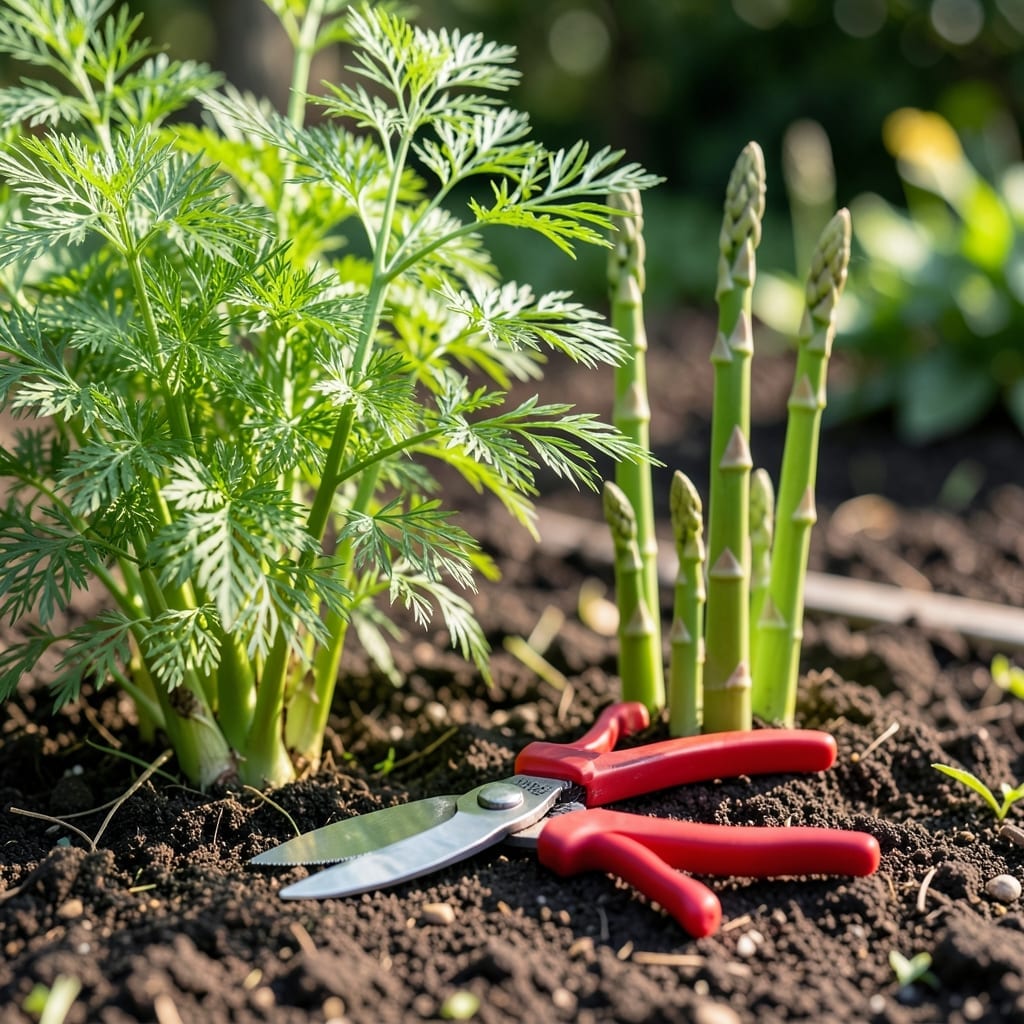
Timing your asparagus trimming right can make or break your harvest. I learned this the hard way when my 🥬 Asparagus patch struggled after a poorly timed cut back.
Pruning at the wrong moment can weaken your plants and reduce next year’s yield. But when you get the timing right, you’ll see healthier growth and more abundant spears.
Discover the seasonal sweet spot for trimming that keeps your asparagus thriving year after year. Let me walk you through the simple but crucial timing.
Timing your asparagus trimming correctly ensures strong, productive plants. I’ve found that cutting back at the wrong time can stress the plants and reduce next year’s harvest significantly.
The best window depends on your climate zone and the plant’s growth stage. Generally, late fall or early spring works best, but there are important nuances to consider.
| Season | Timing | Reason |
| Late Fall | After first frost | Ferns turn brown, nutrients stored in roots |
| Early Spring | Before new growth | Remove old foliage to prevent disease |
| After Harvest | June-July | Allow ferns to grow for photosynthesis |
In cold climates (Zones 3-5), I recommend trimming in late fall after the first frost kills the ferns. This signals the plant to direct energy to its roots for winter storage.
For warmer zones (6-10), early spring trimming works better. Cut back the brown ferns just before new spears emerge to avoid harboring pests over winter.
Never trim during active growth in spring or summer. The ferns are busy photosynthesizing and storing energy for next year’s crop. Cutting them early robs your plants of vital resources.
If you miss the fall window, don’t panic. Early spring trimming still works, but be sure to remove all debris to prevent fungal diseases from overwintering in the old foliage.
In my experience, consistency matters most. Pick a timing method—fall or spring—and stick with it yearly. Your asparagus patch will reward you with stronger spears and better yields.
Remember that young plants (under 3 years old) shouldn’t be trimmed at all. They need all their foliage to establish a strong root system for future harvests.
Watch for yellowing ferns in fall as your signal. When about 75% of the foliage has turned brown, it’s time to reach for those pruners and give your patch its annual haircut ✂️
Proper trimming keeps your asparagus patch healthy and productive. I always use sharp pruners to make clean cuts that prevent disease entry and promote quick recovery.
The key is cutting at the right height and removing all old foliage. This prevents pests and diseases from overwintering in your garden bed.
I start by inspecting the asparagus ferns for complete browning. When they’re fully dormant, I cut them back to 2-3 inches above the soil using sharp bypass pruners.
Be sure to sterilize your tools between cuts if you notice any disease symptoms. This simple step can prevent the spread of rust or leaf spot to healthy plants.
After trimming, I rake up all the old foliage and either compost it (if disease-free) or dispose of it. This cleanup is crucial for preventing pest and disease carryover.
For established patches, I follow up with a light fertilizer application after trimming. This gives the plants a nutritional boost as they prepare for the next growing season.