
Beautiful Plants For Your Interior
Beautiful Plants For Your Interior
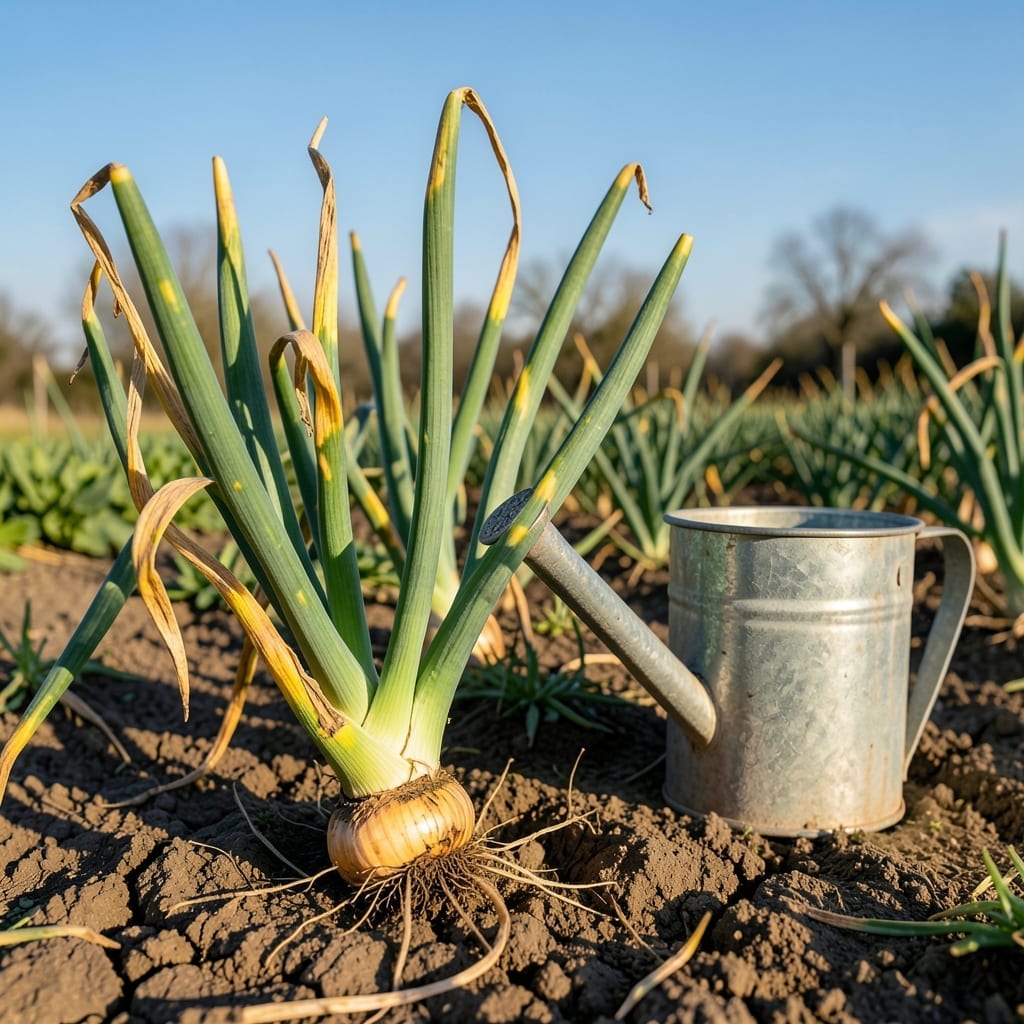
Ever watched your 🧅 Onion crop nearing harvest only to wonder if you’re overdoing the watering? That moment of doubt could make or break your entire season.
Stopping too soon leaves bulbs stunted, but waiting too long invites rot and poor storage. The difference between a perfect harvest and a wasted one often comes down to this one timing decision.
I’ll show you the exact cues to watch for in your plants and soil. Let’s make sure your hard work pays off with firm, flavorful bulbs that store beautifully.


I’ve learned the hard way that timing your watering correctly is the secret to perfect onion bulbs. Stopping too early can leave them underdeveloped, while overwatering leads to rot and poor storage life. The key is watching for clear signs from your plants.
The most obvious indicator is when the onion tops begin to yellow and fall over. This natural process signals that the bulbs have reached maturity and are ready to start curing. At this stage, continuing to water can delay the curing process and soften the bulbs, making them more prone to disease.
🌱 Onion Harvest Readiness Signs
| Sign | Description |
|---|---|
| Yellowing tops | Leaves turn brown or yellow and flop over |
| Soft necks | Stems become weak and papery |
| Dry outer skin | Bulb exterior feels dry and papery |
| Full bulb size | Bulbs reach mature size for variety |
Another critical sign is the neck softening. When the stem just above the bulb becomes thin and papery, it’s a clear indication that the plant is shifting from growth to dormancy. This is your cue to stop watering immediately to allow the curing process to begin.
Check the outer skin of the bulbs too. When it becomes dry and papery, the onions are protecting themselves naturally, which means they’re ready for harvest. If the skin is still moist and tight, the bulbs need more time to mature, even if the tops are starting to yellow.
I always recommend testing a bulb or two before stopping water for the entire crop. Gently brush away soil from the base of a plant and check the bulb’s size and firmness. If it feels solid and has reached its expected size for the variety, it’s a good sign the rest are ready too.
Remember that soil conditions play a role as well. If your soil is sandy and drains quickly, you might need to stop watering a few days earlier than with clay soil, which retains moisture longer. The goal is to let the top inch of soil dry out completely before harvest.
Overwatering at this stage can cause the bulbs to split or rot, especially in heavy or poorly draining soils. This is why it’s crucial to monitor both the plants and the soil. If you’re in a rainy climate, consider covering the crop with a tarp during the final days to prevent excess moisture.
Finally, trust your instincts. If most of your onions show these signs, it’s time to cut off the water. The curing process typically takes 7-10 days in dry conditions, after which your onions will be ready for storage. This patience pays off with bulbs that last for months.
By paying close attention to these visual and physical cues, you’ll ensure your onions mature properly and store well. It’s a simple step that makes a huge difference in your harvest quality. 🌱
I’ve found that weather patterns and soil types can dramatically change when you should stop watering onions. In dry climates, you might need to extend watering slightly, but the key is to watch for those visual cues regardless of conditions.
For sandy soils, which drain quickly, I stop watering 2-3 days earlier than with clay. Sandy soil dries out faster, so the bulbs cure more rapidly once you cut off the water.
🌱 Soil & Weather Watering Adjustments
In clay soils, which hold moisture longer, I often wait an extra 1-2 days after seeing the first signs. The dense soil retains water, so the bulbs take longer to dry out and begin curing properly.
If you’re facing a rainy spell just as your onions are nearing harvest, I recommend covering the bed with a waterproof tarp. This prevents the soil from becoming oversaturated, which can lead to rot before you even pull the bulbs.
For those in humid climates, the curing process takes longer because the air holds more moisture. I’ve learned to add 2-3 extra days of drying time in these conditions to ensure the bulbs cure thoroughly.
Always check the weather forecast as your onions approach maturity. If heavy rain is expected, I adjust my watering schedule earlier to compensate. It’s better to stop a day or two early than to risk waterlogging your crop.
By adapting to your specific soil and climate, you’ll perfect your timing. This attention to detail ensures your onions cure properly regardless of external conditions. 🌿