
Beautiful Plants For Your Interior
Beautiful Plants For Your Interior
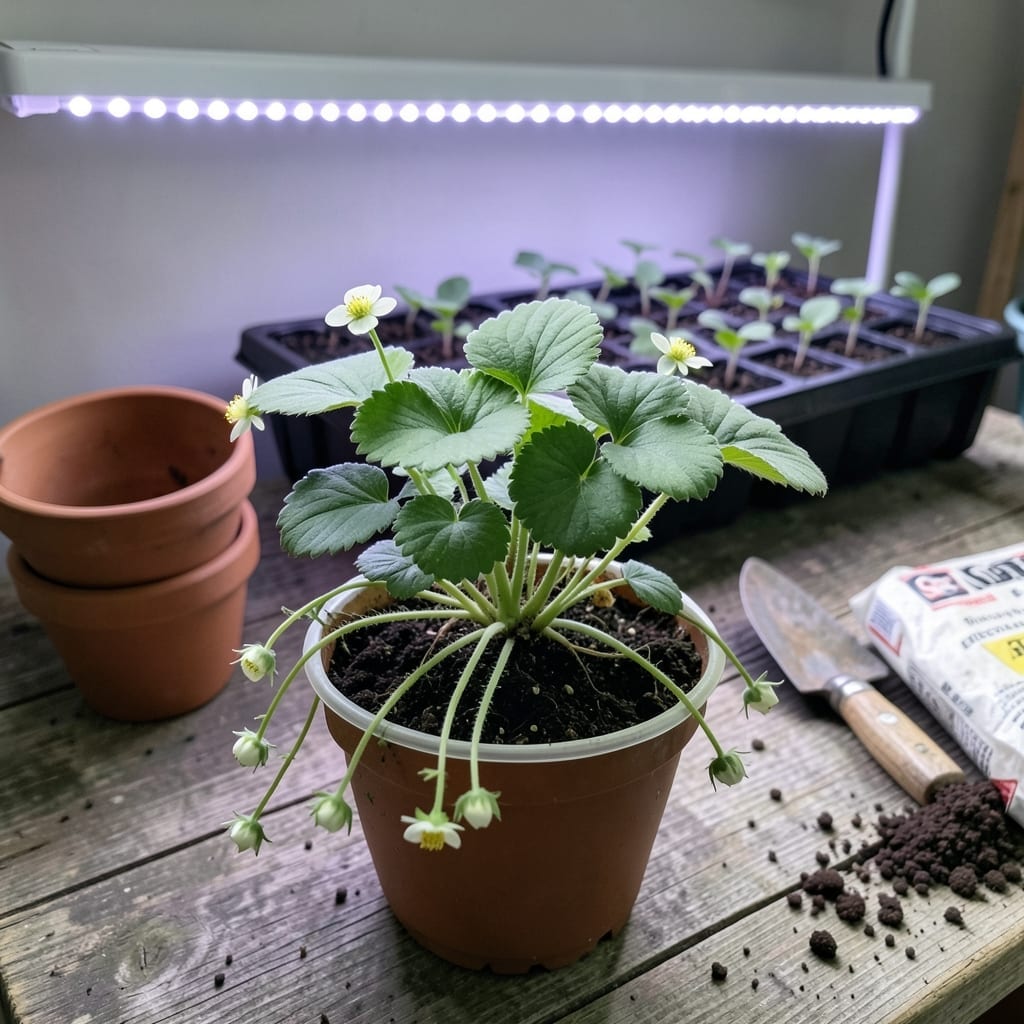
Starting Strawberry 🍓 seeds indoors can give you a serious jump on the growing season. But plant too early or too late, and you risk weak seedlings or missed harvests.
In Zone 6a, timing is critical—get it right and you’ll enjoy plump, homegrown berries by early summer. I’ll show you how to nail the perfect window.
Discover the simple yet precise method to start your Strawberry plants indoors for faster, stronger growth when it’s time to move them outside.
Timing your indoor strawberry starts right means the difference between thriving plants and struggling seedlings. Each USDA zone has its own sweet spot for sowing. 🌱
For June-bearing varieties, you’ll want to start 8-10 weeks before your last frost date. Everbearing types can begin a bit later, around 6-8 weeks pre-frost. ☀️
| Zone | Start Indoors | Last Frost Date |
|---|---|---|
| 1-3 | Jan-Feb | May 15-June 15 |
| 4-5 | Feb-March | April 15-May 15 |
| 6-7 | March-April | March 15-April 15 |
| 8-11 | Dec-Jan | Feb 15-March 15 |
In colder zones (1-4), I recommend using grow lights to supplement the shorter daylight hours. The seeds need consistent warmth to germinate properly. 🌿
For warmer zones (8-11), you can start seeds as early as December. But watch out for unseasonably warm spells that might trick your plants into early blooming.
Remember that strawberry seeds often require stratification—a cold treatment—to break dormancy. I place my seeds in the freezer for 2-4 weeks before planting. ✂️
If you’re in Zone 6a like me, mid-February is ideal for starting June-bearing strawberries indoors. This gives them 10 weeks to grow strong before our April 15 last frost.
Everbearing varieties in Zone 6a can start in early March. They’re more forgiving with timing and often produce multiple harvests per season. 🌱
Always check your local frost dates as they can vary. I use the USDA Plant Hardiness Zone Map and cross-reference with local weather data for the most accurate timing.
Once your seedlings have 2-3 true leaves, they’re ready to be hardened off before transplanting. This process takes about 7-10 days of gradual outdoor exposure. 🌿
While timing is crucial for indoor strawberry starts, other factors can make or break your success. I’ve found that temperature and light exposure are just as important as the calendar. ☀️
Strawberry seeds need consistent warmth between 60-75°F to germinate. I use a seedling heat mat to maintain steady temperatures, especially in colder homes. Without this, germination can take weeks longer or fail entirely.
Light exposure is another critical factor. Strawberry seedlings need 14-16 hours of light daily. A south-facing window might suffice, but I always supplement with grow lights to ensure strong, stocky growth.
The right container matters too. I prefer shallow seed trays with drainage holes to prevent waterlogging. Each seed should have about 2 inches of space to grow without competition. 🌱
Seed stratification is non-negotiable for strawberries. This cold treatment mimics winter, breaking the seed’s dormancy. I place my seeds in a sealed bag in the freezer for 2-4 weeks before sowing.
Finally, humidity plays a role. I cover my trays with plastic domes or clear plastic wrap to maintain humidity until the seeds sprout. Once they do, I remove the cover to prevent mold growth. 🌿