
Beautiful Plants For Your Interior
Beautiful Plants For Your Interior
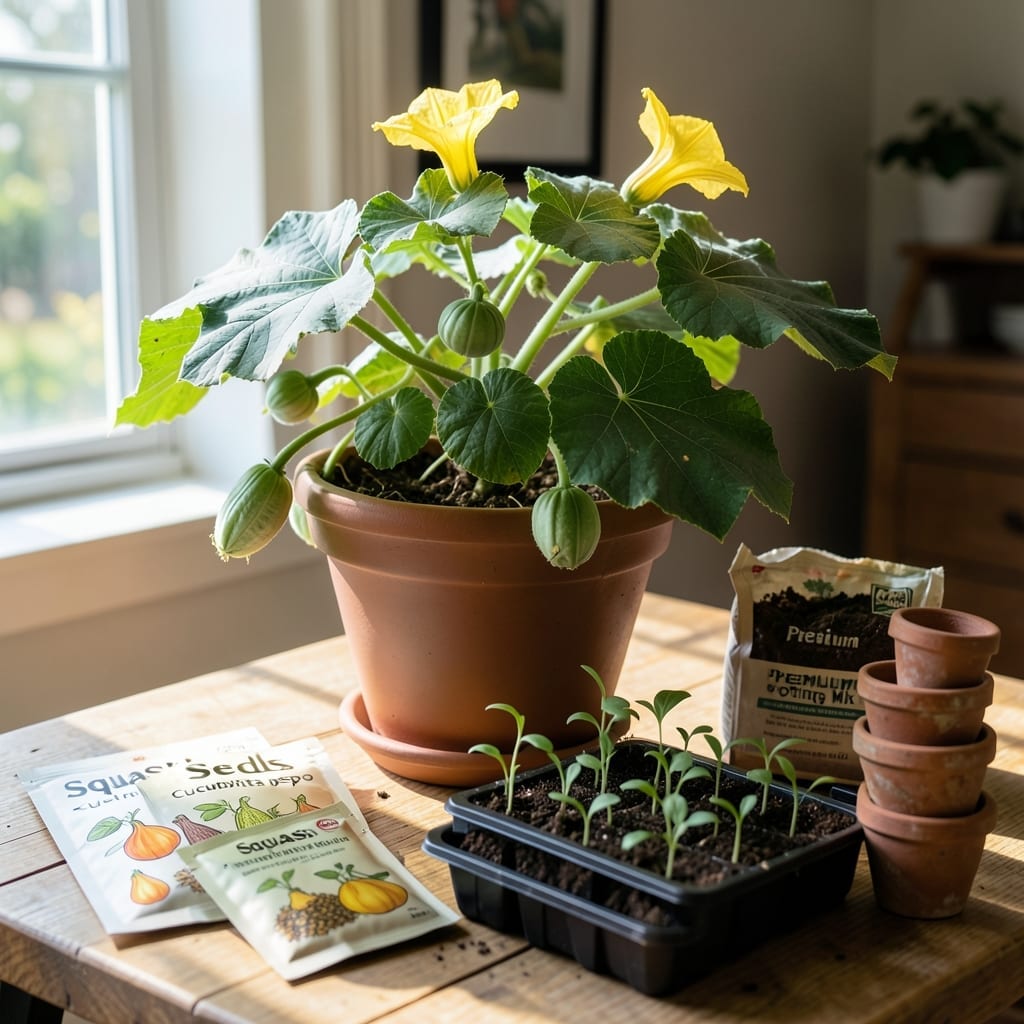
Timing is everything when starting 🎃 Squash seeds indoors—plant too early and your seedlings will outgrow their space. Start too late and you’ll miss your region’s ideal window.
This guide helps you nail the perfect timing for healthy, productive plants. Whether you’re in zone 6a or adjusting for your local climate, we’ll break it down simply.
Discover how to align your indoor start with the last frost date and set your squash up for success before transplanting outdoors.
Starting squash seeds indoors gives your plants a head start, but timing is critical. I always check my USDA hardiness zone to determine the best window. The goal is to have sturdy seedlings ready for transplanting 2-4 weeks after the last frost date.
For most gardeners, this means starting seeds 4-6 weeks before the last expected frost. In cooler zones like 3-4, I begin in early April, while warmer zones like 8-9 can start as early as February. 🌱
| USDA Zone | Start Indoors | Transplant Outdoors |
|---|---|---|
| 3-4 | Early April | Mid-May |
| 5-6 | Late March | Early May |
| 7-8 | Mid-March | Mid-April |
| 9-10 | Early February | Late March |
In my experience, soil temperature matters just as much as timing. Squash seeds need 70-85°F to germinate properly. I use a heat mat to maintain consistent warmth if my home runs cool. Without it, germination can take 10-14 days longer.
Another key factor is light exposure. Once sprouted, seedlings need 12-16 hours of light daily. I position my trays under grow lights or in a south-facing window to prevent leggy growth. Without enough light, they’ll stretch toward the sun and weaken.
I’ve learned that container size affects timing too. Squash grows quickly, so I start in 2-3 inch pots and transplant to larger containers if needed. This prevents root binding before outdoor planting time. 🌿
For those in short-season areas, choosing fast-maturing varieties like ‘Early Prolific Straightneck’ can be a game-changer. These typically mature in 50-55 days, giving you more flexibility with your start date.
Remember that local microclimates can shift your timeline. If you’re near a body of water or in an urban heat island, your last frost might be earlier than the zone average. I always check with my local extension office for hyper-local advice.
Finally, I recommend hardening off seedlings for 7-10 days before transplanting. This gradual exposure to outdoor conditions prevents shock. I start with 1-2 hours of shade time, increasing daily until they’re ready for full sun. ✂️
By following these zone-specific guidelines and paying attention to your plants’ needs, you’ll have robust squash seedlings ready for the garden at just the right time. The effort you put into perfect timing will pay off with a bountiful harvest.
Starting squash seeds indoors requires careful prep for strong seedlings. I begin by selecting high-quality seeds from trusted suppliers, ensuring good germination rates. Always check the packet date—fresh seeds sprout faster and more reliably.
For containers, I use clean, 2-3 inch pots with drainage holes. Squash roots hate soggy soil, so I fill them with a light, well-draining seed mix. Avoid garden soil—it compacts and may carry diseases. 🌱
🌿 Key Steps to Success:
I place my trays on a heat mat until seeds sprout, which usually takes 5-10 days. Once they emerge, I move them under grow lights or to a sunny window. Leggy seedlings mean they’re not getting enough light.
Watering is crucial—I use a spray bottle to keep the soil moist but not soggy. Overwatering leads to damping off, a fungal disease that kills seedlings. I water when the top inch of soil feels dry.
When the first true leaves appear, I start fertilizing with a diluted liquid fertilizer. Squash are heavy feeders, so I use a balanced 10-10-10 mix every 2 weeks until transplanting. 🌿
As seedlings grow, I thin them to one plant per pot. Crowded seedlings compete for resources, leading to weak growth. I also rotate my trays daily to ensure even light exposure.
Finally, I begin hardening off about a week before transplanting. This means gradually exposing seedlings to outdoor conditions. I start with shade for 1-2 hours, increasing time and sun exposure daily. This prevents transplant shock. ✂️