
Beautiful Plants For Your Interior
Beautiful Plants For Your Interior
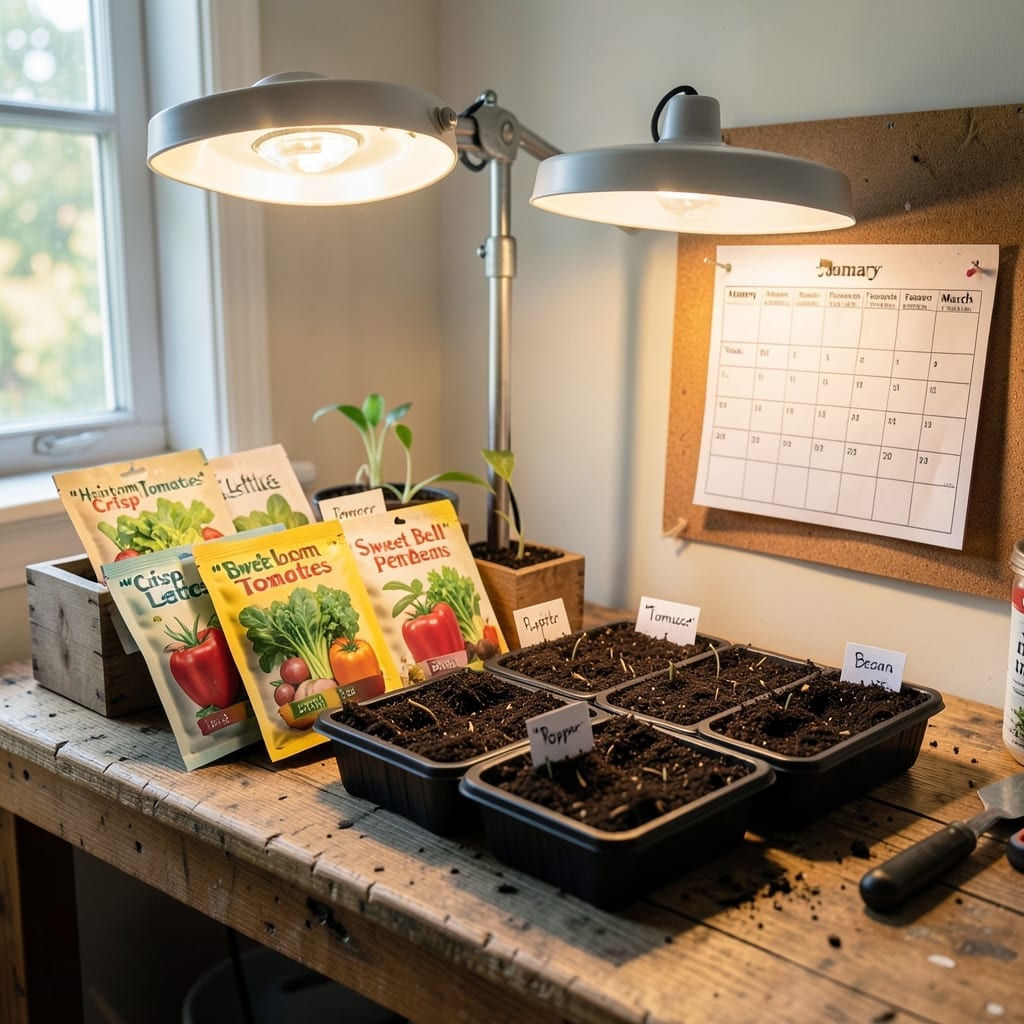
Timing is everything when starting seeds indoors. Plant too early, and your 🌱 General Seed Starting seedlings may outgrow their space; plant too late, and you’ll miss the optimal growing window.
This zone-specific chart takes the guesswork out of indoor seed starting. Whether you’re in Zone 6 or elsewhere, I’ll show you how to align your planting with your local climate.
Discover the exact timing that ensures strong, healthy seedlings ready for transplant. Let’s get your spring garden off to the perfect start.
Getting your indoor seed starting timing right can make or break your garden. I’ve found that aligning with your USDA hardiness zone is the key to strong, healthy seedlings ready for transplant.
This seed starting chart removes the guesswork by listing optimal indoor start dates for popular vegetables and flowers, tailored to your local frost dates and climate conditions.
| Plant Type | Weeks Before Last Frost | Best Zones |
| Tomatoes | 6-8 weeks | 3-10 |
| Peppers | 8-10 weeks | 4-11 |
| Cucumbers | 3-4 weeks | 4-11 |
| Lettuce | 4-6 weeks | 3-9 |
| Marigolds | 6-8 weeks | 2-11 |
For Zone 6, where the last frost typically hits around April 15, I start my tomatoes indoors in mid-February. This gives them plenty of time to develop strong root systems before moving outside.
If you’re in a colder zone, like Zone 3 or 4, you’ll need to start seeds even earlier. For example, peppers need that extra time because they grow more slowly in cooler indoor conditions.
In warmer zones like 9 or 10, you can start seeds later since your growing season is longer. Just be sure to check your local frost dates for the most accurate timing.
I always recommend adjusting for microclimates. If you live in an area with a particularly early or late spring, shift your start dates accordingly. A soil thermometer can help you confirm when conditions are right.
Don’t forget to label your seedlings with their start dates. This helps you track progress and ensures you don’t accidentally transplant them too early or too late.
Finally, keep an eye on the weather forecast as your transplant date approaches. A late frost can set back all your hard work, so be prepared to protect tender seedlings if needed.
With this zone-specific chart and a little local fine-tuning, you’ll be well on your way to a thriving garden 🌱
Your USDA hardiness zone gives a great starting point, but local conditions can change the game. I always check my last frost date and adjust seed starting by 1-2 weeks for early or late springs.
If your area has a microclimate—like a city heat island or a cold pocket—you may need to tweak the timeline. For example, urban gardens often warm up faster than rural areas, allowing earlier starts.
In cooler climates, I start peppers and eggplants up to 12 weeks early because they grow slowly. But in Zone 9, I might only give them 6-8 weeks indoors.
For fast-growing plants like cucumbers or squash, I start them just 3-4 weeks before transplant. They outgrow containers quickly and resent root disturbance.
I’ve learned to keep a garden journal tracking my start dates, transplant dates, and first harvests. Over time, this helps me refine my schedule to match my garden’s unique rhythm.
With these local adjustments, your seed starting chart becomes a precision tool for success 🌱