
Beautiful Plants For Your Interior
Beautiful Plants For Your Interior
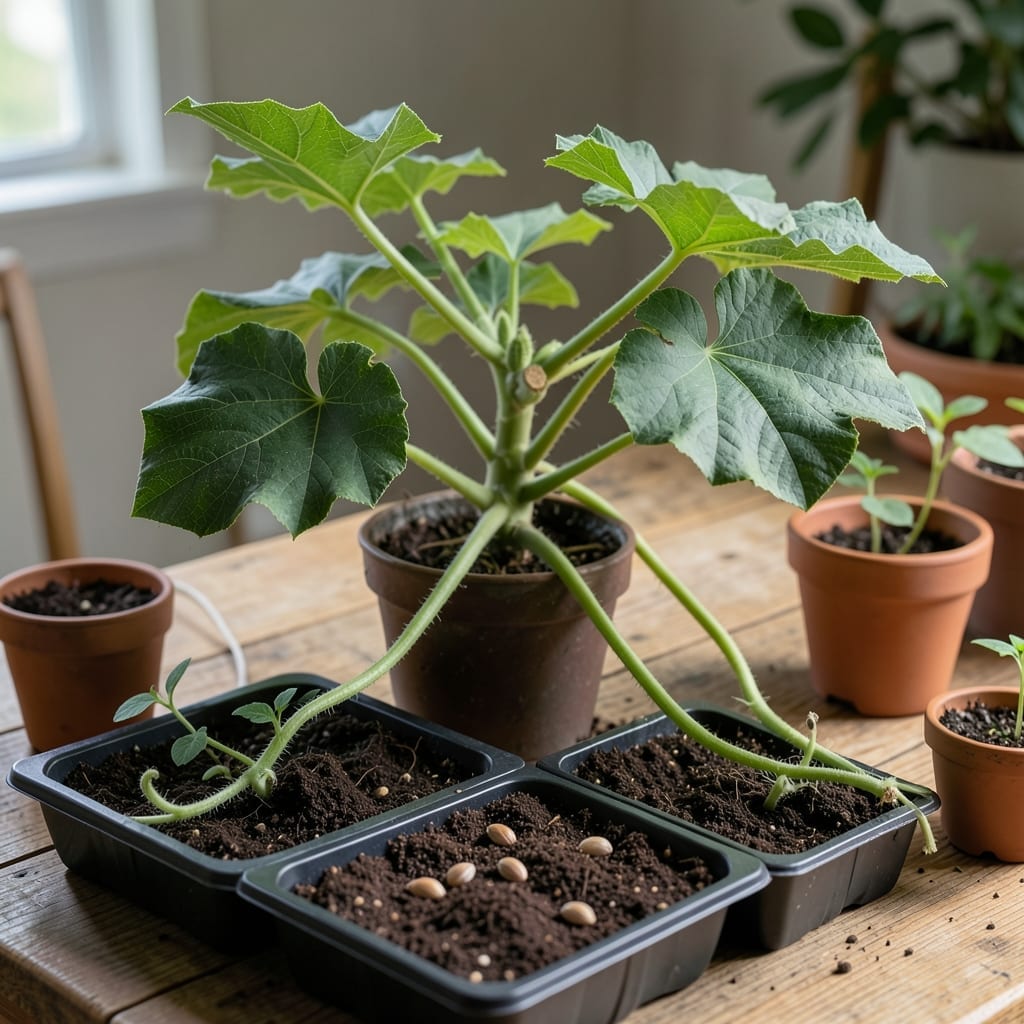
Timing is everything when starting 🎃 Pumpkin seeds indoors—plant too early and your seedlings may outgrow their space, too late and you risk missing the growing season.
Mastering the schedule ensures robust plants ready to thrive in your garden. For zone 6, the sweet spot aligns perfectly with spring’s arrival.
Discover how to hit that ideal window and set your pumpkins up for success from the very first sprout.
Getting your pumpkin seeds started indoors at the right time is crucial for strong, healthy seedlings. The key is working backward from your last frost date, as pumpkins are frost-sensitive.
In most regions, I recommend starting seeds 2-4 weeks before the last expected frost. This gives seedlings enough time to develop without outgrowing their containers.
| Zone | Start Indoors | Transplant Outdoors |
|---|---|---|
| Zones 3-4 | April 1-15 | May 15-30 |
| Zones 5-6 | March 15-April 1 | May 1-15 |
| Zones 7-8 | March 1-15 | April 15-30 |
| Zones 9-10 | February 15-March 1 | April 1-15 |
For Zone 6, where I garden, I start my pumpkin seeds indoors around April 1. This aligns with our average last frost date of April 15, giving seedlings 2-3 weeks to grow strong before transplanting.
If you’re in a warmer climate like Zone 9, you can start as early as mid-February. Cooler zones like 3-4 should wait until early April to avoid frost damage.
Remember that pumpkin varieties matter too. Smaller varieties like Jack Be Little can be started slightly later, while giant pumpkins need an earlier start to reach their full potential.
Always check your local weather patterns too. An unusually late frost might require adjusting your timeline by a week or two. I keep a garden journal to track these variations year to year.
Once your seedlings have 2-3 true leaves and all danger of frost has passed, they’re ready for transplanting. This timing ensures they’ll establish quickly in their new outdoor home.
For the best results, maintain consistent moisture and provide 14-16 hours of light daily. A grow light can be invaluable if natural light is limited in your home.
With the right timing, you’ll have sturdy, vibrant seedlings ready to take off when planted in your garden 🌱
Starting pumpkin seeds indoors gives you a head start on the growing season. I always begin by selecting high-quality seeds from a trusted supplier, as this sets the foundation for healthy plants.
Choose biodegradable pots or seed trays with good drainage. Pumpkins dislike root disturbance, so I prefer peat pots that can be planted directly into the soil later.
Use a seed-starting mix rather than garden soil to prevent disease and ensure proper drainage. I find that a mix with perlite or vermiculite works best for pumpkins.
Place your containers in a warm location or use a heat mat to maintain the ideal 70-85°F for germination. Pumpkin seeds typically sprout in 5-10 days under these conditions.
Once sprouted, move seedlings under grow lights or to a sunny windowsill. I position my lights 2-4 inches above the seedlings and adjust as they grow.
Maintain consistent moisture but avoid overwatering. I use a spray bottle to gently mist the soil surface, preventing the seeds from being dislodged.
With proper care, your seedlings will develop strong stems and healthy leaves ready for outdoor life 🌱