
Beautiful Plants For Your Interior
Beautiful Plants For Your Interior
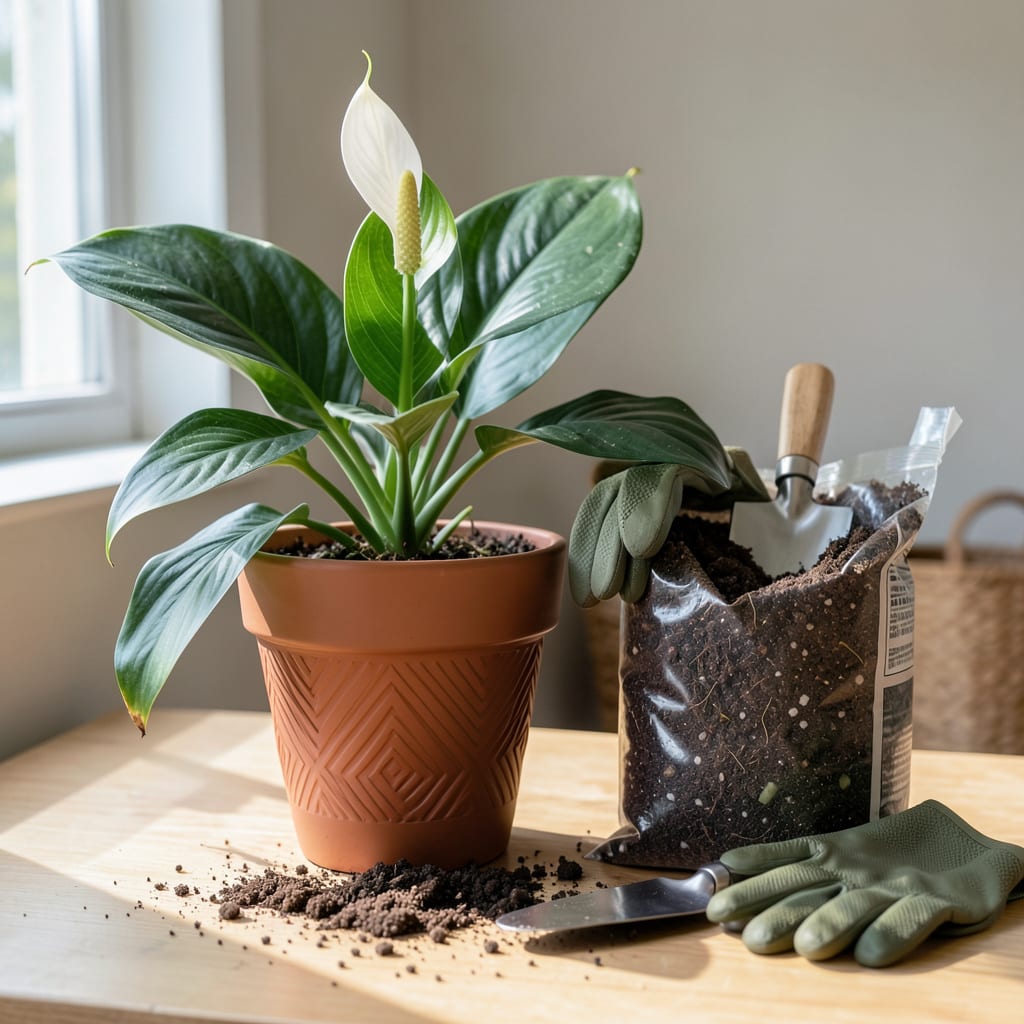
Repot your peace lily every 1-2 years or when you see roots growing through drainage holes, yellowing leaves, or slow growth despite proper care. Spring is the ideal season for repotting to minimize stress.
Think of repotting as giving your peace lily a fresh start—like moving from a cramped apartment to a spacious home. 🌱 The roots need room to expand, and depleted soil loses its ability to hold nutrients over time. I’ve noticed that plants often bounce back dramatically after repotting, showing new growth within weeks. The timing matters too: spring’s natural growth surge helps the plant recover faster from the transition.
What many don’t realize is that waiting too long can stunt your plant’s potential. A root-bound peace lily might survive, but it won’t thrive—you’ll miss out on those lush, vibrant leaves and frequent blooms. ✨
💡 In This Article
Your peace lily communicates its need for a new home through visible distress signals. The most obvious sign is roots escaping through drainage holes—these aren’t just seeking space, they’re searching for nutrients and moisture that the depleted soil can no longer provide.
When roots circle the pot’s interior, they form a dense mat that restricts water absorption, creating a paradox where the soil stays soggy on top but the roots remain thirsty. 🌱
Watch for yellowing leaves, particularly on older foliage, which often indicates nutrient deficiency. Unlike natural aging (where single leaves yellow uniformly), repotting-related yellowing typically affects multiple leaves simultaneously and spreads from the edges inward.
The soil itself tells a story: if it dries out within 24 hours of watering or develops a crusty surface, it’s lost its ability to retain moisture and nutrients effectively.
Stunted growth despite proper care is another red flag. A healthy peace lily should produce 2-3 new leaves during active growing seasons. When you notice 6+ months without new growth or flowers, the root system has likely exhausted the available resources.
The plant isn’t dying—it’s surviving in maintenance mode, unable to thrive in its current conditions. ✨
Physical pot deformation offers subtle clues. Plastic pots may bulge slightly from root pressure, while terracotta pots develop white mineral deposits on the exterior as roots push salts to the surface. These signs appear gradually over 3-6 months, giving you time to prepare for repotting before the plant becomes severely stressed.
Don’t overlook the soil-to-root ratio. Gently remove the plant from its pot and examine the root ball. In a healthy state, you should see about 2 inches of soil around the roots. When roots occupy 80% or more of the soil volume, it’s time to upgrade.
This crowding prevents proper aeration, leading to root suffocation and increased susceptibility to fungal issues. 💡
The timing of these signs matters. Spring emergence of multiple symptoms suggests natural growth demands, while autumn appearances may indicate the plant has outgrown its space during the growing season. Summer signs often relate to increased water needs that the current pot size can’t accommodate during hot weather.
Inspect your peace lily every 3-4 months for early warning signs. Focus on root growth through drainage holes and soil quality. A quick check during regular watering sessions works best.
Pay extra attention during spring and early summer—the plant’s active growth phases. This is when it’s most likely to outgrow its current home.
Choose a pot just 2-3 inches wider than the current one. Too much extra space can lead to overwatering issues. The ideal upgrade gives roots room without overwhelming them.
For mature plants, a 10-12 inch diameter pot typically works well. Always ensure it has drainage holes to prevent root rot.
It’s best to avoid winter repotting unless absolutely necessary. The plant’s growth slows dramatically, making recovery harder. Spring remains the optimal time for this process.
If you must repot in winter, keep the plant in warmer conditions and reduce watering slightly to compensate for slower growth.
Most peace lilies show new growth within 2-4 weeks after repotting. Initial drooping is normal and should resolve within 3-5 days. Patience is key during this transition.
Provide consistent moisture and indirect light to support recovery. Avoid fertilizing for the first 4-6 weeks post-repotting.
A well-draining mix with 60% peat moss and 40% perlite creates ideal conditions. This combination holds moisture while preventing compaction. Avoid heavy garden soils.
You can also add a handful of orchid bark for extra aeration. Always use fresh soil to provide new nutrients for your plant.
