
Beautiful Plants For Your Interior
Beautiful Plants For Your Interior
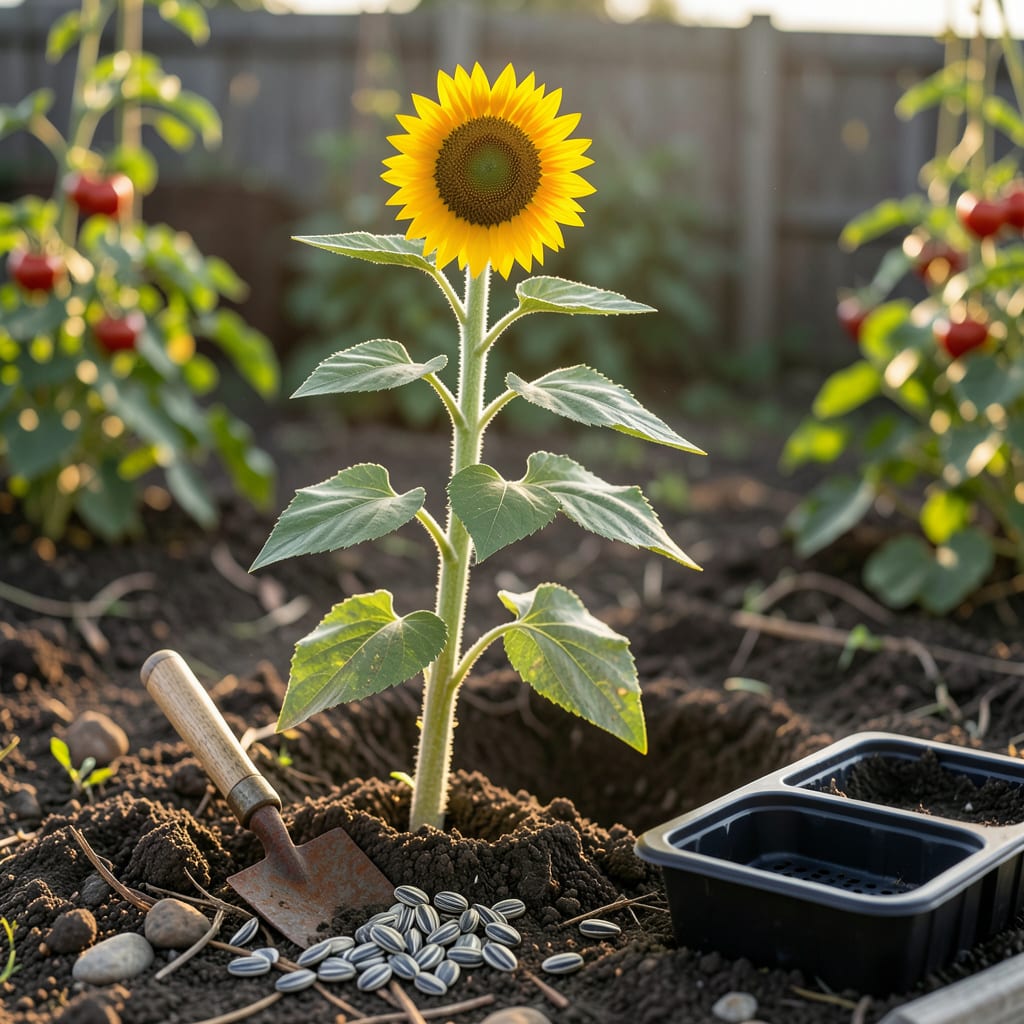
There’s nothing quite like watching towering sunflowers sway in an Indiana summer breeze—unless you’ve planted them at the wrong time. I’ve seen too many gardeners in Zone 5b end up with stunted stems or frost-damaged seeds because they guessed instead of planning.
The difference between thriving 10-foot giants and disappointing flops often comes down to just 2 critical weeks in spring. Let me show you exactly how to nail that planting window for Indiana’s finicky climate—so you get those perfect golden blooms by July.
I’ve seen too many Indiana gardeners make the same costly sunflower mistakes year after year. The worst part? These errors are completely preventable with just a little planning. Let’s start with the biggest offender: planting in cold soil. Sunflower seeds need 55°F+ soil temps to germinate properly.
When you plant too early in Indiana’s unpredictable spring, you risk rotten seeds or weak sprouts that never recover. I once lost an entire patch of ‘Mammoth Grey Stripe’ sunflowers because I jumped the gun in late March. That’s why I now religiously check soil temps with a simple thermometer before planting.
Another mistake I see frequently is skipping the soil prep. Indiana’s clay-heavy soil can be tough on sunflower roots. The solution? Work in 2-3 inches of compost before planting. This improves drainage while giving your sunflowers the nutrients they need for those towering stems we all love.
Timing your watering wrong can also spell disaster. Many new gardeners either drown their seeds or let them dry out. The sweet spot is 1 inch of water weekly until germination, then 1-2 inches as plants grow. I use a simple rain gauge to track moisture—it’s saved my sunflowers during Indiana’s unpredictable summer storms.
Finally, don’t overlook wind protection for those tall varieties. Indiana’s summer storms can snap even the strongest stems. I recommend planting near a fence or using bamboo stakes for support. For extra security, I’ve had great success with ‘Velvet Queen’ sunflowers—they’re slightly shorter but just as stunning.
Remember, the difference between spectacular sunflowers and disappointing flops often comes down to avoiding these common mistakes. Take it from someone who’s learned the hard way—your future sunflower patch will thank you for the extra care! 🌻
Not all sunflowers are created equal when it comes to Indiana’s humid summers and unpredictable springs. After testing dozens of varieties in my Zone 5b garden, I’ve found that drought-tolerant hybrids and early-blooming types perform best here. The key is matching the variety to your specific region.
In northern Indiana, where the growing season is shorter, I recommend ‘Moulin Rouge’ or ‘Teddy Bear’—both mature in under 70 days. For central and southern regions with longer summers, you can experiment with giants like ‘Russian Mammoth’ that need 90+ days to reach their full 12-foot glory.
For urban gardeners dealing with heat islands, I’ve had great success with ‘Soraya’—it handles the extra warmth while staying compact at 4-5 feet. Rural gardeners with more space should consider ‘Skyscraper’, which can reach 14 feet in Indiana’s rich farmland soil.
Don’t overlook the pollinator benefits either. Varieties like ‘Lemon Queen’ and ‘Maximilian’ attract bees and butterflies all season. I plant these near my vegetable garden to boost pollination for my squash and cucumbers—it’s a win-win!
Pro tip: For continuous blooms, I stagger plantings of ‘Autumn Beauty’ every 2 weeks from late April through May. This gives me fresh sunflowers from July until frost. Just
You can start as early as mid-April in southern Indiana, but wait until soil reaches 55°F. Use a soil thermometer to check—cold soil causes poor germination. For extra protection, cover seeds with row fabric if night temps dip below 40°F.
Yes, but only in heated greenhouses where you can maintain 60°F+ soil temps. Start seeds in biodegradable pots to avoid transplant shock. Move outdoors after last frost (around April 15 for most of Indiana) when plants have 2-3 true leaves.
Short stems usually result from cool nights or overcrowding. In Zone 5b, plant giant varieties no earlier than late April and space seeds 24-36″ apart. Choose faster-maturing types like ‘Moulin Rouge’ (60 days) for better results in shorter seasons.
For summer blooms, plant by early June at the latest. Opt for quick-maturing varieties like ‘Teddy Bear’ (50-60 days). Late plantings may produce smaller flowers but still attract pollinators. Water consistently—1-2 inches weekly—to help them catch up.
