
Beautiful Plants For Your Interior
Beautiful Plants For Your Interior
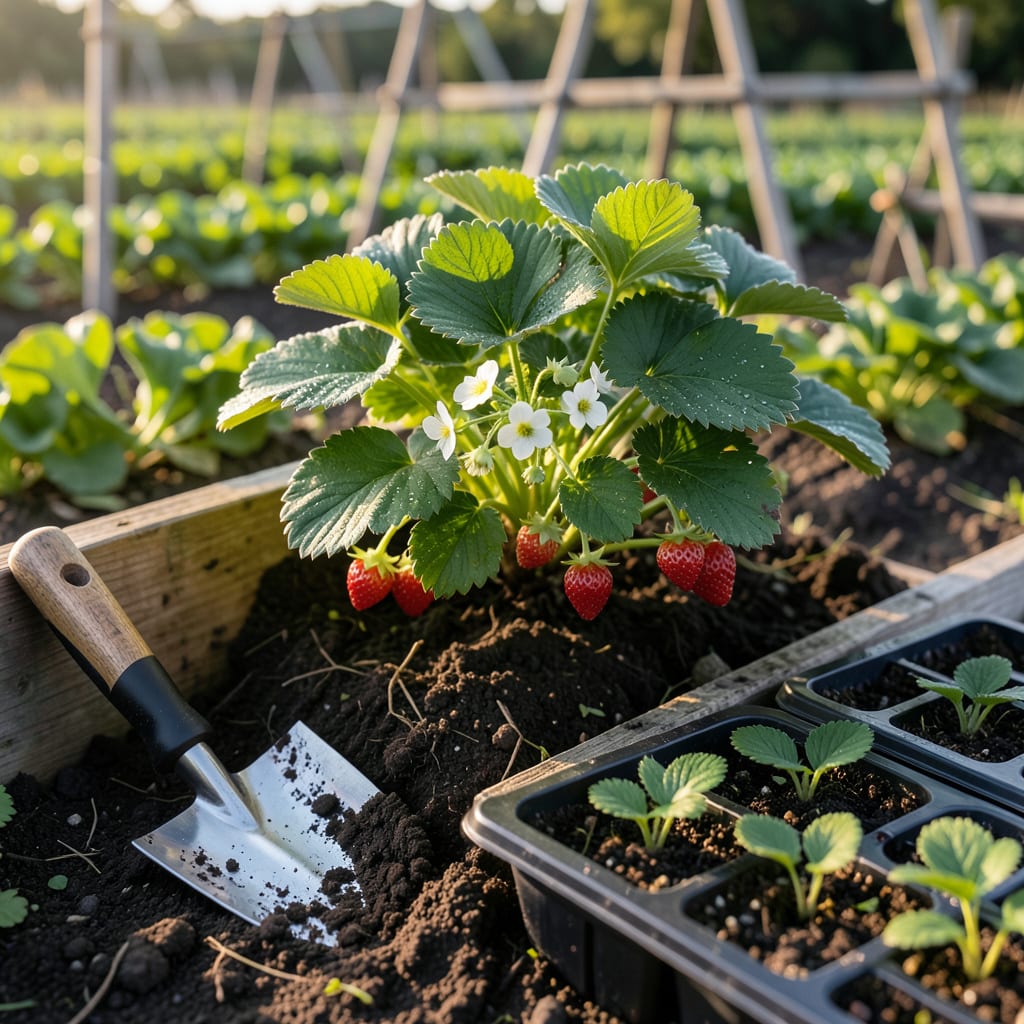
Georgia’s unpredictable weather can turn strawberry planting into a gamble—plant too soon, and frost could wipe out your crop; wait too long, and you’ll miss the juiciest summer harvest. But here’s the good news: timing isn’t guesswork if you know your region.
Whether you’re in the Piedmont’s rolling hills or the Coastal Plain’s warmer climate, I’ll break down the exact windows to get your 🍓 strawberries in the ground. You’ll also learn which varieties thrive where—and how to dodge the 3 most common mistakes GA gardeners make.
If you’ve ever bitten into a sun-warmed strawberry fresh from your Georgia garden, you know timing is everything. Plant too early, and a surprise frost could wipe out your crop. Wait too late, and your berries might bake in the summer heat. The key? Georgia’s diverse climate zones demand different strategies.
In the Piedmont region (think Atlanta, Athens, and Macon), you’ll want to plant strawberries in late September to early October. This gives roots time to establish before winter. Meanwhile, Coastal gardeners (Savannah, Brunswick) can push planting to October through early November thanks to milder winters. 🌱
| Region | Best Planting Window | First Frost Date | Variety Recommendations |
|---|---|---|---|
| Piedmont (Atlanta, Athens) | Late Sept–Early Oct | Mid-November | Chandler, Sweet Charlie |
| Coastal Plain (Savannah, Brunswick) | Oct–Early Nov | Late November–Dec | Camarosa, Albion |
Pro Tip: Check your local frost dates—Piedmont can dip to 25°F by November, while Coastal areas rarely drop below 30°F before December.
Why the difference? The Piedmont’s higher elevation means cooler nights and earlier frosts. I’ve seen Atlanta gardeners lose plants to a mid-October cold snap, so don’t delay. Coastal areas, with their sandy soil and ocean moderation, can safely plant later—but watch for humidity-driven fungal issues.
For June-bearing varieties (like ‘Chandler’), aim for early fall planting to maximize spring harvests. Everbearing types (‘Albion’, ‘Seascape’) are more flexible—you can plant them in spring (March–April) for a late-summer crop, but yields may be lower. Day-neutral strawberries? They’re your best bet for containers if you’re short on space. ☀️
Soil temperature matters too. Strawberries thrive when soil is 50–60°F at planting. Use a soil thermometer—if it’s above 65°F, wait a week. In the Piedmont, I’ve found that mulching with pine straw helps regulate temperature swings. Coastal gardeners should opt for straw mulch to combat moisture retention issues.
Don’t forget USDA zones! Most of Georgia spans Zones 7b–8b, but the mountain counties (Zone 7a) need earlier planting. If you’re in Zone 9a (like Brunswick), you can even experiment with winter planting for a head start. Just protect young plants from cold snaps with row covers. 🌡️
Here’s my **quick soil prep
Even with perfect timing, small errors can sabotage your Georgia strawberry patch. I’ve seen gardeners lose entire crops because of three preventable mistakes. The first? Planting too deep or too shallow. Bury the crown, and it’ll rot; leave roots exposed, and they’ll dry out. 🌱
The ideal depth is just below the soil surface, with the crown (where leaves emerge) sitting above ground. Use your finger to measure—about ½ inch of soil over the roots. In Georgia’s clay-heavy Piedmont soil, I recommend planting on raised mounds to improve drainage.
⚠️ GA Gardener Alert!
Coastal mistake: Skipping mulch in humid areas leads to gray mold on berries. Use straw (not pine) to reduce moisture contact.
Piedmont mistake: Ignoring soil pH. Georgia’s natural pH is often too high—test and amend to 5.5–6.5 with sulfur.
Statewide mistake: Overcrowding plants. Space June-bearing 18” apart; everbearing 12” apart.
The second mistake is ignoring soil pH. Georgia’s red clay tends to be alkaline (pH 7.0+), but strawberries need acidic soil (5.5–6.5). Test with a $10 kit from your local extension office. If needed, mix in elemental sulfur (follow package rates) or pine fines 2 months before planting.
Third, skipping winter protection in the Piedmont. While Coastal gardeners might get away with it, Piedmont plants need 2–3 inches of mulch (straw or pine needles) after the first hard frost. I lost a whole bed one year by waiting until December—by then, the 20°F snap had already damaged roots. Apply mulch when temps hit 25°F.
Bonus tip for Coastal gardeners: Our humidity breeds fungal diseases. Space plants wider (20” apart) for airflow, and water at soil level—never overhead. I use drip irrigation on a timer for 6 AM watering, which lets foliage dry before evening. ✂️
Finally, don’t plant where tomatoes, peppers, or eggplants grew last year. These crops share verticillium wilt, a soil-borne fungus that can linger. Rotate beds or use clean containers with fresh potting mix. For containers, choose day-neutral varieties like ‘Seascape’—they’ll produce all season in Georgia’s long growing window. 🪴
Not all strawberries are created equal—especially in Georgia’s varied climate. I’ve tested over a dozen varieties in my own garden, and the differences are stunning. In the Piedmont region, ‘Chandler’ and ‘Sweet Charlie’ consistently outperform others, while Coastal gardeners swear by ‘Camarosa’ and ‘Albion’ for their heat tolerance. 🌱
The secret? Matching the variety to your microclimate and harvest goals. June-bearing types like ‘Chandler’ give one massive spring harvest, perfect for Piedmont’s cooler springs. Everbearing varieties (‘Albion’, ‘Seascape’) produce smaller batches from spring to fall—ideal for Coastal gardeners who want extended yields. Day-neutral strawberries? They’re your best bet for containers or small spaces. ☀️
| Variety | Best Region | Harvest Window | Flavor Profile | Disease Resistance |
|---|---|---|---|---|
| Chandler | Piedmont | April–May | Sweet, juicy | Moderate |
| Camarosa | Coastal | March–June | Firm, balanced | High |
| Albion | Statewide | May–Oct | Sweet-tart | Very High |
| Seascape | Containers | Year-round | Mild, aromatic | High |
Pro Tip: For Piedmont gardens, pair ‘Chandler’ with ‘Sweet Charlie’ for staggered harvests. Coastal growers should interplant ‘Camarosa’ with ‘Albion’ for extended production.
Timing your harvest is just as critical as planting. ‘Chandler’ peaks in late April in the Piedmont, while ‘Camarosa’ can start producing as early as March in Coastal areas. I’ve found that ‘Albion’ keeps fruiting into October if you protect plants from summer heat with 30% shade cloth. For containers, ‘Seascape’ is a game-changer—it thrives in 5-gallon pots with consistent moisture. 💧
Flavor matters too! ‘Chandler’ is the gold standard for classic strawberry sweetness, while ‘Camarosa’ offers a firmer texture perfect for shipping (or eager kids!). ‘Albion’ strikes a balance—sweet with a hint of tartness—and holds up well in Georgia’s humidity. If you’re growing for jams or preserves, I recommend ‘Sweet Charlie’ for its intense flavor. For fresh eating, you can’t beat ‘Seascape’ straight off the plant. 🪴
Disease resistance is non-negotiable in Georgia’s climate. ‘Albion’ and ‘Seascape’ top my list for fungal resistance, critical in the Coastal Plain’s humidity. Piedmont gardeners should watch for anthracnose—‘Chandler’ is susceptible, so I rotate beds annually and use copper fungicide preventatively. For organic growers, ‘Tristar’ (an everbearing) offers solid resistance with moderate yields. ✂️
Atlanta’s Piedmont region requires earlier planting (late September–early October) due to cooler nights and earlier frosts. Savannah’s Coastal climate allows planting until early November thanks to milder winters. Piedmont gardeners should prioritize June-bearing varieties, while Coastal growers can extend harvests with everbearing types.
Yes, but yields may be lower. Spring planting (March–April) works best for everbearing or day-neutral varieties like ‘Albion’ or ‘Seascape’. These produce smaller, staggered harvests rather than one large crop. Fall planting is still ideal for June-bearing types to establish roots before winter.
In the Piedmont, apply 2–3 inches of straw or pine needle mulch when temps hit 25°F. Coastal gardeners can use row covers for light frosts. Avoid plastic—it traps moisture and encourages disease. For containers, move pots to a garage or covered porch during cold snaps.
‘Albion’ and ‘Seascape’ top the list for disease resistance in humid Coastal areas. Piedmont gardeners should try ‘Camarosa’ for its balance of flavor and fungal tolerance. For containers, ‘Seascape’ thrives with consistent moisture and airflow. Space plants 20” apart to reduce humidity-related issues.
Mix 3–4 inches of compost and 1 inch of pine fines into the top 8–10 inches of soil. This improves drainage and lowers pH to the ideal 5.5–6.5 range. For containers, use a 50/50 blend of potting mix and compost. Test soil with a $10 kit from your local extension office.
