
Beautiful Plants For Your Interior
Beautiful Plants For Your Interior
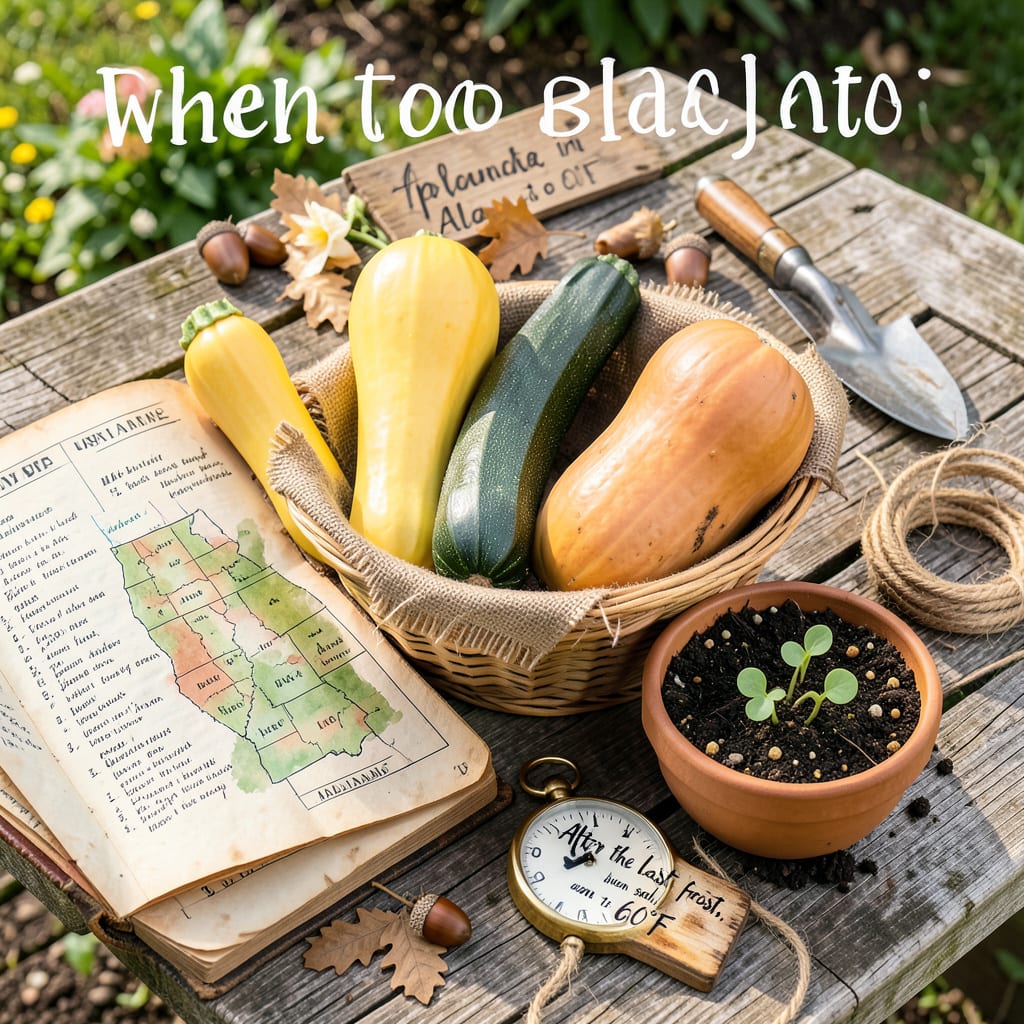
Alabama’s long growing season is a squash grower’s dream—if you time it right. I’ve planted squash from the Tennessee Valley to the Gulf Coast, and the difference between a mediocre harvest and an overflowing one often comes down to just 2-3 weeks of planting timing. Get this right, and you’ll be pulling tender zucchini and buttery yellow squash from vines that outpace the pests.
The key is working backward from your last frost date, but here’s the thing—Alabama’s climate lets you sneak in two full plantings if you play it smart. Spring squash goes in after soil hits 60°F, while fall plantings need to beat the first frost by 60 days. The real secret? Picking varieties like ‘Tromboncino’ that laugh at our humidity and heat waves.
📚 In This Guide
Timing is everything when it comes to squash—here’s how to nail the perfect window for Alabama’s unique climate.
Alabama spans USDA zones 7 through 9, which means your planting window varies significantly. Northern Alabama (zone 7) has a shorter growing season, while southern areas (zone 9) can plant earlier. Check your exact zone using the USDA Plant Hardiness Map—this ensures you won’t plant too early or late.
I always mark my calendar based on the last frost date. For Birmingham (zone 8a), that’s around April 1, while Mobile (zone 9a) can start as early as March 15. Don’t guess—local weather patterns shift yearly, so verify with your county extension office.
Summer squash varieties like zucchini and yellow crookneck need soil temperatures above 60°F. In central Alabama, this typically happens around mid-April. I use a soil thermometer to check—don’t rely on air temperature alone. Cold soil causes seeds to rot before germinating.
For a continuous harvest, I plant a second crop in late July for fall production. This timing avoids the peak pest pressure of midsummer while still allowing fruit to mature before first frost. Watch for soil that feels warm to the touch at 2-inch depth—that’s your green light.
Winter squash like butternut and acorn need 100-120 days to mature, so I plant them 2-3 weeks before summer squash. In south Alabama, that means late March; in the north, wait until early April. These varieties handle cooler soil better but still need at least 50°F soil.
I’ve found that starting seeds indoors 3-4 weeks before transplanting gives a head start, but squash hates root disturbance. Use biodegradable pots so you can plant the whole container without shocking the roots. Look for first true leaves before moving outdoors.
Alabama’s humidity and sudden temperature swings can throw off schedules. I watch for consistent nighttime temperatures above 50°F—this means the soil won’t chill overnight. Dogwoods blooming and redbud trees leafing out are nature’s signals that soil is warming.
If a late cold snap threatens after planting, cover seedlings with frost cloth (never plastic—it traps cold air). Remove covers by 10 AM to prevent overheating. I keep a thermometer in my garden to track microclimate differences—what works for your neighbor might not work for your specific spot.
Squash vine borers and cucumber beetles emerge in force by late May. I time my main planting to mature before this peak or use row covers until flowers appear. For fall crops, plant after August 1 when pest populations decline naturally.
Monitor leaves daily once plants are up. Holes in leaves or sawdust-like frass at the stem base mean pests have arrived. I’ve had best success with early June plantings for summer squash—they often produce heavily before borers become overwhelming. Always rotate planting locations yearly to break pest cycles.
Getting the timing right makes all the difference between a thriving squash patch and a disappointing harvest. Here’s what I’ve learned from years of planting in Alabama’s unpredictable climate.
Soil Temperature Secret: Don’t guess when your soil is ready—use a thermometer to confirm it’s above that critical 60°F mark mentioned in Step 2. I’ve ruined more seeds by planting in soil that felt warm to the touch but was actually too cold. A $10 soil thermometer saves you from replanting later. Check at 2-inch depth in the morning when temperatures are coolest to get an accurate reading.
Zone-Specific Timing: The difference between Birmingham and Mobile planting dates isn’t just academic—it’s the difference between harvest and heartbreak. I keep a garden journal tracking my April 1 (Birmingham) and March 15 (Mobile) plantings, and adjust by 5-7 days based on that year’s weather. Your county extension office has hyper-local data that’s more reliable than general zone guidelines.
Pest Prevention Strategy: Those squash vine borers in late May are no joke—they can wipe out a healthy plant overnight. I’ve had best results by planting my main crop in early June (just after the initial borer surge) and using floating row covers until flowers appear. For fall plantings after August 1, I rotate to a completely different garden bed than my spring planting to break the pest cycle.
Seed Starting Technique: When starting winter squash indoors 3-4 weeks early as mentioned in Step 3, use biodegradable pots to avoid root shock. I learned this the hard way after losing half my butternut seedlings to transplant shock. Wait until you see those first true leaves—they look different from the initial seed leaves—and harden off plants for 3-4 days before transplanting.
Yes, but timing is key! Summer squash (like zucchini) thrives when planted in late March to early April for a spring harvest or late July to early August for a fall crop. Avoid mid-summer (June-July)—Alabama’s heat and pests can stress plants. Opt for heat-tolerant varieties like ‘Straightneck’ or ‘Crookneck’ if planting later.
For a fall harvest, plant by mid-August in North Alabama or early September in the southern regions. Squash typically matures in 45–60 days, so aim to harvest before the first frost (usually late October to November). Use row covers to extend the season if needed!
Squash hates being transplanted—direct-sow seeds outdoors after the last frost (check your local frost dates). If you must start indoors, use biodegradable pots (like peat) to avoid root shock, and plant seedlings within 2–3 weeks. Harden them off for 3–5 days before moving outside.
Common culprits in Alabama:
Can I grow squash in containers in Alabama?
Choose bush varieties (like ‘Patio Star’ zucchini) and use a 5-gallon container (or larger) with drainage. Use a lightweight potting mix and place containers in full sun (6+ hours). Water daily—Alabama’s heat dries pots fast! Harvest frequently to encourage more production.
