
Beautiful Plants For Your Interior
Beautiful Plants For Your Interior
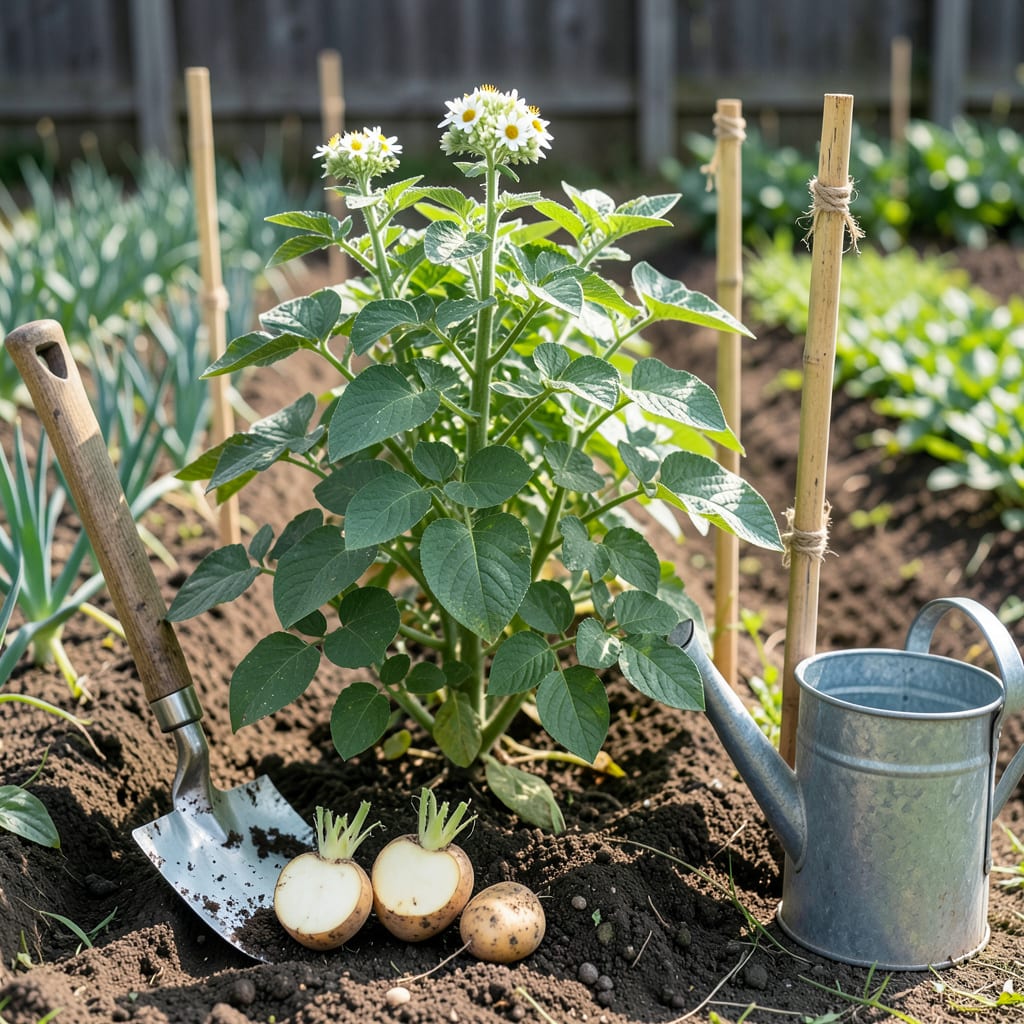
Timing your potato planting in Idaho can mean the difference between a bumper crop and a disappointing harvest. Our state’s unpredictable springs and short growing season make nailing that perfect window absolutely critical.
I’ve dug through the research (and the dirt) to uncover when Idaho’s soil is truly ready for those seed potatoes. Whether you’re in Boise’s Zone 7 or up in Coeur d’Alene’s chillier Zone 5, I’ll show you exactly how to work with your local frost dates and soil conditions for maximum yields.
If you’re growing potatoes in Idaho, timing isn’t just important—it’s everything. Our state’s varied USDA Zones (3b-7a) mean what works in Boise won’t fly in Coeur d’Alene. The secret? Plant 2-3 weeks before your last frost when soil hits 45°F.☀️
Southern Idaho gardeners (Zones 6-7) can start as early as late March, while northern regions (Zones 3-5) should wait until mid-May. I’ll break down the exact windows for your area—plus which early-season varieties like Yukon Gold thrive in our short season.
| Region | USDA Zone | Planting Window | Last Frost Date | Recommended Varieties |
|---|---|---|---|---|
| Southern Idaho (Boise, Pocatello) | 6-7a | March 15 – April 15 | April 15 | Yukon Gold, Red Pontiac |
| Central Idaho (Twin Falls, Idaho Falls) | 5-6 | April 1 – May 1 | May 1 | Russet, Kennebec |
| Northern Idaho (Coeur d’Alene, Sandpoint) | 3b-5 | May 1 – June 1 | June 1 | Early Rose, Norland |
Pro Tip: Use a soil thermometer to confirm 45°F+ at 4″ depth. Mountain valleys may need row covers for early planting.
I always recommend chitting (pre-sprouting) your seed potatoes 4-6 weeks before planting. This gives you a 2-week head start on growth. For high-altitude gardens (above 5,000 ft), add 10-14 days to these windows—cold soil stunts growth.🌱
Don’t forget about soil prep! Idaho’s volcanic soil is great, but potatoes need loose, well-draining conditions. I mix in 2-3 inches of compost and avoid fresh manure (it causes scab). For clay-heavy areas, add sand or straw to improve drainage.
The University of Idaho Extension suggests planting 12 inches apart in rows 30 inches wide. This spacing prevents disease spread and makes hilling easier. I use the “trench method”—dig 6″ deep, place seed pieces, then cover with 4″ of soil.🪴
Watch for late spring frosts, especially in northern zones. Keep frost blankets or straw mulch handy to protect emerging shoots. Remember: potatoes can handle light frost, but hard freezes (below 28°F) will kill them.
For successive harvests, plant early varieties (70-day maturity) first, then mid-season (90-day) 2 weeks later. This staggers your harvest and extends fresh potato season. I love Fingerlings for late summer and Russets for storage.🌿
If you’re in urban areas like Boise, watch for “heat islands” that dry soil faster. Mulch with grass clippings to retain moisture. Rural gardeners should test soil—our alkaline soils (pH 7.5+) may need sulfur amendments for optimal growth.
Finally, mark your calendar for harvest timing: new potatoes in 60-70 days, storage potatoes when tops die back (usually August-September). Dig carefully with a fork to avoid bruising—Idaho’s famous for perfect spuds, and yours can be too!✂️
Even with perfect calendar timing, your Idaho soil might not be ready for potatoes. I’ve learned the hard way that soil temperature and moisture levels matter more than dates. Let me show you the three non-negotiable checks I use before planting.🌱
First, grab a soil thermometer—this $10 tool saves me every year. Potatoes need 45°F minimum at 4″ depth. In Boise, we often hit this by mid-March, but northern Idaho gardeners may wait until late May. Don’t guess—measure daily for 3 consistent days.☀️
Use a thermometer at 4″ depth—must read 45°F+ for 3 days. Morning readings are most accurate.
Grab a handful of soil—it should hold shape when squeezed but crumble easily. Too wet? Wait 3-5 days.
Clear all weeds and old plant matter—they harbor pests. I use a stirrup hoe for easy prep without disturbing soil structure.
The “squeeze test” is my favorite trick. Take a handful of soil and squeeze—if it holds shape but breaks with a light poke, it’s perfect. If water drips out, you’re too early. Idaho’s clay-heavy soils in the Treasure Valley often need extra drying time after snowmelt.💧
Watch for microclimate differences—south-facing slopes in Boise foothills warm up 2-3 weeks earlier than north-facing gardens. I plant my test hill on a slope first, then observe its progress before committing to the full crop. This trick has saved me from late frosts multiple times.🌡️
Don’t ignore soil pH—Idaho’s volcanic soil often tests 7.5-8.0. Potatoes prefer 5.0-6.5. I amend with elemental sulfur (1 lb per 100 sq ft) if needed. Test kits from the UI Extension are free and take the guesswork out of adjustments.
Finally, check for soil compaction—our heavy equipment traffic can pack soil tightly. If your finger struggles to push in 6″, loosen with a broadfork before planting. I add 1″ of compost and ½” of sand to improve structure in my clay-dominant garden near Nampa.🪴
Planting potatoes at the wrong time in Idaho isn’t just about smaller harvests—it can mean no harvest at all. I’ve seen both scenarios play out dramatically in my garden. Let me walk you through exactly what happens when timing goes wrong, and how to salvage your crop if you’ve misjudged.🌱
Plant too early, and frost damage becomes your biggest enemy. Potato leaves turn black and mushy overnight when temps dip below 28°F. The tubers themselves might survive, but growth stalls for weeks. In northern Idaho, I’ve lost entire plantings to late May frosts—even after the “safe” date.☀️
⚠️ Frost Alert!
Early planting risks:
Recovery tip: Hill up soil over damaged plants to encourage new shoots from below.
Late planting brings its own headaches. Potatoes need 90-120 days to mature, and Idaho’s short season punishes procrastinators. Plant after June 1 in northern zones, and you’ll harvest golf-ball-sized tubers before frost hits. I once planted Russets in mid-June near Moscow—ended up with marble-sized potatoes by September.🌡️
The Colorado potato beetle thrives in warm soil, so late plantings often face severe pest pressure. These striped menaces can defoliate plants in days. Southern Idaho gardeners also risk heat stress—when soil temps exceed 85°F, tubers stop forming. I combat this with shade cloth and deep mulching in my Boise garden.🪴
There are ways to recover from poor timing. For frost-damaged plants, cut back blackened stems and hill soil over the base—new shoots often emerge. With late plantings, choose fast-maturing varieties like ‘Norland’ (75 days) and use row covers to extend the season. I’ve salvaged crops by container-growing late potatoes near a sunny south wall.✂️
Use a soil thermometer to check temperatures at 4″ depth—potatoes need 45°F minimum for 3 consecutive days. In Boise, this often happens by mid-March, while northern regions may not reach it until late May.
Frost below 30°F turns foliage black and stunts growth for weeks. While tubers may survive, you risk seed rot in cold, wet soil. Northern Idaho gardeners should be especially cautious—late May frosts are common.
Yes! Use row covers or black plastic mulch to warm soil 2-3 weeks earlier. For late plantings, choose fast-maturing varieties like ‘Norland’ (75 days) and protect with frost blankets in fall.
Early varieties like Yukon Gold and Norland thrive statewide. For storage, Russets excel in southern Idaho’s warmer zones. In northern areas, stick to 70-90 day varieties to beat early frosts.
Add 10-14 days to standard windows for gardens above 5,000 ft. Cold soil at higher elevations stunts growth. Mountain valleys may need row covers even after the typical last frost date.
