
Beautiful Plants For Your Interior
Beautiful Plants For Your Interior
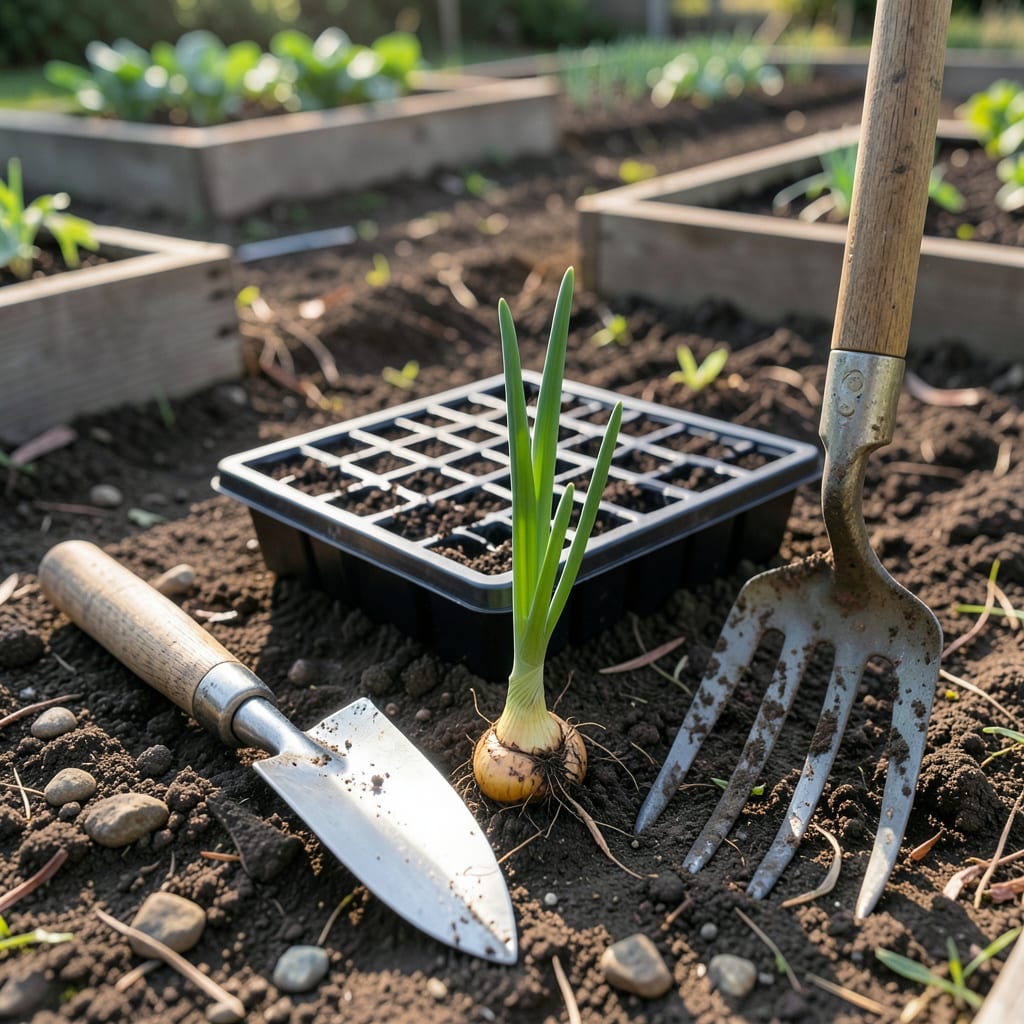
Timing your onion planting in Alabama can mean the difference between a bountiful harvest and a disappointing one. The state’s unique climate—with its warm falls and mild winters—creates a perfect window for growing plump, flavorful bulbs, but only if you get the timing right.
Whether you’re in Zone 7b or further south, I’ll show you exactly when to plant 🧅 for the best results. From fall planting for spring harvests to avoiding common mistakes, this guide covers everything you need to know to grow onions like a pro.
Alabama’s climate gives us a fantastic opportunity to grow onions twice a year—but timing is everything. The key is working with the state’s three distinct regions: Northern, Central, and Southern. Each has slightly different frost dates and soil warm-up times.
For fall planting (my favorite method), aim to get your onion sets or transplants in the ground 4–6 weeks before the first frost. In most of Alabama, that means late September through October. Spring planting works too, but you’ll need to act fast after the last frost.
| Region | Fall Planting Window | Spring Planting Window | Best Varieties |
|---|---|---|---|
| Northern AL (Zones 7a-7b) | Sept 15 – Oct 15 | Feb 15 – Mar 15 | Texas Early White, Red Creole |
| Central AL (Zone 8a) | Oct 1 – Oct 31 | Feb 1 – Feb 28 | Yellow Granex, Candy |
| Southern AL (Zone 8b-9a) | Oct 15 – Nov 15 | Jan 15 – Feb 15 | Georgia Sweet, Vidalia-types |
Pro Tip: Soil temps should be 50°F+ for planting. Use a soil thermometer!
I always recommend short-day onion varieties for Alabama because they form bulbs with 10–12 hours of daylight—perfect for our latitude. Varieties like ‘Texas Early White’ and ‘Yellow Granex’ consistently perform well here.
For spring planting, watch your last frost date carefully. In Birmingham (Zone 8a), that’s around March 15, but Mobile (Zone 9a) can plant as early as February 15. The goal is to get onions in the ground 2–3 weeks before this date.
Soil prep matters just as much as timing. Alabama’s clay-heavy soils need amending with compost for proper drainage. I mix in 2–3 inches of organic matter and aim for a pH of 6.0–6.8 before planting. This prevents waterlogged bulbs.
Watering is critical during bulb formation. Stick to 1 inch per week, including rainfall. Alabama’s humid summers mean you’ll need to reduce watering as harvest nears to prevent rot. I use drip irrigation to keep foliage dry and reduce disease risk.
Watch for onion thrips—they love Alabama’s warmth! I combat them with neem oil sprays every 10–14 days during active growth. Row covers work too if you’re dealing with heavy infestations.
Harvest timing depends on your planting window. Fall-planted onions are typically ready by late April to May, while spring-planted ones mature in June to July. Look for tops yellowing and falling over—that’s your signal!
Remember, onions are day-length sensitive. If you plant long-day varieties in Alabama, you’ll likely end up with scallions instead of bulbs. Stick to short-day types, and you’ll be rewarded with big, sweet onions perfect for storage or fresh eating. 🌱
Even experienced gardeners can stumble when growing onions in Alabama. The biggest issues I see come from ignoring our unique climate and daylight patterns. Let me walk you through the three most common mistakes that lead to disappointing harvests—and how to fix them.
First up: planting the wrong onion type for our latitude. Alabama’s position means we need short-day varieties that form bulbs with just 10–12 hours of daylight. Long-day types simply won’t bulb properly here, leaving you with scallions instead of storage onions.
The second mistake is neglecting soil preparation. Alabama’s clay-heavy soils can suffocate onion roots if not amended. I always work in 2–3 inches of compost and ensure proper drainage. A quick soil test is worth it—onions hate soggy feet!
Third, many gardeners misjudge planting depth. Onion sets should be planted 1 inch deep with 4–6 inches between plants. Too deep and they’ll rot; too shallow and they’ll dry out. Use a soil thermometer to confirm temps are 50°F+ before planting.
Watering errors are another silent killer. Onions need consistent moisture but despise waterlogged soil. I recommend drip irrigation to keep foliage dry and prevent fungal diseases. Aim for 1 inch per week, adjusting for rainfall.
Finally, don’t overlook pest management. Onion thrips thrive in Alabama’s warmth. I combat them with neem oil sprays every 10–14 days during active growth. Row covers work well for organic gardeners dealing with heavy infestations.
Remember, onions are day-length sensitive. If you’re planting in spring, choose varieties with 90–110 day maturity to beat the summer heat. Fall planting gives you more flexibility with 110–120 day varieties. Either way, proper timing and variety selection will reward you with big, sweet onions! 🌿
Not all onions thrive in Alabama’s humid subtropical climate, but these fast-growing varieties consistently deliver big, sweet bulbs. I’ve tested dozens over the years and narrowed it down to the top performers for our state’s unique conditions.
For beginners, I always recommend starting with ‘Texas Early White’. This short-day variety matures in just 90–100 days and produces mild, crisp onions perfect for fresh eating. It’s also remarkably disease-resistant, which is crucial in our humid summers.
90–100 days | Mild, crisp flavor | Great for beginners | Disease-resistant
100–110 days | Sweet, Vidalia-type | Stores well | Heat-tolerant
95–105 days | Spicy, deep red | Excellent keeper | Drought-resistant
105–115 days | Very sweet | Large bulbs | Good for storage
110–120 days | Extra sweet | Heat-loving | Long storage life
‘Yellow Granex’ is another star performer, especially for gardeners wanting that classic Vidalia-style sweetness. It takes about 100–110 days to mature and stores beautifully. I’ve found it particularly well-suited to Central Alabama’s Zone 8a conditions.
For those who love colorful onions, ‘Red Creole’ is a must-try. This spicy red variety matures in 95–105 days and has excellent disease resistance. It’s also one of the best storage onions you can grow in Alabama, keeping well for months.
If you’re looking for extra-large bulbs, ‘Candy’ onions are hard to beat. These sweet, mild onions grow impressively big in our climate, though they do need consistent moisture to reach their full potential. They’re ready in about 105–115 days.
For gardeners in Southern Alabama, ‘Georgia Sweet’ is my top recommendation. This variety thrives in the warmer Zone 9a conditions and produces beautifully sweet onions in 110–120 days. It’s particularly well-adapted to our long growing season and handles heat better than most varieties. 🌱
Summer planting isn’t ideal for most onion varieties in Alabama. The extreme heat can stress plants and lead to poor bulb formation. For best results, stick to fall planting (Sept–Nov) or early spring (Feb–Mar) when temperatures are milder.
Plant onion sets about 1 inch deep with the pointed tip just above the soil surface. Space them 4–6 inches apart in rows 12–18 inches apart. This depth allows proper root development while preventing rot.
Short-day onions form bulbs with 10–12 hours of daylight and are perfect for Alabama’s climate. Long-day varieties need 14+ hours and won’t bulb properly here. Always choose short-day types like ‘Texas Early White’ or ‘Yellow Granex’.
Onions need 1 inch of water per week, including rainfall. Use drip irrigation to keep foliage dry and prevent fungal diseases. During bulb formation, reduce watering slightly to prevent rot. Morning watering is best to allow foliage to dry before evening.
Harvest when tops yellow, dry, and fall over—typically late April to May for fall-planted onions. For spring-planted onions, expect harvest in June to July. Let harvested onions cure in a dry, shaded area for 2–3 weeks before storage.
