
Beautiful Plants For Your Interior
Beautiful Plants For Your Interior
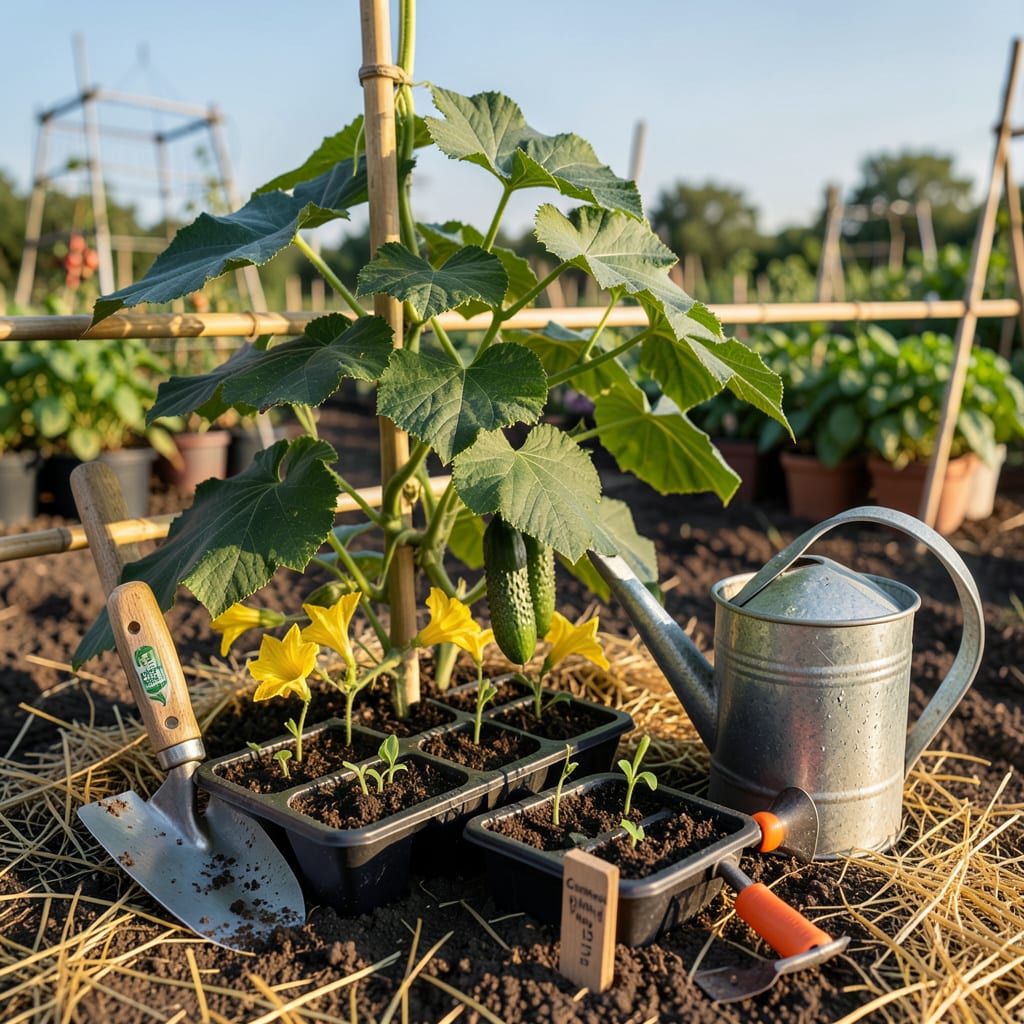
Timing your 🥒 cucumber planting in Oklahoma can mean the difference between a thriving harvest and a disappointing flop. Our unpredictable springs—where 70°F days can turn into 30°F nights—make it tricky to know when to start.
I’ve tested the ideal window for Zone 7a, and the secret lies in soil temps, not just calendar dates. Let me show you exactly when to plant for crisp, homegrown cucumbers all summer long—without the guesswork.
If you’ve ever wondered why your neighbor’s cucumbers thrive while yours struggle, the answer often lies in planting timing. Oklahoma’s diverse climate means what works in Tulsa might flop in Lawton. The key? Matching your planting date to your region’s last frost date and soil temperature.
Most of Oklahoma falls in USDA Zone 7a, but microclimates create variations. Central Oklahoma (Oklahoma City, Norman) typically sees its last frost around April 15, while Western Oklahoma (Altus, Woodward) can lag by 1-2 weeks. Eastern Oklahoma (Muskogee, Tahlequah) often warms up faster due to higher humidity.
| Region | Last Frost Date | Ideal Planting Window | Soil Temp Threshold |
|---|---|---|---|
| Eastern OK (Tahlequah, Muskogee) |
April 5-10 | April 10-25 (or 2 weeks after frost) |
60°F+ (15°C or higher) |
| Central OK (OKC, Norman, Edmond) |
April 10-15 | April 15-30 (after soil warms) |
60-65°F (15-18°C ideal) |
| Western OK (Altus, Woodward) |
April 15-20 | April 20-May 5 (watch for late frosts) |
60°F+ (use black plastic to warm soil) |
| Panhandle (Guymon, Hooker) |
April 20-25 | May 1-10 (shortest season) |
65°F+ (cold frames help) |
💡 Pro Tip: Use a soil thermometer at 4″ depth for accuracy. If soil is below 60°F, seeds may rot before germinating.
For urban gardeners in Oklahoma City or Tulsa, heat islands can make soil warm up 1-2 weeks earlier than rural areas. If you’re gardening in raised beds, your soil will warm faster than in-ground plots. I always check my soil temp at 8 AM for 3 consecutive days to confirm consistency.
If you’re eager to get a head start, consider starting seeds indoors 3-4 weeks before your last frost date. Use biodegradable pots to avoid transplant shock. Just remember: cucumbers hate root disturbance, so handle seedlings carefully. Harden them off for 7-10 days before transplanting outdoors.
For fall plantings, aim to sow seeds 12-14 weeks before your first frost date (around October 15 for most of Oklahoma). This gives plants time to mature before cold weather hits. In Western OK, where summers are hotter, a late July planting can yield a second crop before frost.
Oklahoma’s clay-heavy soil can be a challenge for cucumbers, which prefer loamy, well-draining conditions. Before planting, I recommend amending your soil with compost and sand to improve drainage. A soil test can reveal pH imbalances—cucumbers thrive in pH 6.0-6.8.
Watch out for sudden temperature swings, especially in spring. A late frost can devastate young cucumber plants. Keep row covers or frost blankets handy if the forecast dips below 32°F. Conversely, in July-August heat, provide afternoon shade to prevent scorching.
If you’re growing vining cucumbers, install your trellis at planting time to avoid disturbing roots later. Bush varieties are great for containers but may need more frequent watering in Oklahoma’s summer heat. I’ve found that drip irrigation works best to keep foliage dry and prevent disease.
Finally, don’t forget to succession plant! For a continuous harvest, sow a new batch of seeds every 2-3 weeks until mid-July. This ensures you’ll have fresh cucumbers all summer long, even if some plants succumb to powdery mildew or cucumber beetles.
By tailoring your planting schedule to your specific Oklahoma region and preparing your soil properly, you’ll set your cucumbers up for success. Next, let’s dive into how to tell if your soil is truly ready—beyond just checking the calendar! 🌱
Oklahoma’s unpredictable springs make calendar-based planting risky. I’ve learned the hard way that soil conditions matter more than dates. Even if your last frost date has passed, your soil might not be ready for cucumbers yet. Here’s how to tell when it’s truly time to plant.
Cucumbers need warm soil to germinate—at least 60°F at a 4-inch depth. But you don’t need a fancy thermometer to check. Your own elbow test can reveal if the soil is warm enough. Stick your arm in up to your elbow first thing in the morning.
⚠️ Warning: If soil feels damp and cold at 8 AM, cucumber seeds will likely rot before sprouting.
Another foolproof method? Watch for earthworms near the surface. When you see 2-3 worms in a square foot of turned soil, it’s a sign that microbial activity has warmed things up. I also look for soil cracking—small fissures indicate moisture has evaporated, meaning the ground is warming up.
If you’re still unsure, try the plastic bag test. Place a black plastic bag over your planting area for 24 hours. If the soil underneath feels noticeably warmer than uncovered soil, it’s ready. This trick also helps pre-warm cold soil if you’re eager to plant.
Remember that raised beds warm up 1-2 weeks earlier than in-ground soil. If you’re using containers, they can heat up even faster—but also dry out quicker. I always keep a soil moisture meter handy to monitor both temperature and moisture levels in pots.
For those in Western Oklahoma, where soils are often sandy and dry, you might need to pre-moisten your planting area. Water deeply 24 hours before sowing to ensure seeds have enough moisture to germinate. In Eastern Oklahoma, where clay soil dominates, work in compost to improve drainage before testing soil temps.
By using these real-world indicators instead of just relying on calendar dates, you’ll avoid the disappointment of seeds that refuse to sprout. Next, we’ll explore what happens if you plant too early or late—and how to rescue your crop if timing goes wrong! 🌡️
Planting cucumbers at the wrong time in Oklahoma can lead to disastrous results. I’ve seen firsthand how early planting invites frost damage, while late planting means struggling with scorching heat. Let’s break down the risks and how to recover if your timing is off.
If you plant too early, cucumber seeds may rot in cold soil before germinating. Even if they sprout, a late frost can kill tender seedlings overnight. I lost an entire batch one April when temperatures plunged to 28°F after a warm spell. 🌱
Fix it: Use row covers or cold frames to protect young plants.
Fix it: Provide afternoon shade and drip irrigation to cool roots.
⚠️ Critical: Both scenarios increase pest pressure—weak plants attract beetles and aphids.
For late plantings, the biggest challenge is blossom drop. When daytime temps exceed 90°F, cucumber flowers often fall off before fruiting. I combat this by planting heat-tolerant varieties like ‘Straight Eight’ or ‘Lemon Cucumber’ for late-season success.
If you’ve already planted too early, don’t panic. Row covers can add 4-6°F of warmth and protect against light frosts. For late plantings, mulch heavily with straw to keep roots cool and moist. I’ve salvaged many crops by adjusting watering to early morning and using shade cloth during peak heat.
Remember that succession planting can mitigate timing mistakes. If your first planting fails, try again in 2-3 weeks. Oklahoma’s long growing season (about 180 frost-free days) gives you multiple chances. Just avoid planting after July 15—there won’t be enough time for mature fruit before frost.
By understanding these risks and having recovery strategies ready, you can turn a planting mistake into a learning experience. Next time, you’ll know exactly when your Oklahoma soil is perfect for cucumbers! 🌿
Begin seeds indoors 3-4 weeks before your last frost date (around March 15-20 for most regions). Use biodegradable pots to avoid transplant shock, and keep soil temps above 70°F for best germination.
Yes, but timing is critical. Sow seeds by July 15 in Central/Eastern OK or late June in the Panhandle. Choose fast-maturing varieties like ‘Bush Champion’ (50 days) and use shade cloth to protect from extreme heat.
Cover plants with frost blankets or plastic cloches when temps drop below 32°F. Remove covers by 10 AM to prevent overheating. For extra warmth, add black plastic mulch to raise soil temps.
Lay black plastic sheeting over planting beds for 2-3 weeks before sowing. Raised beds warm 1-2 weeks earlier than ground soil. In clay-heavy areas, mix in compost to improve heat retention.
Blossom drop occurs when daytime temps exceed 90°F. Combat this with afternoon shade and consistent watering (1-1.5 inches weekly). Heat-tolerant varieties like ‘Straight Eight’ perform better in July-August.
