
Beautiful Plants For Your Interior
Beautiful Plants For Your Interior
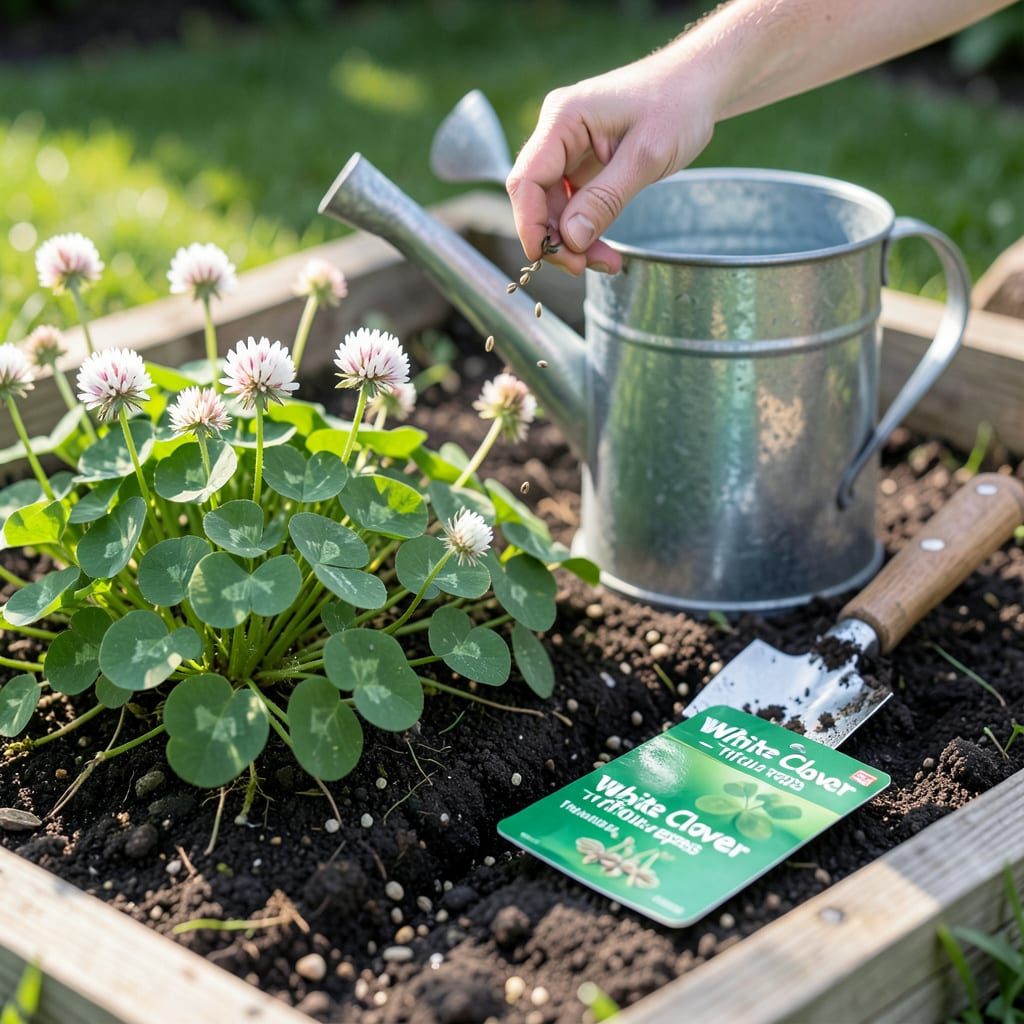
Timing can make or break your ☘️ clover patch in Georgia—plant a week too early or late, and you might face sparse growth or wasted seed. I’ve seen firsthand how Georgia’s unpredictable springs and mild winters demand precise planning.
After testing different approaches in Zone 8a, I’ll share the exact windows that deliver lush results. Whether you’re planting for soil health or livestock forage, these timing secrets will help you avoid the most common mistakes Georgia growers make. Let’s get your clover off to the perfect start.
Georgia’s diverse climate zones (USDA 7a-9a) mean clover planting windows vary dramatically from the mountains of North Georgia to the Coastal Plain. I’ve found that soil temperature—not just calendar dates—is the real secret to success.
For most varieties like white clover and crimson clover, you’ll want soil consistently above 50°F. Georgia’s last frost dates (April 15 in Atlanta, March 1 in Savannah) create two prime planting seasons: early fall and late winter.
| Season | Optimal Window | Soil Temp | Best For |
|---|---|---|---|
| Fall | Sept 15–Oct 30 | 55–65°F | Winter cover, erosion control |
| Winter | Feb 1–Mar 15 | 50–60°F | Spring forage, nitrogen fixation |
| Spring | Mar 15–Apr 15 | 55°F+ | Quick summer cover |
*Adjust dates by 2 weeks for North Georgia (Zone 7) vs. South Georgia (Zone 9)
In North Georgia (Zones 7a-7b), I recommend shifting fall planting 2 weeks earlier (by Sept 1) to beat frost. The Coastal Plain (Zone 9a) can push winter planting into early January thanks to milder winters.
Crimson clover thrives in fall plantings, while white clover does better in spring. For red clover, aim for late February in Central Georgia—it needs that extra warmth to establish before summer heat.
The soil moisture sweet spot is crucial. Georgia’s spring rains often create perfect conditions, but fall plantings may need supplemental irrigation if we hit a dry spell. I always check the 3-inch soil depth with a thermometer before planting.
Pro tip: Avoid planting after April 15 in most regions—rising temperatures can stress young clover. The exception? High-elevation areas (like Blairsville) where you can plant until May 1 due to cooler microclimates.
For winter survival, fall-planted clover needs 6 weeks of growth before the first frost. In Atlanta (Zone 8a), that means seeding by October 15. Further south in Valdosta (Zone 8b), you can plant until November 1.
Remember that humidity levels affect germination too. Georgia’s summer humidity can cause fungal issues for spring-planted clover, so I recommend morning watering and proper spacing to improve airflow.
If you’re using clover as a cover crop, the UGA Extension recommends planting 4–6 weeks before your main crop. For example, plant crimson clover in October before spring corn to maximize nitrogen benefits.
For the most reliable results, I cross-check my planting dates with the Georgia Agricultural Weather Network. Their soil temperature maps are invaluable for pinpointing that 50°F threshold in your exact location.
🌱Getting clover established in Georgia requires more than just tossing seeds. I’ve learned through trial and error that soil preparation and proper seeding techniques make all the difference in our humid climate. Let’s walk through my proven method for success.
First, test your soil pH—clover thrives in 6.0–7.0 range. Georgia’s naturally acidic soils often need lime applications (about 50 lbs per 1,000 sq ft) applied 2–3 months before planting. This gives it time to adjust the pH properly.
⚠️ Common Georgia Clover Mistakes
❌ Planting too deep – Clover seeds need light to germinate. Never bury more than ¼ inch.
❌ Skipping soil contact – Use a lawn roller or drag a board to press seeds into soil after broadcasting.
❌ Ignoring weed control – Apply pre-emergent herbicide 6 weeks before planting or hand-remove weeds first.
For seeding, I recommend 8–10 lbs per acre (about ¼ lb per 100 sq ft) for white clover and 12–15 lbs per acre for crimson clover. Use a broadcast spreader for even coverage, then lightly rake to ensure seed-soil contact without burying.
Watering is critical in Georgia’s climate. After planting, keep soil consistently moist (not soggy) for 7–10 days. I set up sprinklers for 15–20 minutes daily in morning to prevent fungal issues. Once established, clover needs about 1 inch weekly from rain or irrigation.
For spring plantings, I add a light nitrogen fertilizer (5-10-10) at planting to jumpstart growth. Fall plantings benefit from phosphorus-heavy fertilizer (0-20-20) to strengthen roots before winter. Always follow with ½ inch of water to activate nutrients.
Mulching with straw or pine straw helps retain moisture in our hot summers. Apply a light ½-inch layer after germination—this also suppresses weeds while allowing sunlight through. Remove mulch in spring if planting annual clovers to prevent smothering new growth.
🌱When I first started planting clover in my Georgia garden, I was only thinking about the pretty green carpet it would create. But I quickly discovered that clover offers far more valuable benefits that make it a powerhouse plant for our state’s unique climate and soil challenges.
One of the biggest advantages I’ve seen is clover’s nitrogen-fixing superpower. In Georgia’s often nutrient-depleted soils, clover can add 50–150 lbs of nitrogen per acre annually—that’s like getting free fertilizer! This makes it perfect for rotating with heavy feeders like corn or tomatoes.
🌱 Top 3 Georgia Clover Benefits
Georgia’s red clay soil is notorious for erosion, especially on slopes. I’ve used crimson clover on my property’s steep areas and watched it prevent rainwater runoff that used to wash away topsoil. The dense root system creates a living net that holds soil in place during our intense summer storms.
For livestock owners, clover provides high-protein forage that thrives in our climate. My neighbor mixes white clover with fescue and reports his cattle gain weight faster with less supplemental feed. The UGA Extension confirms clover can boost forage protein content by 3–5 percentage points compared to grass alone.
I’ve also noticed a dramatic increase in beneficial insects since planting clover. The flowers attract parasitic wasps that control tomato hornworms and ladybugs that devour aphids. This natural pest control has allowed me to reduce pesticide use by about 40% in my vegetable garden.
For urban gardeners, clover makes an excellent low-maintenance lawn alternative. It stays green year-round in most of Georgia, tolerates foot traffic better than grass, and never needs mowing below 3–4 inches. Plus, it’s drought-tolerant once established—perfect for our occasional water restrictions.
🌿Clover seeds germinate best when soil reaches 50–65°F at 3-inch depth. In Georgia, this typically occurs in late winter (February–March) and early fall (September–October). Use a soil thermometer for accuracy—don’t rely on air temperature alone.
Summer planting is risky in Georgia due to heat stress and drought conditions. Young clover struggles to establish when temperatures exceed 85°F. If you must plant, choose heat-tolerant varieties like durana white clover and provide daily irrigation. Early morning watering is crucial.
North Georgia (Zones 7a-7b) requires 2 weeks earlier fall planting (by Sept 1) and 2 weeks later spring planting (until April 1). South Georgia (Zone 9a) can plant later in fall (until Nov 1) and earlier in spring (starting Jan 15). Always adjust based on your local frost dates.
The most common error is planting too deep—clover needs light to germinate. Never bury seeds more than ¼ inch. Another critical mistake is skipping soil contact; always press seeds into soil with a lawn roller or board after broadcasting. Weed competition is also deadly to young clover.
